€ 240


Still questions? Contact us
ankyrin necklace | sterling silver
If you trained on cell biology, you remember ankyrin from one slide in a long lecture. The adaptor that makes red blood cells flexible and neurons fire reliably, mostly invisible until something fails. The structural protein that runs more biology than its public profile suggests.
How Ankyrin Works
Ankyrins are large adaptor proteins that link integral membrane proteins to the underlying spectrin-actin cytoskeleton. The classic case is in red blood cells, where ankyrin-1 connects band 3 (the chloride/bicarbonate exchanger) to the spectrin lattice that gives erythrocytes their flexibility. Mutations in ankyrin-1 cause hereditary spherocytosis, a condition where red blood cells lose their biconcave shape and rupture in the spleen. In neurons, ankyrin-G organises the axon initial segment, fixing voltage-gated sodium channels in place where action potentials begin. Without ankyrin, neurons can't fire reliably and red blood cells shred under shear stress. Most of cell biology runs on these adaptors that nobody outside the field has ever heard of.
The Audience
The audience is narrow.
- cell biologists working on membrane organisation
- haematologists and red blood cell researchers
- neuroscientists studying axon initial segments
- biochemists working on spectrin-actin networks
- protein structure researchers
The science question this pendant gets asked most often is below.
Explore Related Cellular Biology Jewelry
- laminin necklace | silver
- clathrin coated vesicle necklace | silver
- myosin necklace | silver
- red blood cells necklace | silver
FAQ
Will a cell biologist actually recognise this?
Anyone whose training touched the membrane cytoskeleton or axon initial segment will recognise the structure on sight. Outside that population the recognition rate drops sharply. If the recipient works on membrane proteins, hereditary spherocytosis, or sodium channel localisation, the piece is a clear peer signal. If they're outside cell biology entirely, expect to explain.
Why does hereditary spherocytosis come from ankyrin mutations?
Because ankyrin-1 is what physically anchors the membrane to the cytoskeleton in red blood cells. Without that anchor, the spectrin lattice drifts away from the lipid bilayer, the cell loses its biconcave disc shape, becomes spherical, and gets cleared in the spleen. The result is a chronic mild-to-moderate haemolytic anaemia, often mild enough to go undiagnosed until adulthood.
Size, material, chain length?
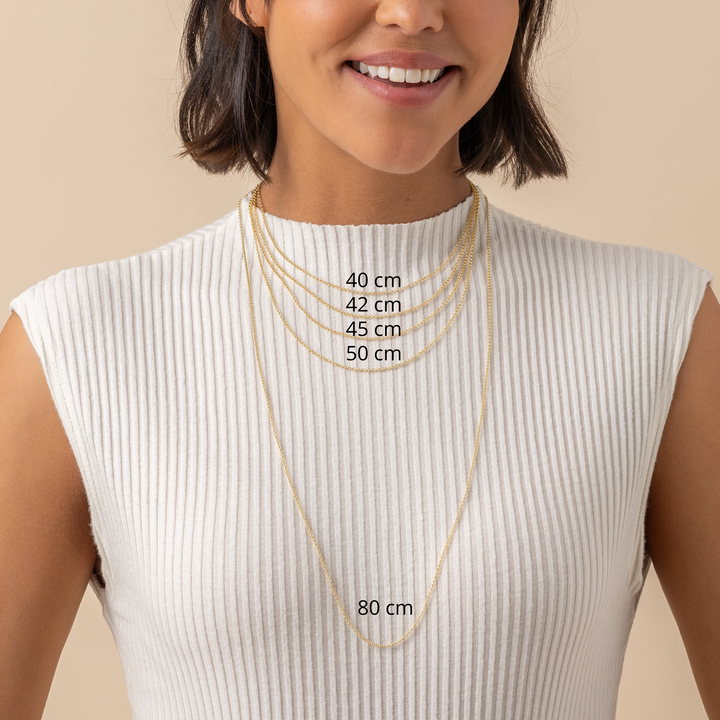
36 mm pendant in 925 polished sterling silver, nickel-free and hypoallergenic, on a 45 cm sterling silver chain (1.8 mm diameter) with lobster clasp and a 5 cm extender. Free DHL Express shipping worldwide in 1-5 business days, all duties and taxes covered, 30-day “Love It or Return It” policy.
Is there a gold or other material version?
Not currently. The ankyrin necklace exists only in sterling silver. If a custom version in gold vermeil or solid gold would suit a specific gift, it can be made on request through our custom design service (around 4-6 weeks total).
Cellular Biology
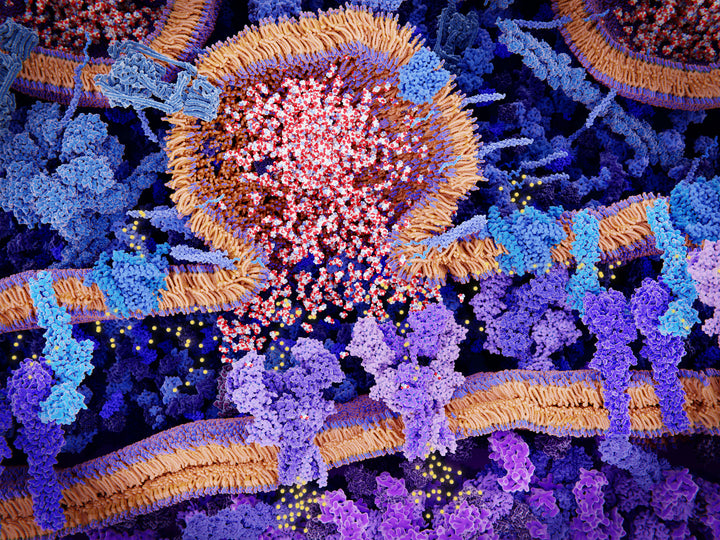
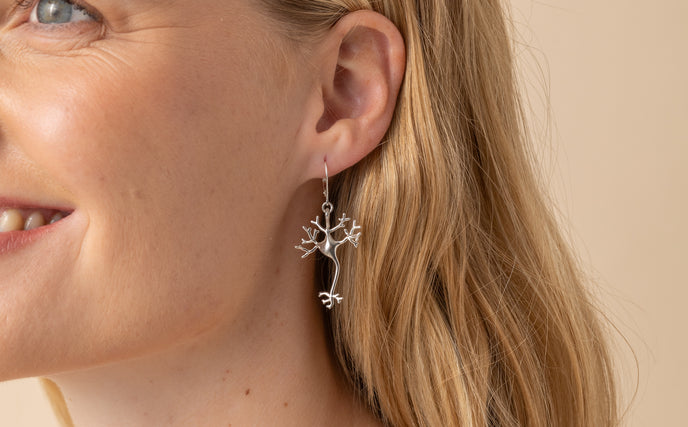
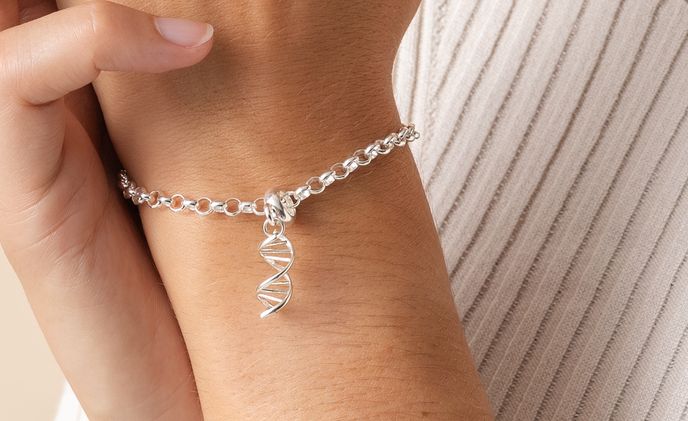
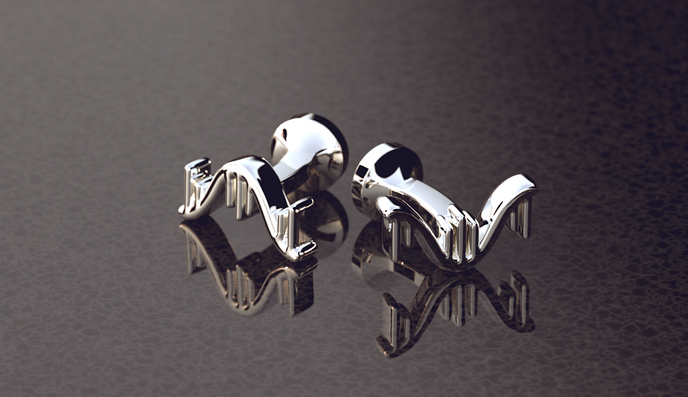
Step into the fascinating world of cellular biology through our unique jewelry designs. These pieces serve as wearable reflections of life's microscopic wonders, capturing the aesthetics of DNA strands, cellular formations, and more. Far from simple adornments, they spark dialogue and honor the captivating complexities found within biological research. Merging scientific accuracy with artistic flair, each creation offers a tactile experience that bridges the gap between scientific inquiry and aesthetic appreciation.
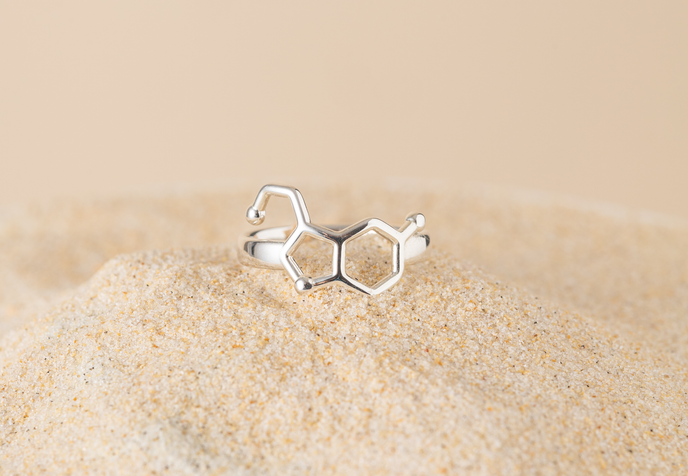
Find your perfect fit: measure an Existing Ring
Finding out your ring size at home is a simple process and can help you shop for jewelry online with confidence.
Necklace length guide