€ 155


Still questions? Contact us
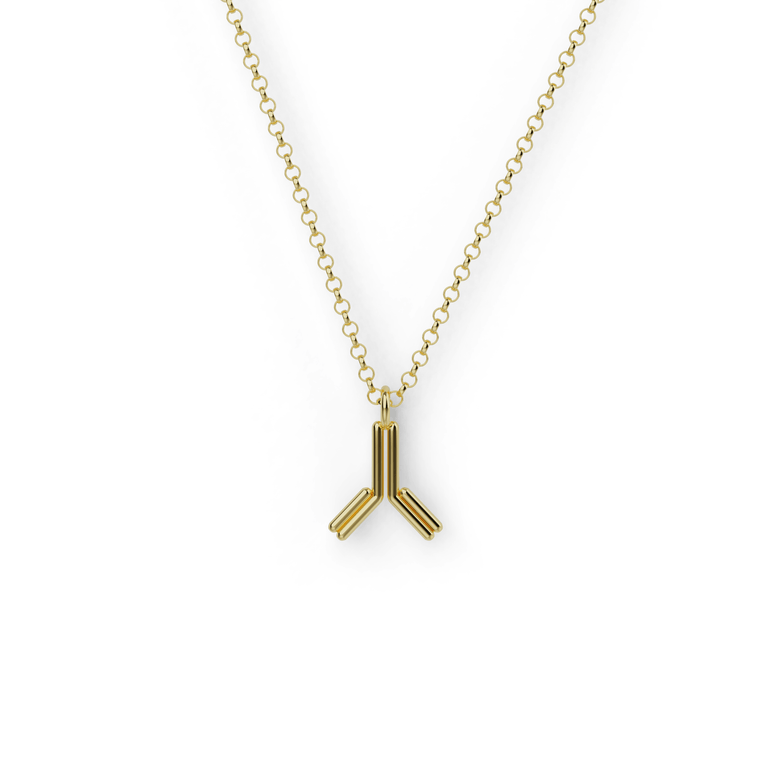
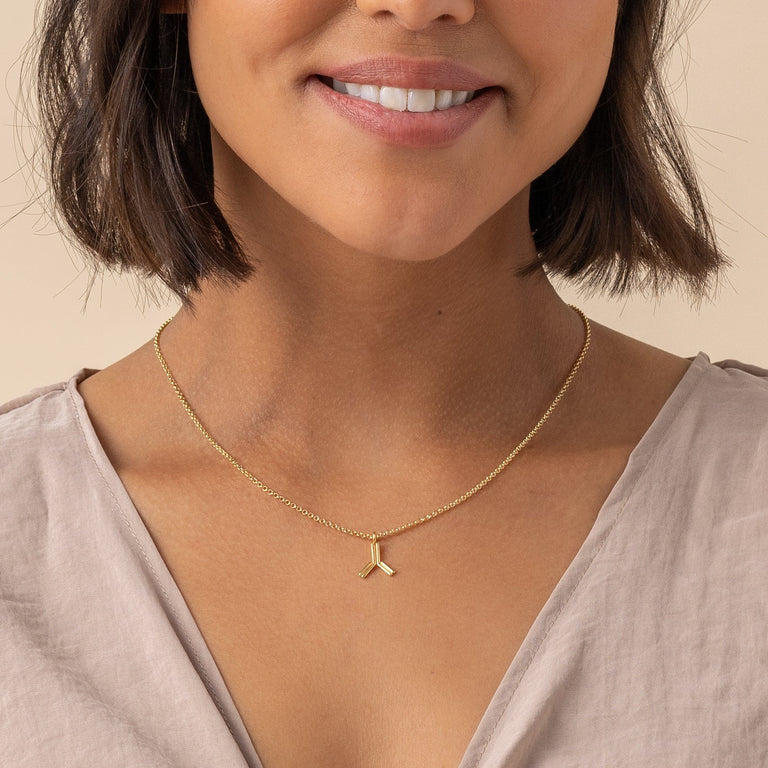
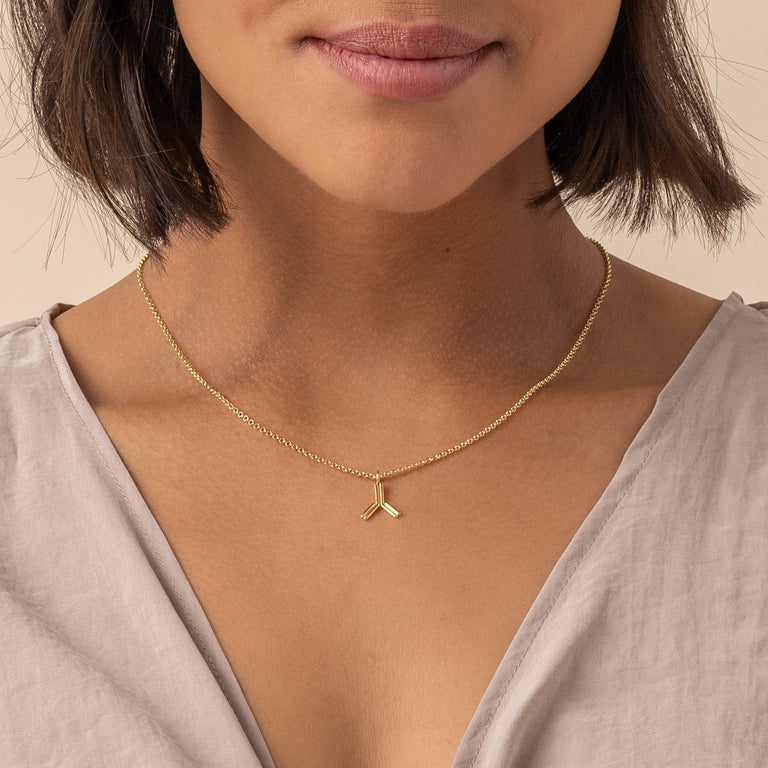
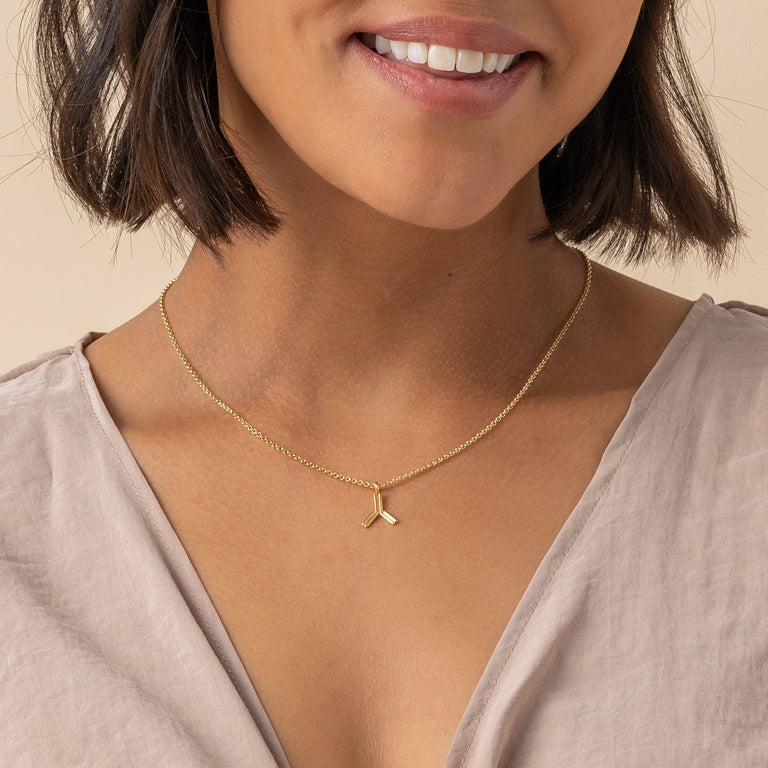
Antibody necklace | 18K gold vermeil
Before you were born, your mother's antibodies crossed the placenta to protect you, most of them in the last three months of pregnancy. Wear this gold antibody necklace if your own work is with them, or give it to a daughter finishing a biomedical degree, a sister in medicine or a friend who has just defended her PhD.
Who It's For
- a daughter graduating in biomedical science or medical biology
- a sister who is a doctor, for her birthday
- a friend or colleague in immunology, or one defending a PhD on antibodies
- a wife or partner who works with antibodies in the lab
- yourself, if antibodies are part of your working day
Davide L. gave it to his sister: “I’ve bought this necklace for my sister’s birthday and she was surprised and pleased because she’s a doctor!” Sasha S. bought it to wear: “Absolutely love this piece! It's beautiful, understated and really good quality!”
The Science Behind the Antibody
The basic antibody unit is a Y-shaped protein built from two heavy and two light chains. Both arm tips carry the same binding site, so each Y can hold two copies of its target, while the stem tells the immune system what to do next. Each B cell makes one kind of antibody. As it matures, it builds the gene for it by cutting and rejoining pieces of its DNA, in a different combination in each cell, which is how one genome produces antibodies against almost anything. Susumu Tonegawa won the 1987 Nobel Prize in Physiology or Medicine for discovering this. After an infection or a vaccine, memory B cells keep the recipe and answer faster the next time.
Explore Related Immunology Jewelry
- antibody necklace | silver
- antibody earrings | gold vermeil
- antibody studs | gold vermeil
- IgM necklace | silver
FAQ
How big is it, and what is gold vermeil?
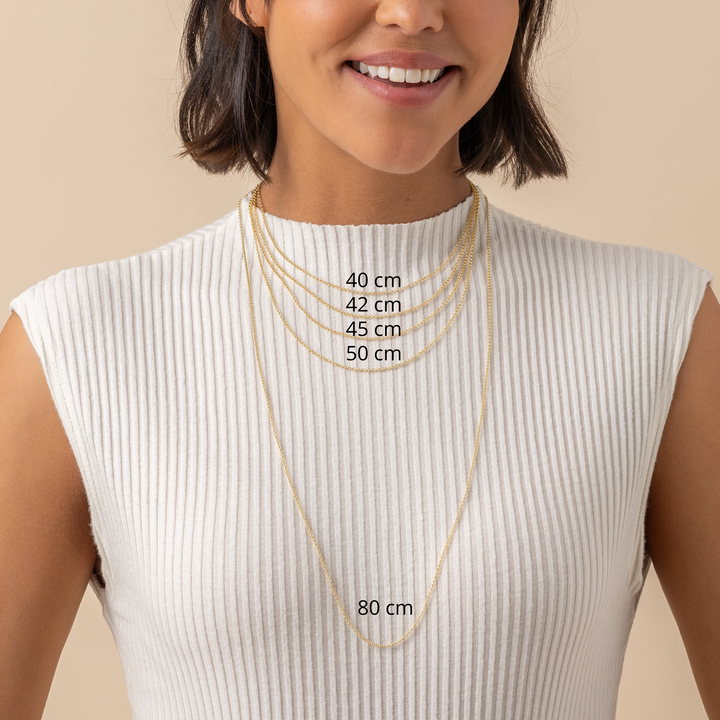
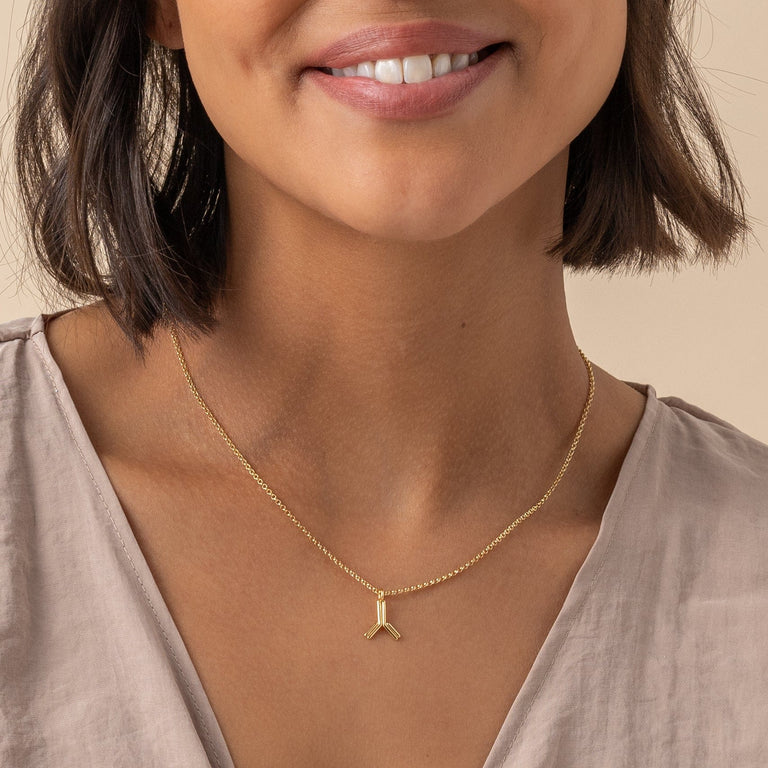
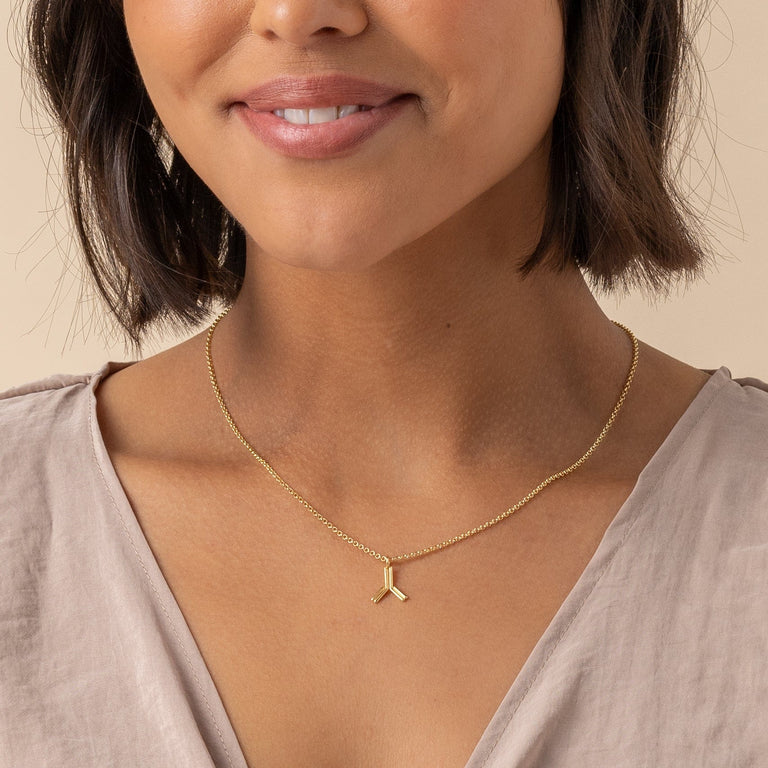
The pendant is 15 mm (about 0.6 inches), a little smaller than a 1-euro-cent coin and smaller than a US dime. It comes on a 45 cm (17.7 inch) gold vermeil chain with a 5 cm (2 inch) extender, so the length adjusts from 45 to 50 cm, and longer chains up to 80 cm can be added on this page. Gold vermeil is 2.5 microns of 18K gold over solid sterling silver, nickel-free and hypoallergenic. To keep the gold bright, store it dry and take it off before swimming.
Is there a silver version, or antibody earrings in gold?
Yes. The same 15 mm antibody necklace comes in sterling silver. Choose the finish she already wears: the design is identical in both. In gold vermeil there are also antibody earrings on leverback hooks (15 mm) and antibody studs (15 × 12 mm). In silver there is an antibody bracelet, and the larger IgM necklace at 32 mm.
Is delivery free, and what if it isn't right?
Yes. DHL Express delivers free in 1-5 business days worldwide, and we pay the import duties and taxes, so nothing is due at the door. It arrives in a ready-to-gift jewelry box and festive envelope. If it isn't right, our 30-day “Love It or Return It” policy applies.
Who first used antibodies to measure hormones in blood?
Rosalyn Yalow and Solomon Berson, at the veterans’ hospital in the Bronx. In 1959 they described radioimmunoassay, a test that uses antibodies to measure insulin in blood at concentrations too low for any earlier method. It became a standard way to measure hormones, and they chose not to patent it. Berson died in 1972. In 1977 Yalow received the Nobel Prize for the method, the second woman to win the prize in medicine. Years earlier she had taken a secretary’s job at Columbia, hoping to get into graduate classes.
Cellular Biology
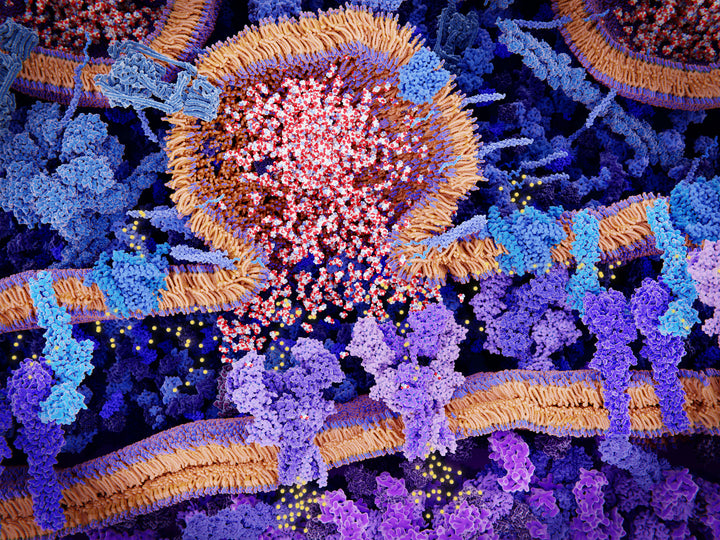
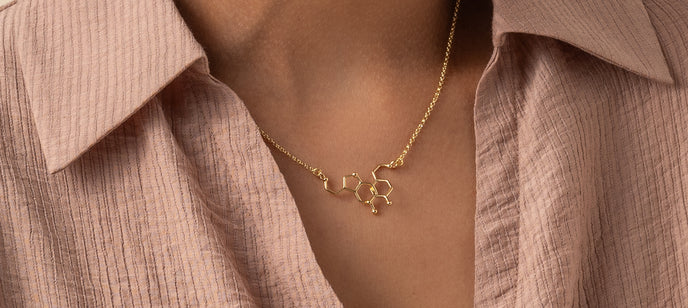
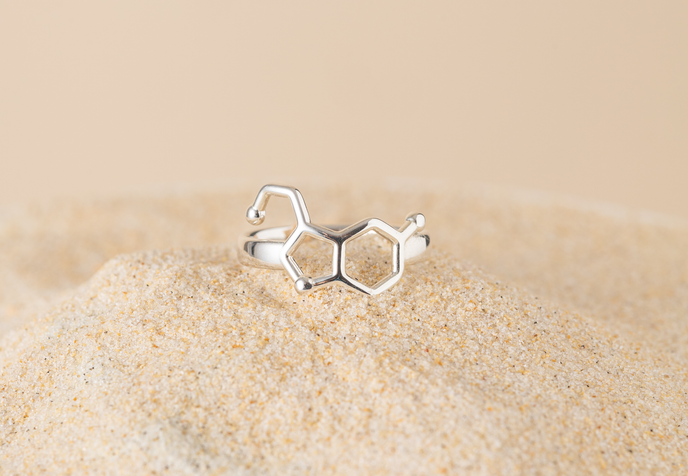
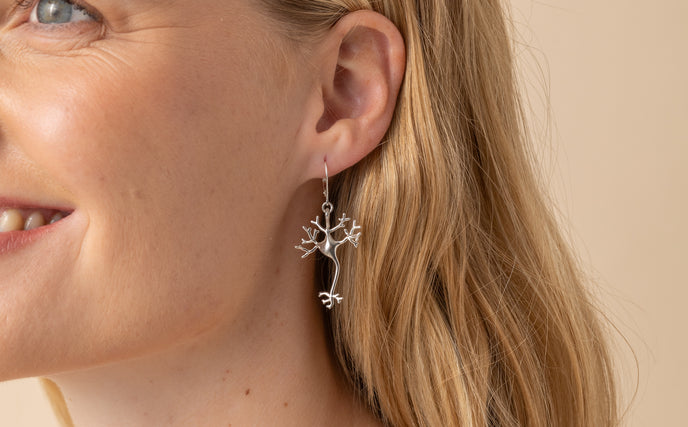
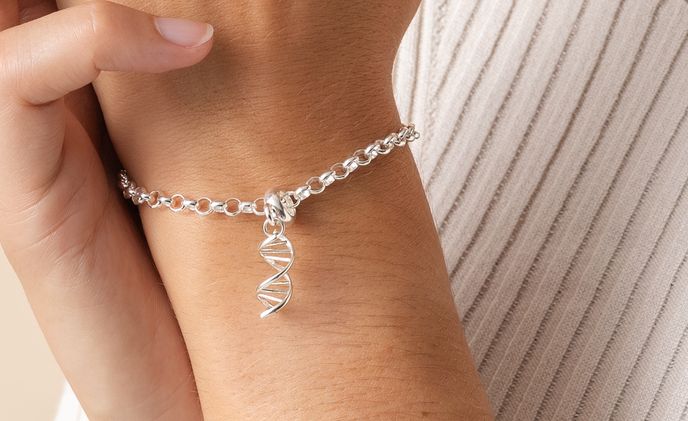
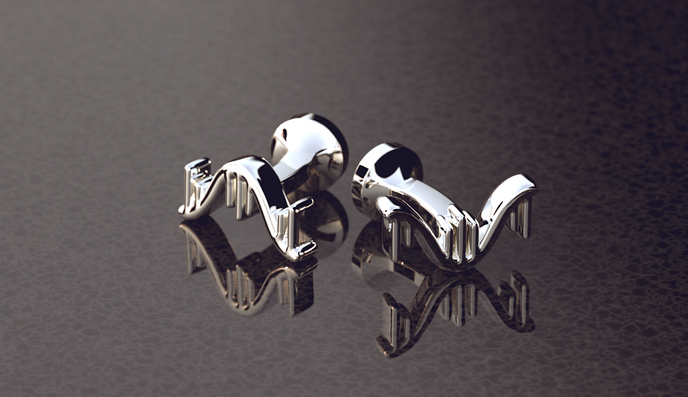
Step into the fascinating world of cellular biology through our unique jewelry designs. These pieces serve as wearable reflections of life's microscopic wonders, capturing the aesthetics of DNA strands, cellular formations, and more. Far from simple adornments, they spark dialogue and honor the captivating complexities found within biological research. Merging scientific accuracy with artistic flair, each creation offers a tactile experience that bridges the gap between scientific inquiry and aesthetic appreciation.
Find your perfect fit: measure an Existing Ring
Finding out your ring size at home is a simple process and can help you shop for jewelry online with confidence.
Necklace length guide