€ 190


Still questions? Contact us
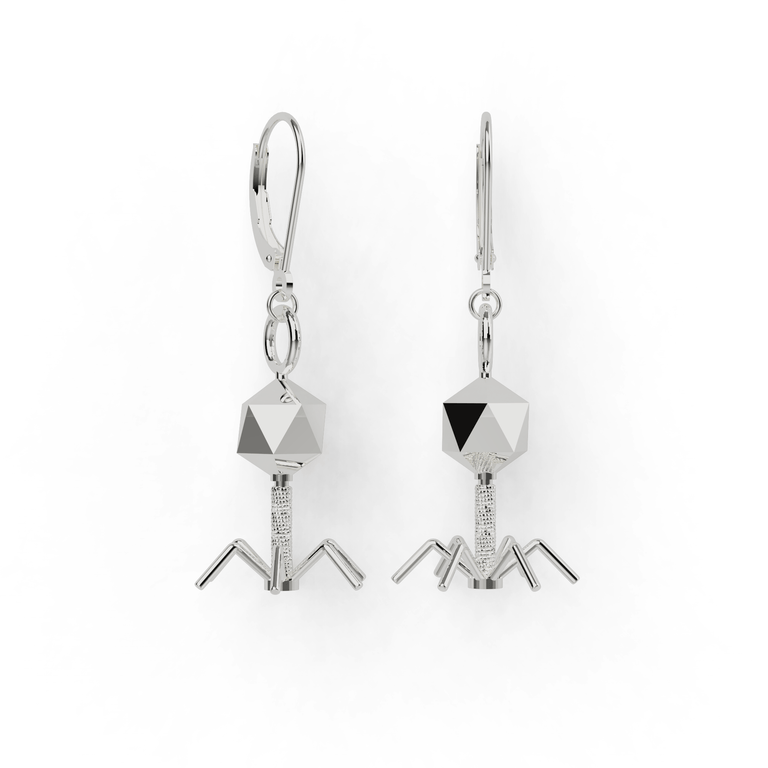
Bacteriophage earrings | sterling silver
If you teach microbiology or molecular biology, the bacteriophage is usually the first model organism you put in front of students. T-series phages taught the field that DNA is the genetic material, that the code is read in triplets, and how a virus actually assembles. Simple enough for a semester, complex enough that phage research still lands in high-impact journals.
The Science of the Bacteriophage
Bacteriophages are viruses that infect bacteria, and they are the most abundant biological entity on Earth. Twort discovered them in 1915. D'Hérelle independently rediscovered and named them two years later. The Hershey-Chase experiment in 1952 used radioactively labelled T2 phage to prove that DNA, not protein, carries genetic information. T4 phage went on to become the model for viral structure, the lytic cycle, and the regulation of replication. Phage display now drives selection of proteins and peptides with specific binding properties. Phage therapy is back in serious clinical conversation as multi-drug resistance worsens, with FDA compassionate-use approvals and active trials. Lysogenic phages and lateral gene transfer remain central to bacterial evolution.
Worn By
The audience clusters around microbiology and virology:
- microbiologists and molecular biologists teaching the central dogma
- phage researchers and phage therapy specialists
- virologists studying viral structure and assembly
- undergraduate biology teachers and doctoral students
- infectious disease pharmacists exploring phage-based therapeutics
Most often given alongside the silver bacteriophage necklace as a paired set for a department gift, or matched with another virus or phage design as a collection.
Explore Related Cellular Biology Jewelry
FAQ
Will a microbiologist recognise this?
Immediately. The T4 phage structure is one of the most iconic images in molecular biology. Anyone who has taught or studied molecular biology, genetics, or virology will recognise it on sight. It reads as a peer-specific piece rather than generic science jewelry, especially for researchers and educators whose work touches phage biology or the history of molecular discoveries.
Why did the Hershey-Chase experiment use phage?
Because phage are simple. T2 phage infect bacteria, inject their genetic material, and take over the cell machinery to make new phages. By labelling phage protein with radioactive sulphur and phage DNA with radioactive phosphorus, Hershey and Chase could track which molecule entered the bacterial cell and directed replication. The radioactive phosphorus alone appeared in the offspring phage, proving DNA was the genetic material. The elegance of the experiment lay in the simplicity of the system and the directness of the question it answered.
What is the size, material, and earring type?
23 mm pendants in 925 sterling silver, nickel-free, with leverback hooks (no posts, no chain). Ships free worldwide via DHL Express in 1-5 business days, with all import duties prepaid. Comes in a ready-to-gift jewelry box with the 30-day “Love It or Return It” policy.
Is there a gold or different format version?
The bacteriophage necklace is available in gold vermeil and silver if a pendant format is preferred. These earrings are leverback hooks only. Custom formats (studs, different materials) can be explored through the custom jewelry form.
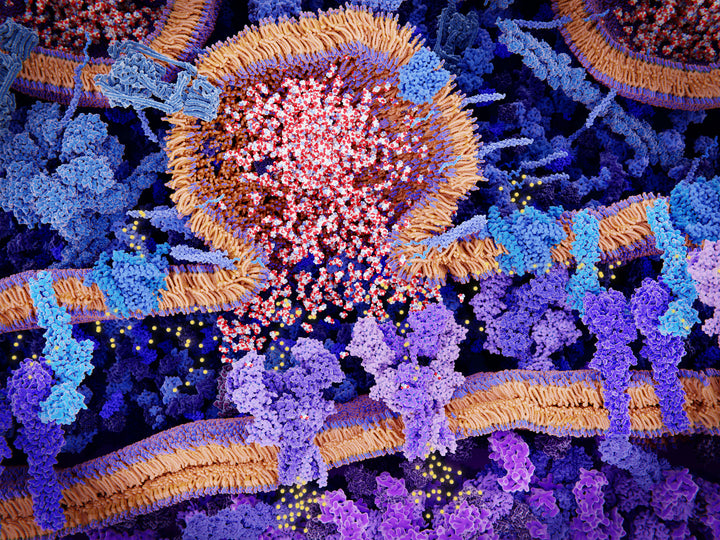
Cellular Biology
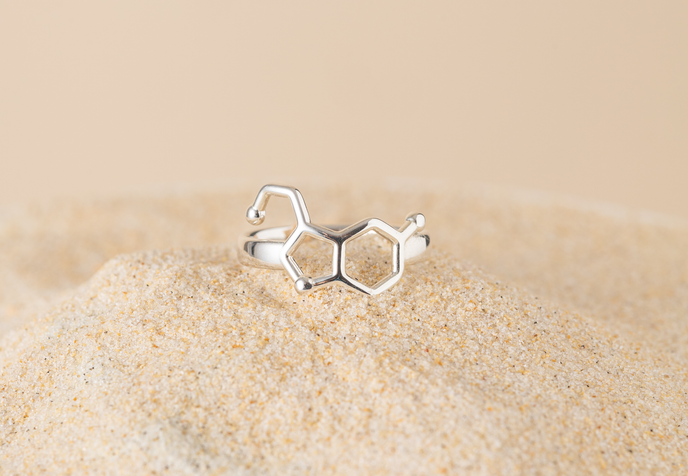
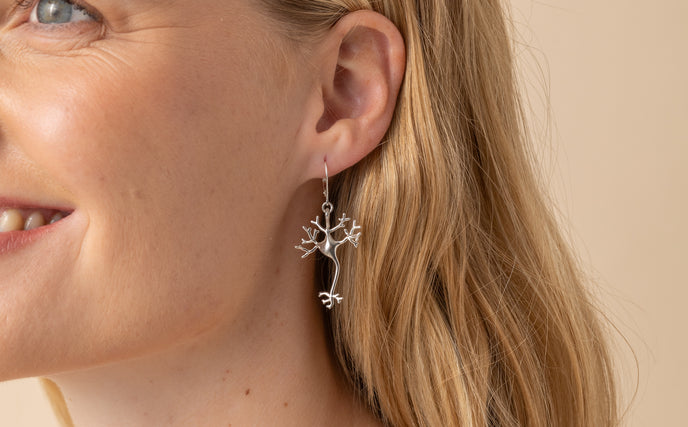
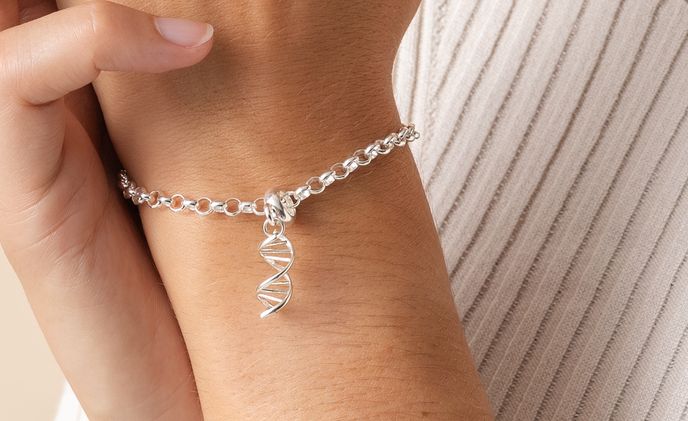
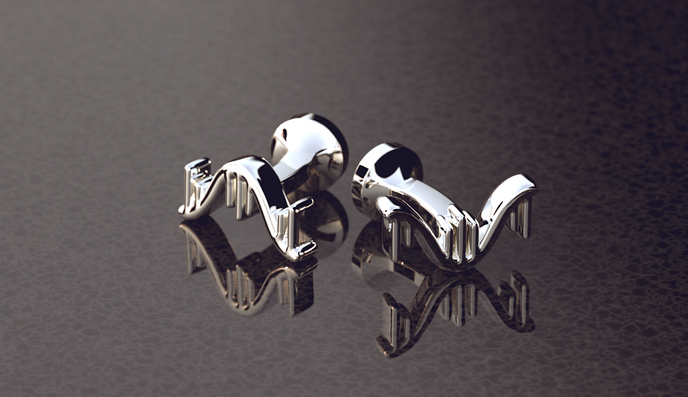
Step into the fascinating world of cellular biology through our unique jewelry designs. These pieces serve as wearable reflections of life's microscopic wonders, capturing the aesthetics of DNA strands, cellular formations, and more. Far from simple adornments, they spark dialogue and honor the captivating complexities found within biological research. Merging scientific accuracy with artistic flair, each creation offers a tactile experience that bridges the gap between scientific inquiry and aesthetic appreciation.
Find your perfect fit
Necklace length guide