€ 270


Still questions? Contact us
brain cufflinks | sterling silver
Brain cufflinks for neuroscientists, neurologists, and the kind of person who reads cortical anatomy for fun. The most metabolically expensive organ you own, with its 86 billion neurons and unmistakable folded surface, scaled down to a pair of cuffs in sterling silver.
The Science Behind the Brain Design
The cerebrum's recognisable folded surface is the result of a developmental constraint: the cortex grows faster than the skull around it, so it folds. The pattern of gyri and sulci is broadly conserved between people but never identical, much like a fingerprint. About 86 billion neurons live in the human brain, with roughly the same number of glial cells, and together they consume around 20% of the body's energy budget while accounting for only 2% of its mass. The basic functional map (frontal, parietal, temporal, occipital lobes) was worked out in the late 19th century by people including Korbinian Brodmann, whose 52 cytoarchitectonic areas are still used in neuroimaging today.
A Meaningful Gift for Science Lovers
For people whose work or curiosity sits at the cortical level.
- neurologists, neuroscientists, and neurosurgeons
- psychiatrists and clinical psychologists
- cognitive scientists and neuroimaging researchers
- medical students who can already point out Broca's area
For the colleague who corrects you politely when you say "left brain, right brain".
Explore Related Neuroscience Jewelry
FAQ
Are these a good gift for a graduating neuroscience PhD?
One of the better choices for that audience. They sit somewhere between formal and personal, which is the right register for a defense party, a postdoc transition, or a thank-you to a supervisor. Specific enough to mean something to a brain person, restrained enough to wear with a normal suit.
Why does the brain look like that?
The cortex grows faster than the skull, so it has to fold to fit. The folds (gyri) and grooves between them (sulci) increase the surface area roughly threefold compared to a smooth brain of the same volume. The major folds are highly conserved between people, which is why neuroanatomists can name landmarks like the central sulcus or the calcarine fissure on any normal brain.
What are the materials and dimensions?
925 sterling silver, polished, nickel-free and hypoallergenic. Standard cufflink fitting that works with any French-cuff shirt. Sterling silver is durable enough for daily use and polishes back up easily if it dulls. Ships free worldwide via DHL Express within 1-5 business days, with all import duties and taxes covered.
Is there a matching necklace?
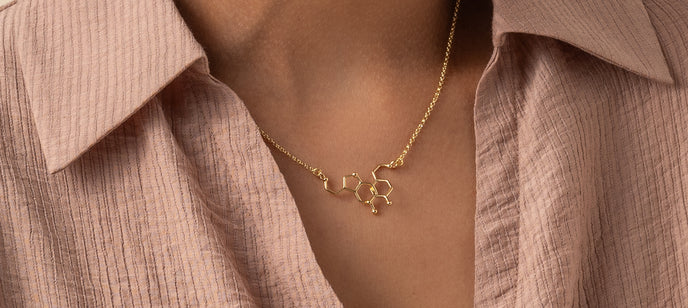
Yes, the same brain design is available as a pendant necklace in both silver and gold vermeil, and as a pair of stud earrings. Mixing the cufflinks with a brain studs gift is a common combination for a partner in the same field.

Neuroscience
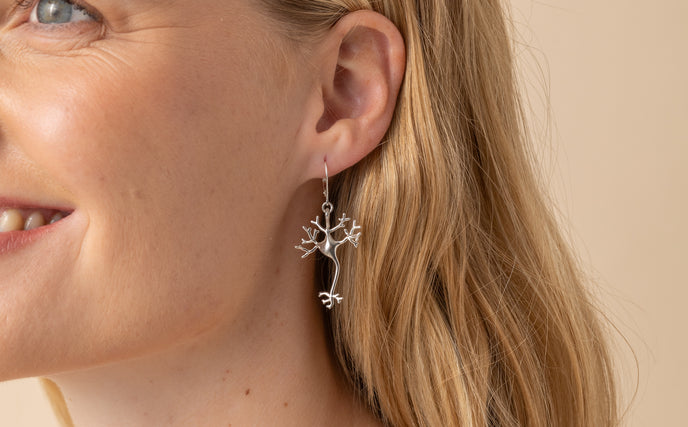
Dive into the intricacies of the human mind with our neuroscience-inspired jewelry collection. Each piece is a tactile ode to the neural networks that shape our thoughts, memories, and consciousness. Crafted with meticulous attention to detail, our designs mirror the dendritic branches and synaptic connections that form the basis of mental activity. With these elegant pieces, wear the enigma of cognition close to your skin, offering a subtle yet profound exploration of what it means to be sentient.
Find your perfect fit
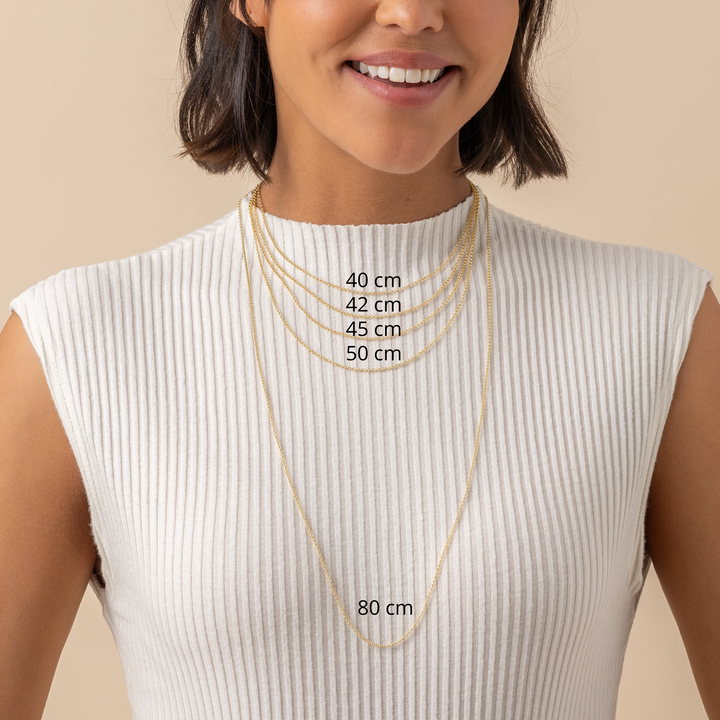
Necklace length guide