€ 200


Still questions? Contact us
Buckyball necklace | sterling silver
In 2010, Kris Sellgren and colleagues reported C60 in a reflection nebula, and a team led by Jan Cami found it around an ageing star. An astronomer who wears her buckyball necklace studies clouds of gas and dust like the two where C60 turned up.
Who It's For
- a sister
- someone turning 60 (C60 has 60 carbon atoms)
- a chemist or a materials scientist
- a chemistry teacher
- yourself, if carbon is part of your work
Marcia M.: “Gift for my sister and she loves it! Better than described and pictured.”
Why Sixty Carbon Atoms Hold Together
Carbon atoms that each bond to three neighbours can close into a hollow cage of five- and six-sided rings. Where two pentagons share an edge, the cage is strained and less stable. The isolated pentagon rule says a stable cage keeps every pentagon ringed by hexagons, and 60 is the smallest number of carbon atoms that can manage it. On paper, 60 atoms can close into 1,812 different cages of pentagons and hexagons. The one with every pentagon kept apart, buckminsterfullerene, is the most stable of them. The next cage that obeys the rule takes 70 atoms.
Explore Related Chemistry Jewelry
- Buckyball necklace | gold vermeil
- diamond crystal structure necklace | silver
- graphite necklace | silver
- atom necklace | silver
FAQ
What size is the pendant, and where does it sit?
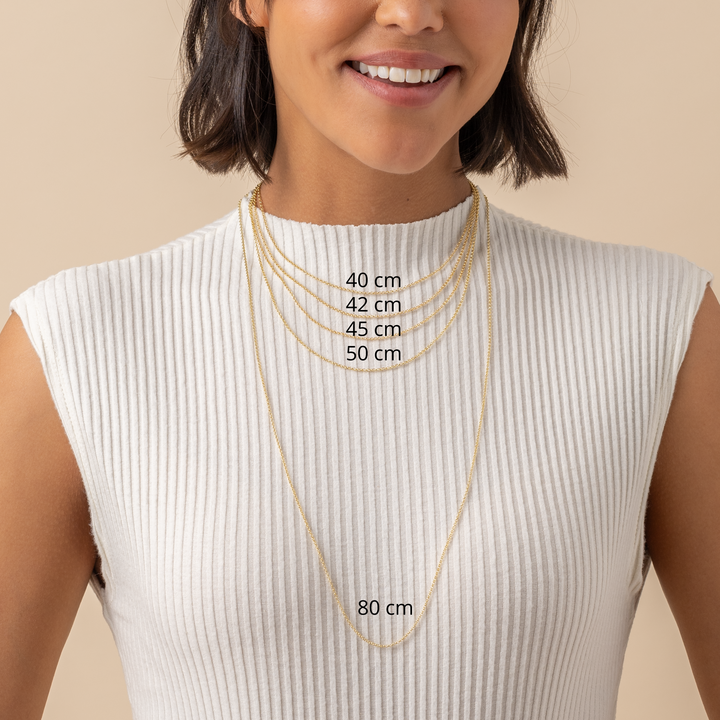
The pendant measures 25 mm (about 1 inch), 0.74 mm more than a US quarter (24.26 mm). It is a round, open cage rather than a flat disc, and it hangs from its top on an 80 cm (31.5 inch) sterling silver chain with a lobster clasp and no extender. On that long chain it falls to about the middle of the chest. Our 925 sterling silver is nickel-free and hypoallergenic.
Is there a gold buckyball necklace?
Yes. The buckyball necklace comes in sterling silver and in 18K gold vermeil, both with a 25 mm pendant on an 80 cm chain with no extender. Choose the finish the recipient already wears. The design is the same in both finishes. For carbon in other forms, the diamond crystal structure necklace (27 mm, on an 80 cm chain) comes in sterling silver and gold vermeil, and the graphite necklace (24 mm, on a 45 cm chain with a 5 cm extender) in sterling silver.
Will it arrive in time, and what if it isn't right?
DHL Express delivers it free worldwide in 1-5 business days, and we pay the import duties and taxes, so nothing is due at the door. It arrives in a ready-to-gift jewelry box and festive envelope. If it isn't right, our 30-day “Love It or Return It” policy applies.
What were the chemists at Rice looking for when they found C60?
Chains of carbon atoms like those detected in space. Harold Kroto, a chemist from the University of Sussex, wanted to make them in the lab, and Richard Smalley and Robert Curl at Rice University had an instrument that could vaporise graphite with a laser. Kroto arrived in late August 1985. With graduate students Jim Heath and Sean O'Brien, the team kept seeing one cluster stand out, with 60 carbon atoms. To explain why it was so stable, they proposed a closed cage of pentagons and hexagons, and named it buckminsterfullerene.

Math & Physics
Unlock the elegance of the abstract with our math and physics-inspired jewelry collection. These carefully crafted pieces mirror the profound equations and natural laws that shape our understanding of the universe. Experience the allure of fractals, the rhythmic beauty of pi, and the celestial wonder of astral formations—each piece serves as a wearable homage to the artistry inherent in scientific inquiry.
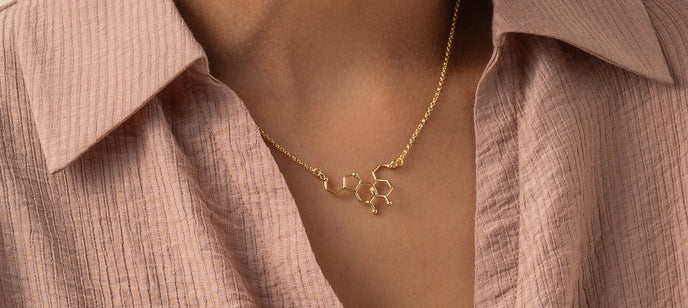
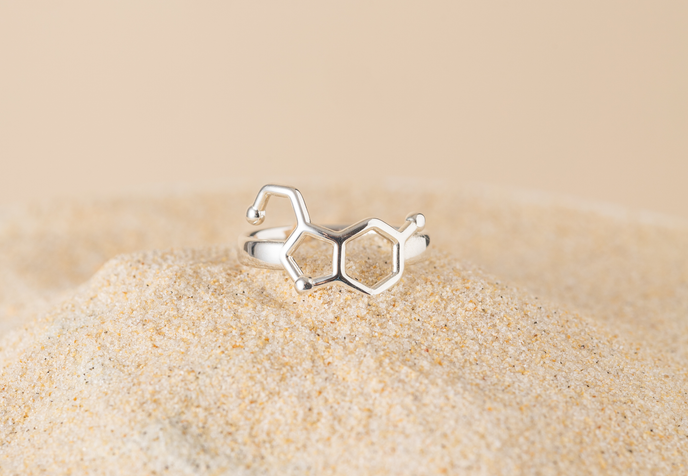

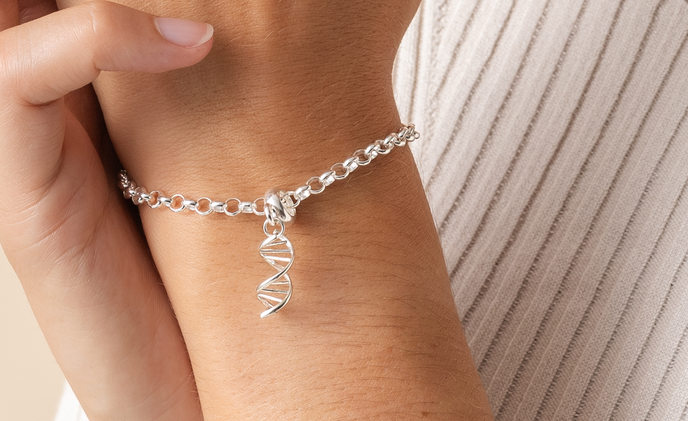
Find your perfect fit: measure an Existing Ring
Finding out your ring size at home is a simple process and can help you shop for jewelry online with confidence.
Necklace length guide