€ 145


Still questions? Contact us
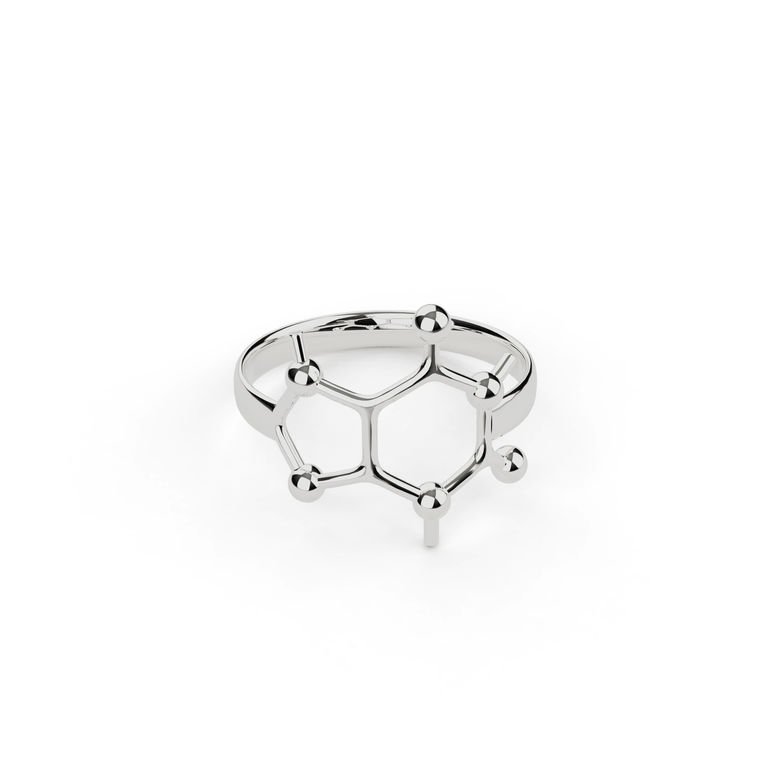
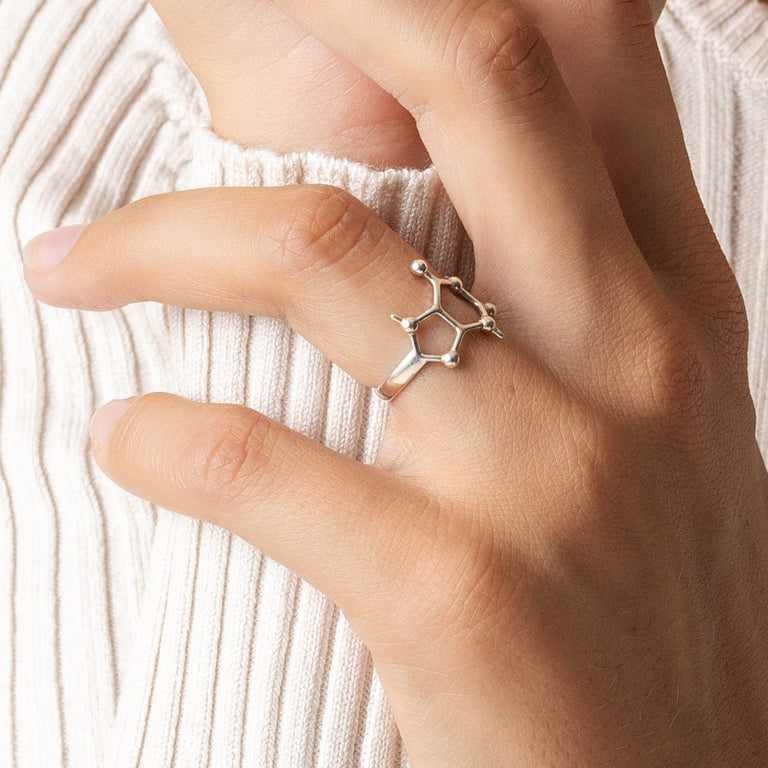
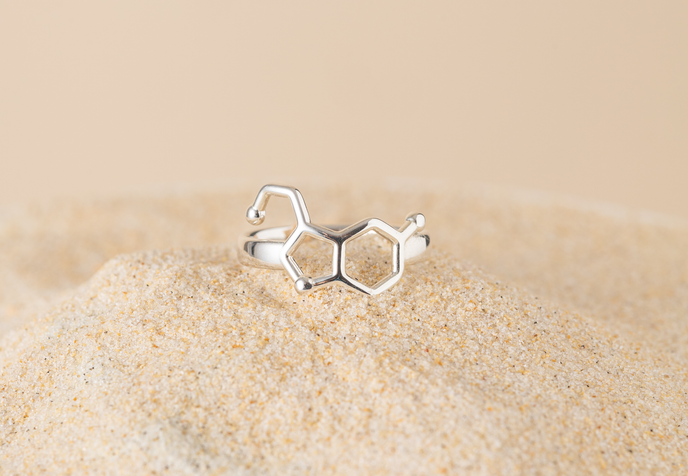
Caffeine ring | sterling silver
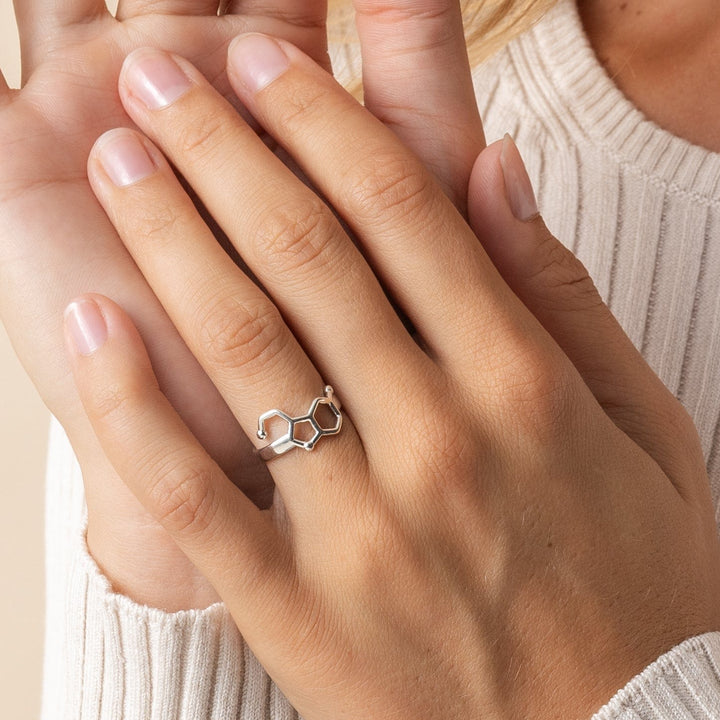
If you cannot read, write, or run a clinic before your second cup, you already know what the ring carries. Caffeine, 1,3,7-trimethylxanthine, the most-consumed psychoactive drug on the planet. Worn here as a sterling silver ring in US sizes 5 to 9.
The Chemistry of Caffeine
Caffeine is 1,3,7-trimethylxanthine, structurally one methyl group more than theobromine (3,7-dimethylxanthine). It was first isolated from coffee beans by Friedlieb Ferdinand Runge in 1819, working in Goethe's lab in Jena after the poet asked him to identify the active component of coffee. The molecule occurs naturally across coffee, tea, cacao, yerba mate, guaraná, kola nuts, and a handful of other plants, where it serves as a defence against insect herbivory. In humans, the primary mechanism is antagonism of the adenosine A1 and A2A receptors, blocking the buildup of adenosine that drives sleep pressure. Half-life sits around 5 hours in healthy adults, with substantial individual variation through CYP1A2 polymorphisms. Caffeine is the most-consumed psychoactive drug worldwide, with an estimated 80% of adults using it daily.
Who Will Recognise It
- chemists working on alkaloid pharmacology or natural-product chemistry
- food scientists and beverage technologists working with coffee, tea, or cacao
- pharmacology students learning the methylxanthine class
- anyone for whom the molecule is the daily working-day starter
For someone who reaches for caffeine when the conversation is about adenosine receptor pharmacology or CYP1A2 metabolism, rather than coffee-shop loyalty cards.
Explore Related Molecules Jewelry
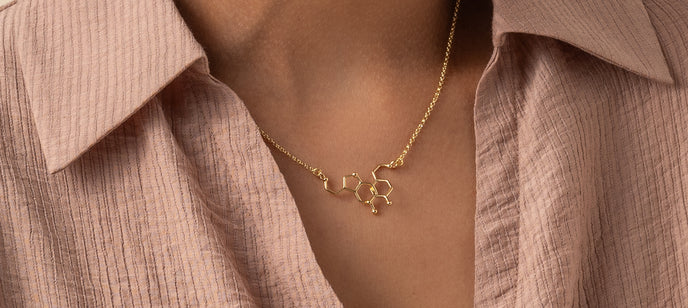
- Caffeine necklace | silver
- Caffeine necklace | gold vermeil
- Theobromine necklace | silver
- Theobromine necklace | gold vermeil
- Dopamine necklace | silver
FAQ
Why a ring rather than the pendant?
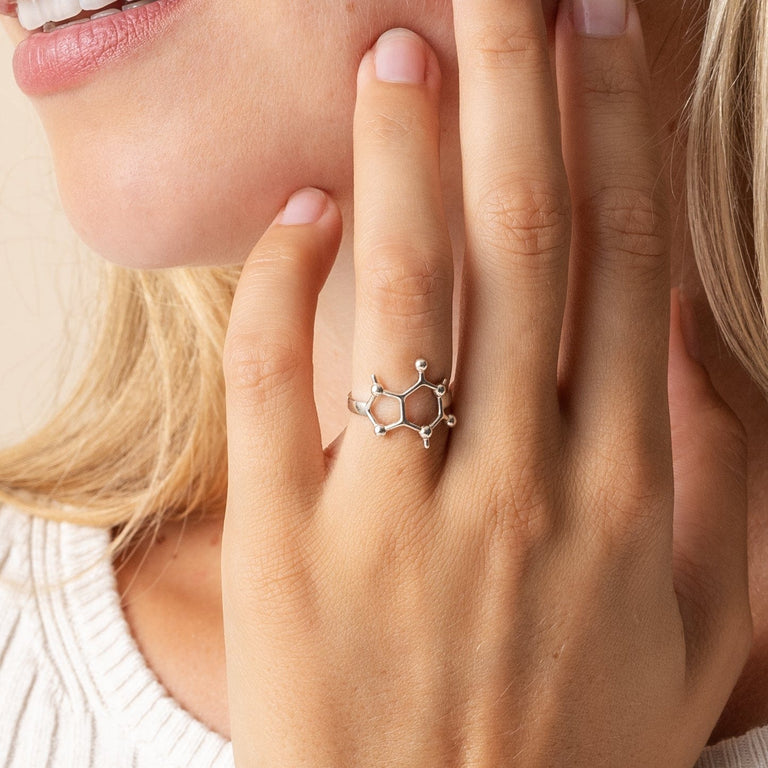
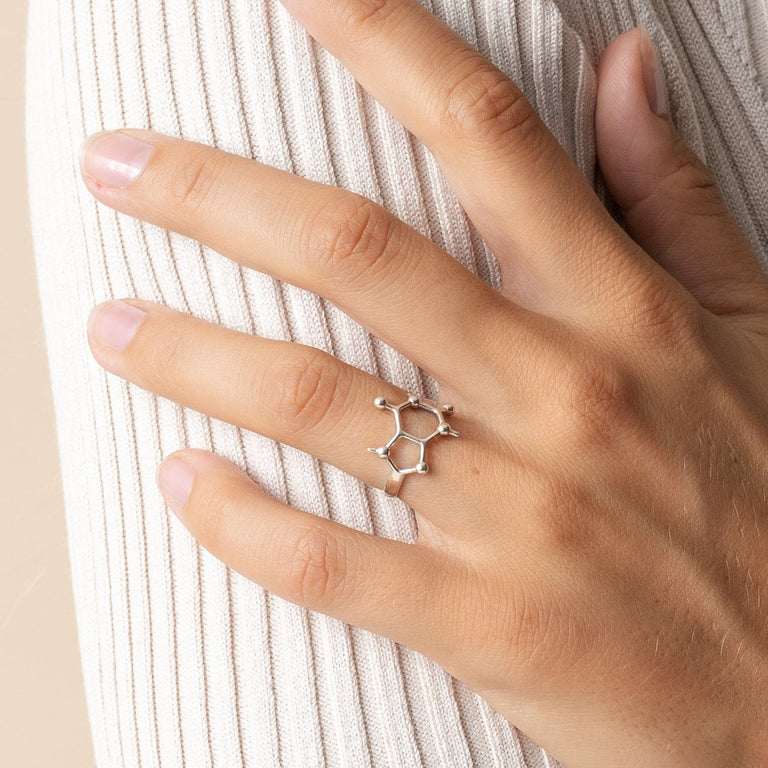
The ring keeps the molecule at hand-distance, where the wearer sees it during ordinary daily use, especially when holding a cup. Pendants for working pharmacology molecules also work, sitting at chest height where they are seen but not focal. The ring scale fits caffeine's daily-companion role differently. Buyers who want a quieter signal than a chest pendant tend to start with the ring.
How does caffeine differ from theobromine pharmacologically?
One methyl group, three substantial differences. Caffeine has the N1 methyl that theobromine lacks, which makes caffeine a more potent adenosine antagonist and a more wakeful stimulant. Caffeine also crosses the blood-brain barrier faster and produces clearer central-nervous-system effects, while theobromine has stronger vasodilatory and diuretic actions. Both molecules co-occur in cacao, with the ratio depending on the cacao variety and processing. The methyl-position difference between the two is one of the cleanest small-molecule pharmacology examples in the textbook.
What sizes are available and what is the return policy?
925 sterling silver, available in US ring sizes 5, 6, 7, 8, and 9. Nickel-free and hypoallergenic, no chain. Free worldwide DHL Express in 1-5 business days, with all import duties and taxes covered. 30-day “Love It or Return It” returns.
Are there other formats of caffeine?
Yes, two pendants. Caffeine is available as a silver pendant and as a gold vermeil pendant, both at chest-pendant scale. The ring is the daily-wear hand-distance format, picked by buyers who want the molecule visible during work rather than from across a room.
Molecules
Delve into the hidden elegance of science with our meticulously crafted jewelry, inspired by the intricate structures of chemical molecules. Each piece serves as a tactile tribute to the building blocks of life and matter, capturing the allure of atoms and bonds in precious metals. A harmonious fusion of art and science, these creations are more than mere accessories; they're a celebration of the enigmatic beauty that underpins our universe.
Find your perfect fit
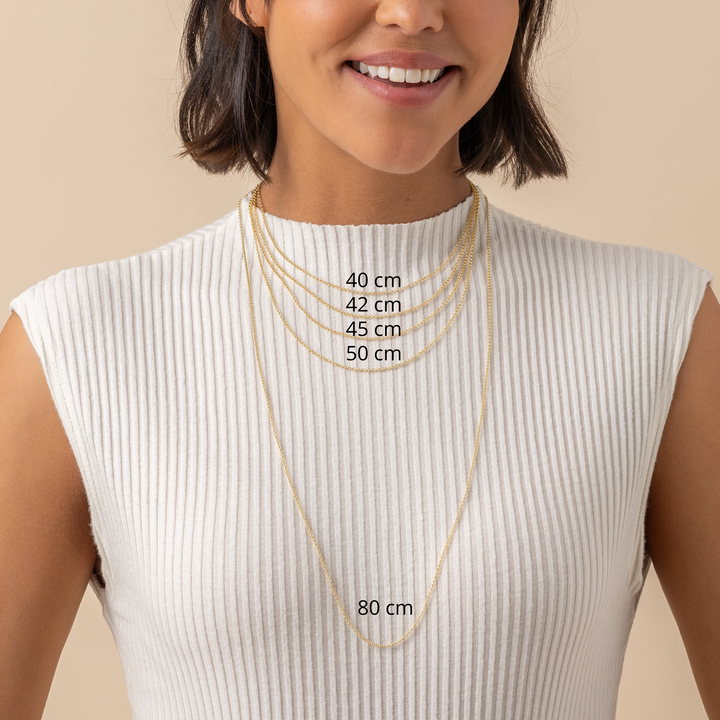
Necklace length guide