€ 220


Still questions? Contact us
Clathrin coated vesicle necklace | sterling silver
If you teach endocytosis, you have probably drawn a clathrin lattice on a whiteboard a hundred times. The triskelion-built cage that pulls a patch of plasma membrane inward to make a vesicle, the structure that explains how cells pull receptors, nutrients, and viral particles into their interior.
The Science of Clathrin-Mediated Endocytosis
Clathrin is a triskelion: three heavy chains and three light chains assembled into a three-legged structure that polymerises into a curved hexagonal-pentagonal lattice on the cytoplasmic face of the plasma membrane. The lattice deforms the membrane inward, recruiting cargo via adaptor protein complexes (AP2 at the plasma membrane, AP1 at the trans-Golgi). Once the bud is mature, dynamin pinches the neck and releases a clathrin-coated vesicle into the cytoplasm. The clathrin coat depolymerises within seconds, releasing the vesicle for fusion with the early endosome. This pathway handles transferrin uptake, LDL cholesterol uptake (a defect in LDL receptor endocytosis causes familial hypercholesterolaemia), G-protein-coupled receptor desensitisation, and viral entry for many viruses including influenza and SARS-CoV-2 in some cell types. The clathrin lattice is one of the most studied symmetric protein assemblies in cell biology and one of the first traffic mechanisms taught in any cell-biology block.
A Quiet Symbol For
The audience clusters around membrane traffic and endocytosis:
- cell biologists studying membrane trafficking and endocytic pathways
- structural biologists working on clathrin or adaptor complexes
- pharmacologists working on receptor internalisation and drug delivery
- virologists studying clathrin-dependent viral entry
- biochemistry educators who teach endocytosis as a textbook example
The clathrin pendant tends to be a peer-recognition gift inside cell biology, picked specifically because the structure is one most people in the field can sketch from memory.
Explore Related Cellular Biology Jewelry
- Clathrin coated vesicle necklace | gold vermeil
- Membrane necklace | silver
- Mammalian cell necklace | silver
- Nuclear pore necklace | silver
- Microtubule necklace | silver
FAQ
Why is the clathrin lattice always drawn with hexagons and pentagons?
Because that is the geometry that closes a curved surface. A flat lattice can be made entirely of hexagons (think of a honeycomb), but you cannot wrap a sphere with hexagons alone. Pentagons introduce the curvature needed to close the cage, in the same way they appear on a soccer ball or a fullerene carbon molecule (C60). Clathrin lattices on flat membranes have more hexagons. Clathrin cages around budded vesicles necessarily contain twelve pentagons. Once you see this, you understand why every clathrin diagram looks like a partially closed soccer ball.
What does clathrin biology have to do with clinical medicine?
More than most people expect. Familial hypercholesterolaemia, the inherited disease that causes early heart attacks, is fundamentally a defect in clathrin-mediated endocytosis of the LDL receptor. Many GPCR-targeted drugs (beta-blockers, opioids) work in part by triggering clathrin-mediated receptor internalisation. Several enveloped viruses use clathrin pathways to enter cells. Understanding traffic at this level matters for cardiology, pharmacology, and virology together.
What is the size, material, and chain?
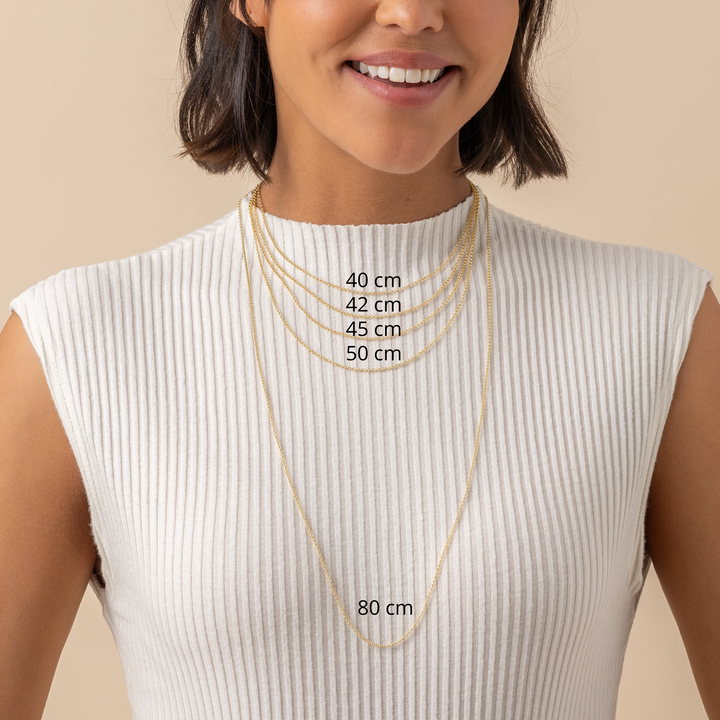
19 mm pendant in 925 sterling silver, nickel-free. 45 cm sterling silver chain with a 5 cm extender. Ships free worldwide via DHL Express in 1-5 business days, with all import duties prepaid. Comes in a ready-to-gift jewelry box with the 30-day “Love It or Return It” policy.
Is there a gold version?
Yes. The same 19 mm clathrin pendant is available in 18K gold vermeil at the same chain length. Same lattice, different metal, different occasion.
Cellular Biology
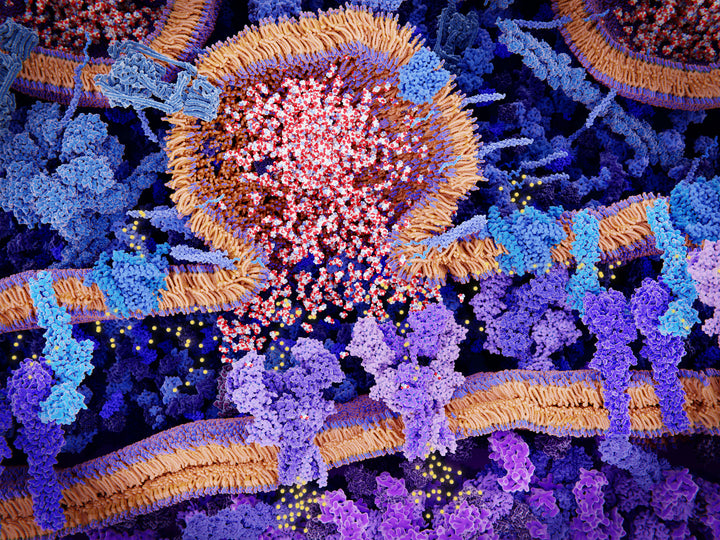
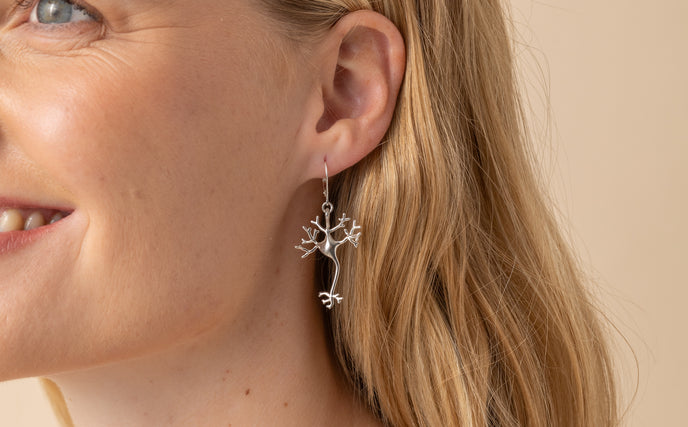
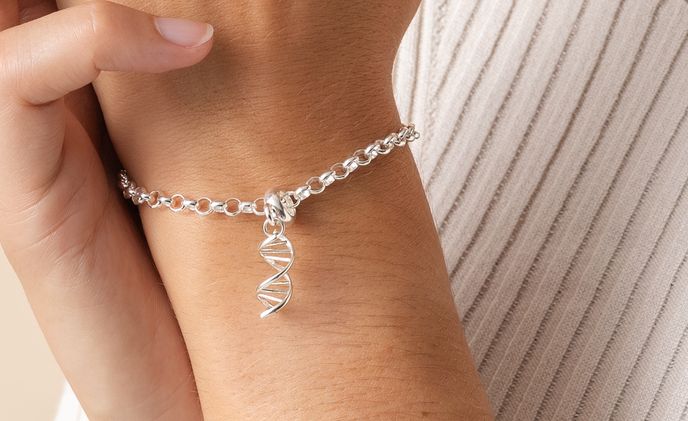
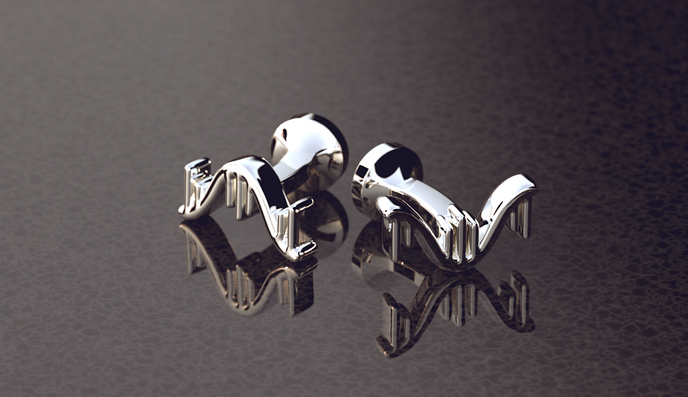
Step into the fascinating world of cellular biology through our unique jewelry designs. These pieces serve as wearable reflections of life's microscopic wonders, capturing the aesthetics of DNA strands, cellular formations, and more. Far from simple adornments, they spark dialogue and honor the captivating complexities found within biological research. Merging scientific accuracy with artistic flair, each creation offers a tactile experience that bridges the gap between scientific inquiry and aesthetic appreciation.
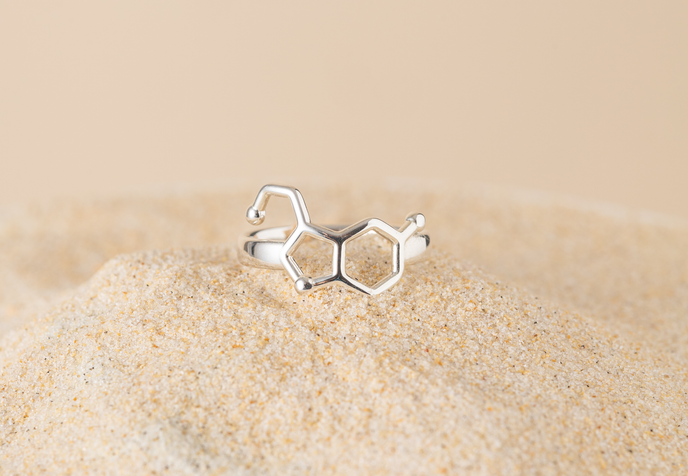
Find your perfect fit: measure an Existing Ring
Finding out your ring size at home is a simple process and can help you shop for jewelry online with confidence.
Necklace length guide