€ 140


Still questions? Contact us
Cloning vector necklace | sterling silver
In 1973, Stanley Cohen and Herbert Boyer ligated foreign DNA into a bacterial plasmid and recovered functional protein expression in E. coli, the experiment that founded recombinant DNA biology. The cloning vector is the iconic circular plasmid that made the field workable. Worn here as a 20 mm sterling silver pendant.
The Science Behind the Cloning Vector
A cloning vector is a small circular piece of DNA that carries foreign DNA into a bacterial host for replication and analysis. The classic plasmid vectors carry three essential features: an origin of replication that lets the host bacteria copy the plasmid, a selectable marker (usually antibiotic resistance) that lets researchers select for cells that took up the plasmid, and a multiple cloning site with restriction enzyme recognition sequences for inserting the gene of interest. pBR322 (1977) and pUC19 (1985) were the historical workhorses. Modern vectors include shuttle vectors that move between bacterial and mammalian hosts, expression vectors with strong promoters for protein production, and lentiviral vectors for stable integration into mammalian genomes. The Cohen-Boyer 1973 experiment that founded the field used pSC101, an early plasmid carrying tetracycline resistance.
Who Reaches For This
- molecular biologists and biochemists running cloning workflows
- protein expression scientists and biopharmaceutical researchers
- core-facility scientists managing plasmid libraries
- genetics educators teaching recombinant DNA at any level
For someone who reaches for the cloning vector when the conversation is about Cohen and Boyer in 1973, not a generic helix-shaped reference to genetics.
Explore Related Medical & Lab Tools Jewelry
- Cloning vector earrings | silver
- Cloning vector necklace | gold vermeil
- CRISPR necklace | silver
- shRNA necklace V | silver
- Eppendorf necklace | silver
FAQ
Will a working molecular biologist find this too literal?
Working molecular biologists tend to be the ones picking it up. Plasmid maps are the daily working object for anyone running cloning workflows or maintaining a strain collection. The pendant reads as identification, not curiosity. Core-facility scientists, biopharma researchers, and genetics educators react the same way. Anyone outside the field is more likely to read it as a stylised circle, which is fine.
Why does the cloning vector matter when CRISPR can do gene editing in place?
Because most CRISPR experiments still depend on plasmid vectors to deliver Cas9 and the guide RNA, and a substantial fraction of molecular biology runs on cloned constructs that have nothing to do with gene editing: protein expression, reporter assays, library construction, recombinant antibody production. The cloning vector predates CRISPR by forty years and continues to underpin the workflows that CRISPR sits on top of. The two technologies are complements, not competitors.
What size is the pendant and what chain comes with it?
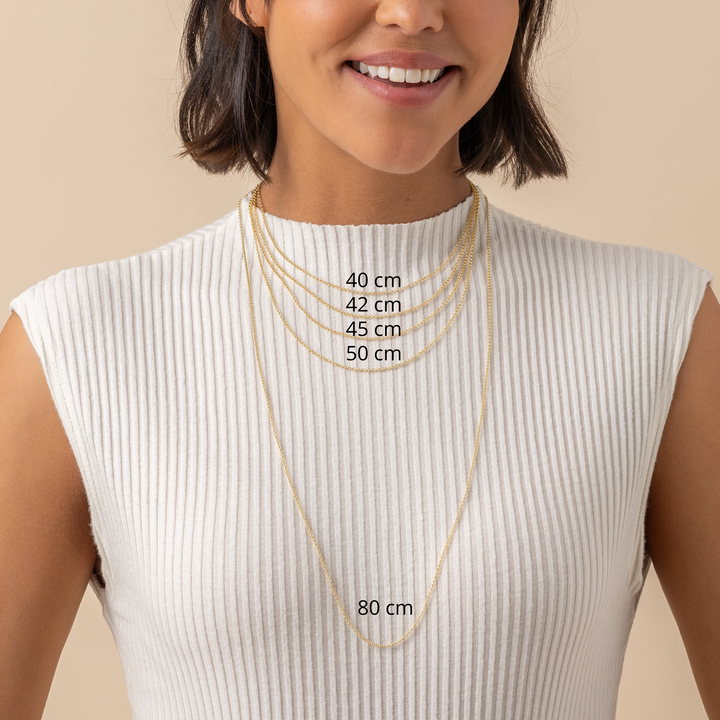
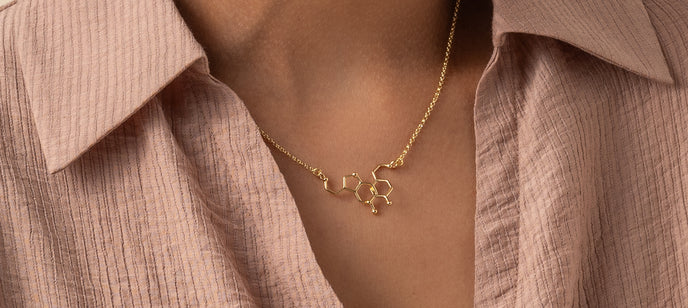
925 sterling silver, 20 mm pendant on a 45 cm sterling silver chain with a 5 cm extender. Smaller scale than most pieces in the catalogue, sits as a quiet daily-wear pendant. Nickel-free and hypoallergenic. Free worldwide DHL Express in 1-5 business days, with all import duties and taxes covered. 30-day “Love It or Return It” returns.
Is there a gold version, or matching earrings?
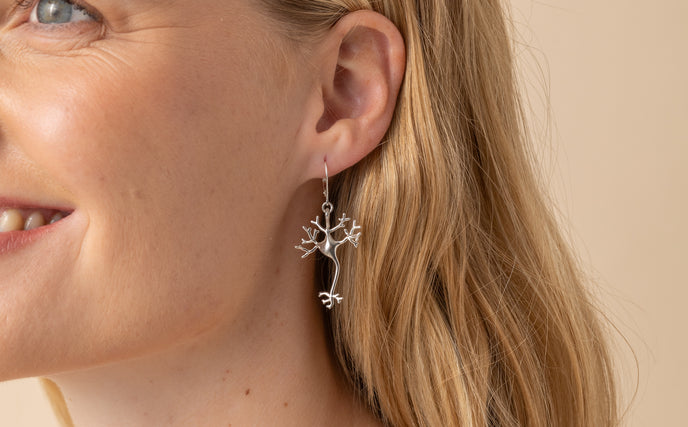
Both. The same cloning vector is available in 18K gold vermeil as a pendant and as silver leverback earrings. The three formats sometimes go together as a set for a graduation gift to a working molecular biologist.

Medical & Lab tools
Dive into the captivating world of science-inspired jewelry, where intricate designs meet the essence of medical and laboratory tools. These masterfully crafted pieces act as subtle yet striking tributes to the instruments that have paved the way for scientific discovery. From DNA helices to microscope charms, each piece serves as a conversation starter, a talisman, and a small monument to human ingenuity. They're not just accessories; they're wearable artifacts that tell a story of scientific exploration and advancement.
Find your perfect fit: measure an Existing Ring
Finding out your ring size at home is a simple process and can help you shop for jewelry online with confidence.
Necklace length guide