
€ 190


Still questions? Contact us
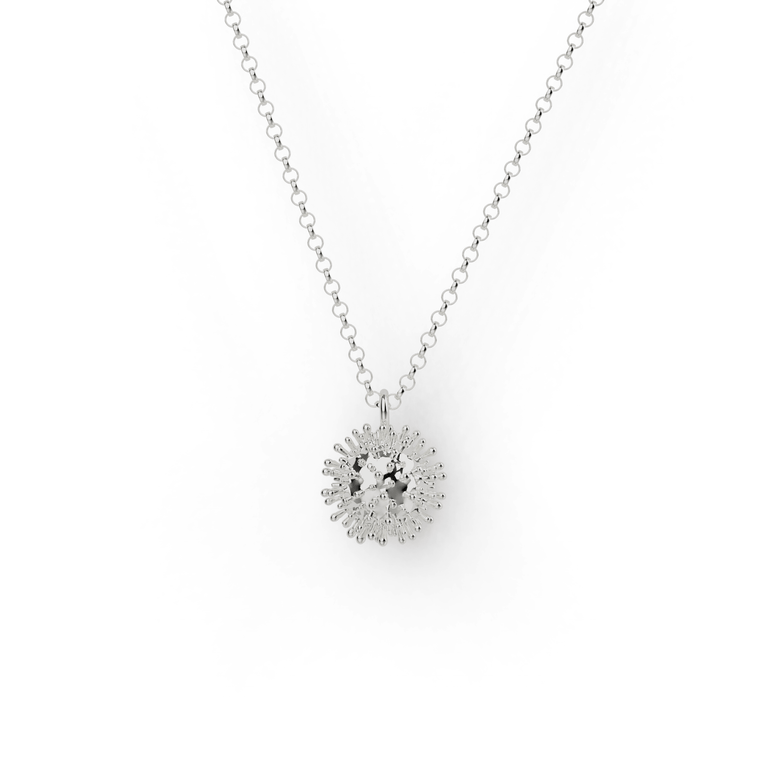
Coronavirus necklace | sterling silver
Five years ago, almost no one outside of virology used the term RBD or knew what cryo-EM could resolve in three weeks. Then a coronavirus cycled from genome sequence to global vaccine to variant tracker in real time, with biology, medicine, and public health watching every step. This piece marks that period in scientific history.
The Science of the Coronavirus
Coronaviruses are enveloped, positive-sense single-stranded RNA viruses with genomes of 26-32 kilobases, among the largest in the RNA virus world. The viral envelope is studded with spike (S) proteins that bind host receptors to initiate infection, along with membrane (M), envelope (E), and nucleocapsid (N) proteins. SARS-CoV-2 uses the spike protein to bind ACE2 receptors on respiratory epithelial cells. The spike protein is trimeric, approximately 1,200 amino acids per monomer, with a receptor-binding domain at its tip. The crown-like cluster of spike trimers on the virion surface gives the family its name: corona, Latin for crown. The spike protein became the primary target of COVID-19 vaccines.
A Meaningful Gift for Science Lovers
- virologists, immunologists, and infectious disease researchers
- vaccine developers and structural biologists who worked on spike protein
- epidemiologists who track pandemic diseases
- scientists who want to carry a reminder of the last years' discoveries
Explore Related Cellular Biology Jewelry
- Coronavirus necklace | gold vermeil
- Bacteriophage necklace | gold vermeil
- West Nile virus necklace | silver
- Ebola virus necklace | silver
FAQ
Is this appropriate for someone who worked through the pandemic?
Yes. Virologists, vaccine developers, and infectious disease researchers who worked on SARS-CoV-2 will recognise the spike protein immediately. The piece is a scientific achievement, not a reminder of hardship.
Why is the spike protein so important structurally?
Because it is what the virus uses to attach to and enter human cells. Understanding its structure (via cryo-electron microscopy) led directly to vaccine design. Scientists worldwide worked to map it, and every vaccine developed targets it. The spike protein is the key that opened the door to pandemic control.
What is the size, material, and chain?
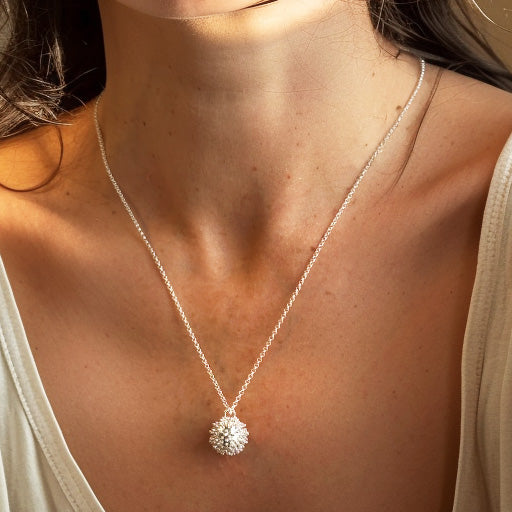
16 mm pendant in 925 sterling silver, nickel-free and hypoallergenic. 45 cm sterling silver chain with 5 cm extender. Ships free worldwide via DHL Express in 1-5 business days, with all import duties prepaid. Comes in a ready-to-gift jewelry box with the 30-day “Love It or Return It” policy.
Is there a gold version?
Yes. Coronavirus is available in 18k gold vermeil at the same 16 mm size. Both versions work as personal recognition pieces or gifts for colleagues in virology and immunology.
Cellular Biology
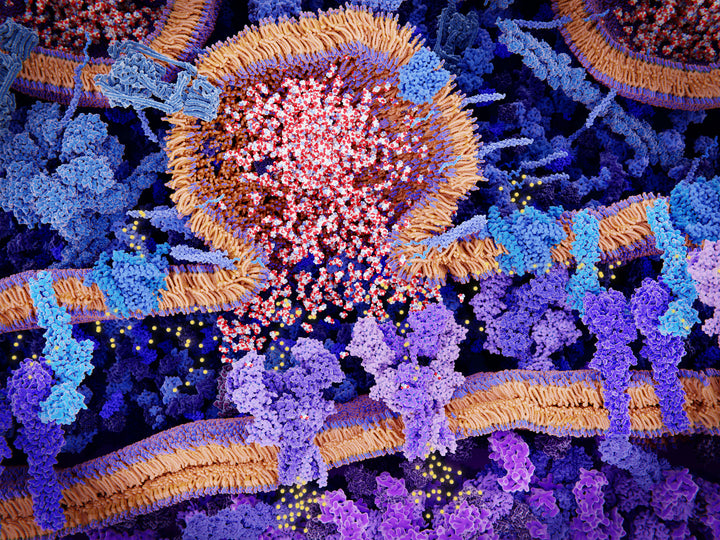
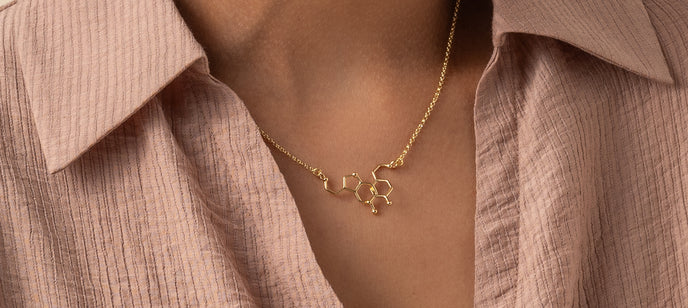
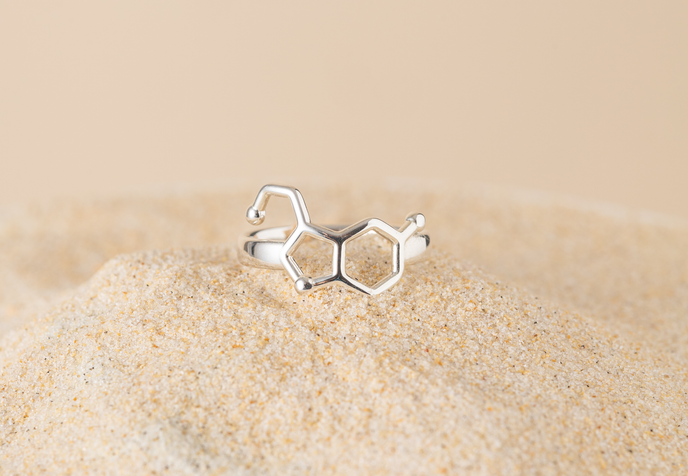
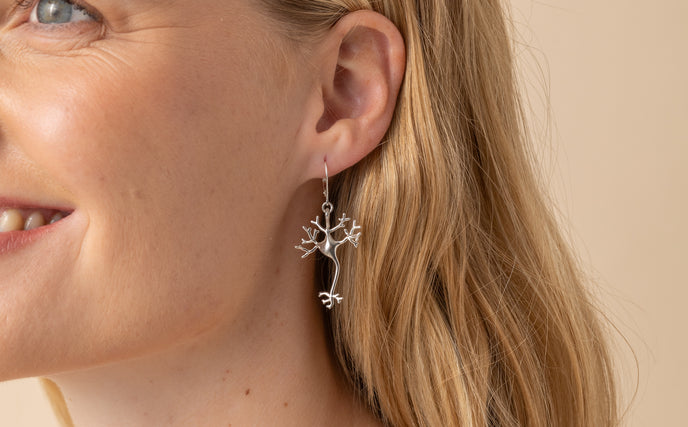
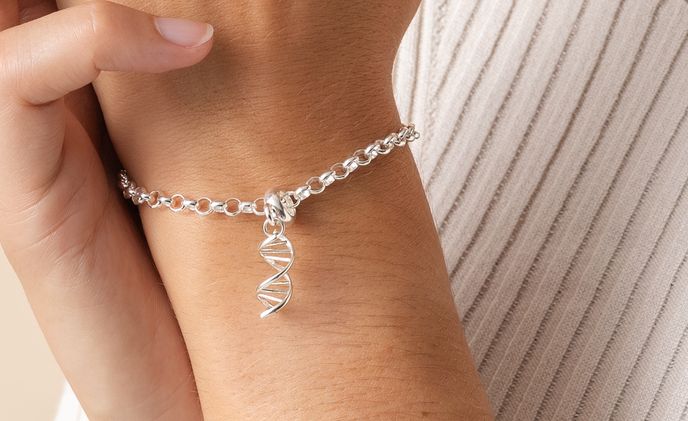
Step into the fascinating world of cellular biology through our unique jewelry designs. These pieces serve as wearable reflections of life's microscopic wonders, capturing the aesthetics of DNA strands, cellular formations, and more. Far from simple adornments, they spark dialogue and honor the captivating complexities found within biological research. Merging scientific accuracy with artistic flair, each creation offers a tactile experience that bridges the gap between scientific inquiry and aesthetic appreciation.
Find your perfect fit: measure an Existing Ring
Finding out your ring size at home is a simple process and can help you shop for jewelry online with confidence.
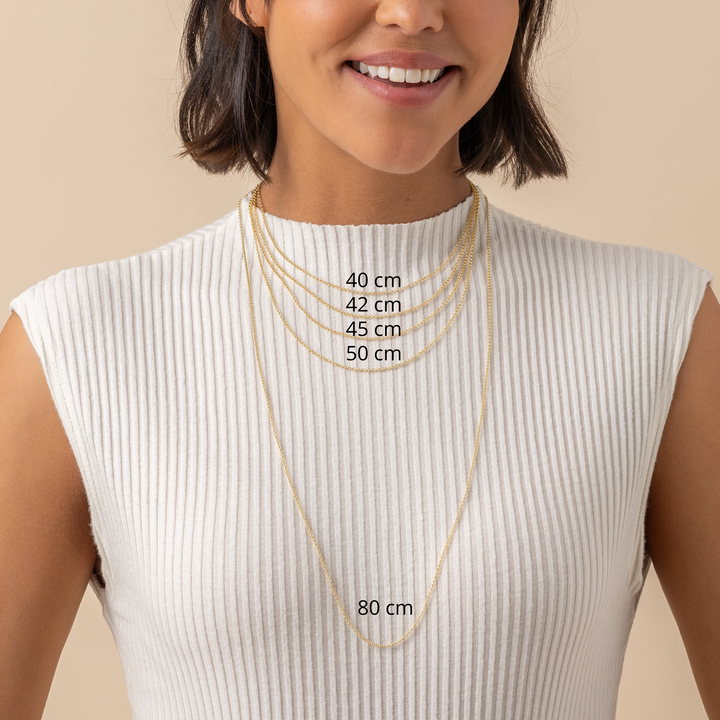
Necklace length guide