€ 150


Still questions? Contact us
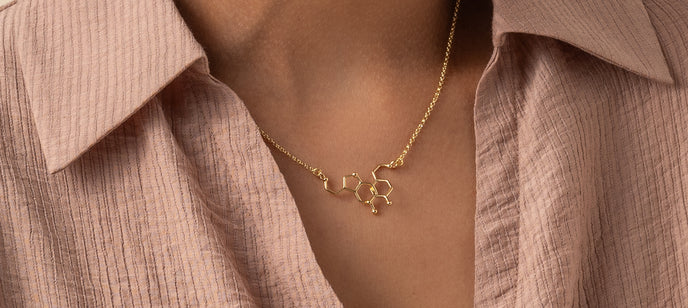
Cystine necklace | sterling silver
Cystine is what happens when two cysteine amino acids find each other and lock together through their sulfurs. The disulfide bridge they create is one of the most quietly important covalent bonds in biochemistry, the bond that lets folded proteins keep their shape across the conditions of the cell.
The Chemistry of Cystine
Disulfide bonds form when the thiol groups of two cysteine residues are oxidised, releasing two hydrogens and creating a covalent S-S bridge. In the endoplasmic reticulum of secretory cells, this oxidation is catalysed by protein disulfide isomerase, and correct disulfide formation is essential for the function of every secreted protein. Insulin contains three disulfide bonds. Antibody molecules contain dozens. Hair keratin owes its tensile strength almost entirely to disulfide cross-linking, and perms and chemical relaxers work by selectively breaking and reforming these bonds in new geometries. Cystinuria, a kidney disorder caused by defective amino acid transport, leads to cystine kidney stones because cystine is among the least soluble amino acids.
Who Will Recognise It
Recognition is mostly professional rather than gift-driven.
- biochemists and structural biologists working on disulfide chemistry
- researchers in protein folding, ER biology, or insulin biology
- chemistry students focused on biological macromolecules
- anyone for whom hair chemistry, antibodies, or insulin disulfides matter professionally
Explore Related Molecules Jewelry
FAQ
Is cystine a gift a biochemist would actually wear?
If their work involves protein folding, antibody engineering, or any aspect of disulfide chemistry, yes. Cystine sits at the heart of structural biochemistry, and the dimer geometry is recognisable on sight to anyone who has spent time staring at protein structures.
Why is cystine drawn as two amino acids joined together?
Because that is what it is. Cystine is the oxidised dimer of two cysteines, linked by an S-S bond. The dimer geometry is the chemical identity. Drawing cystine as a single amino acid would be drawing cysteine, which is the reduced monomer.
What about the size, material, and chain?
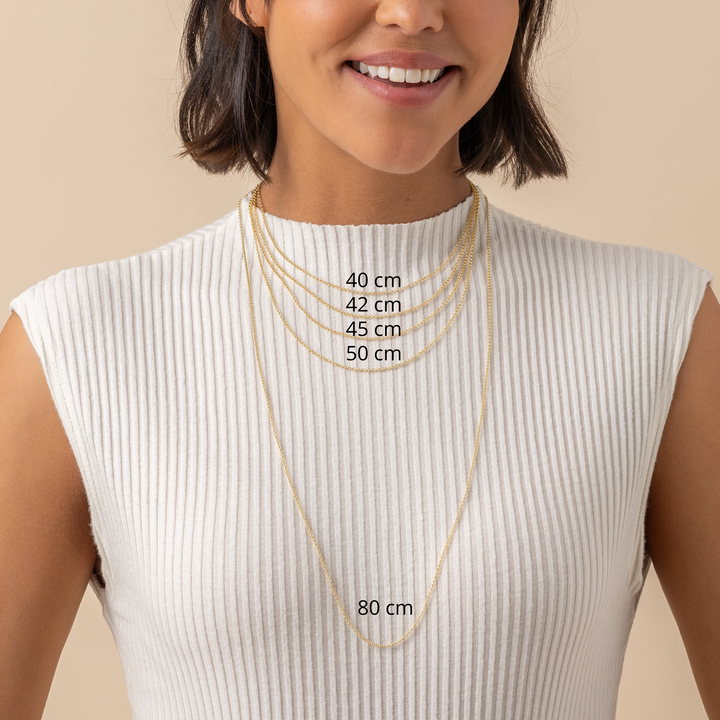
32 mm pendant in 925 polished sterling silver, nickel-free. 45 cm sterling silver chain with a 5 cm extender. Free worldwide DHL Express, 1-5 business days, duties and taxes covered. 30-day “Love It or Return It” policy.
Where does cystine show up in everyday biology?
Hair, antibodies, insulin, and the structural integrity of every secreted protein. Most people interact with cystine chemistry every time they get a perm, take an injection of biologic medicine, or have an antibody-based diagnostic done. The bond is invisible but everywhere.
Molecules
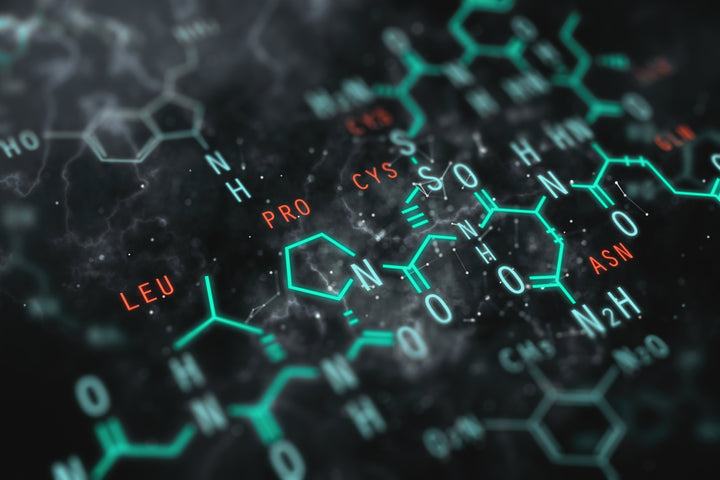
Delve into the hidden elegance of science with our meticulously crafted jewelry, inspired by the intricate structures of chemical molecules. Each piece serves as a tactile tribute to the building blocks of life and matter, capturing the allure of atoms and bonds in precious metals. A harmonious fusion of art and science, these creations are more than mere accessories; they're a celebration of the enigmatic beauty that underpins our universe.
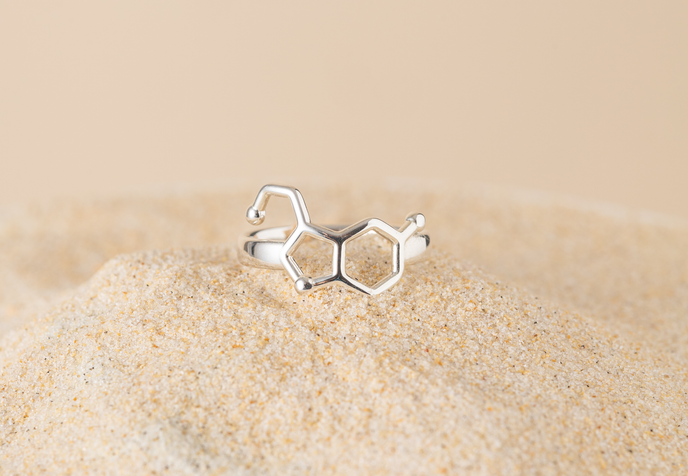
Find your perfect fit: measure an Existing Ring
Finding out your ring size at home is a simple process and can help you shop for jewelry online with confidence.
Necklace length guide