€ 145


Still questions? Contact us
dental mirror necklace | sterling silver
The dental mirror is the foundational tool of a clinical examination. The handheld telescope that lets dentists see what the patient's mouth won't show on first glance. A 42 mm sterling silver pendant shaped like the working end of a tool that has remained essential through two centuries of dentistry.
The Science Behind the Dental Mirror
The mouth mirror appeared in its modern form around the 1840s and has changed very little since. A simple concave or flat reflective surface mounted on a handle, it works by angled reflection. The mirror allows indirect vision of distal and lingual surfaces that would otherwise require the dentist to reposition the patient's head or tilt the light source. Standard dental mirrors come in sizes #4 and #5 (head diameter roughly 10-13 mm). The mouth mirror is the most-used handheld instrument in dental practice, appearing in every examination from initial caries screening to root canal access and preparation verification.
Who Tends to Wear This
- practicing dentists and dental students who recognise the mirror as their working constant
- dental hygienists who use the mirror for patient education and calculus detection
- orthodontists and prosthodontists whose clinical day is built around indirect vision
- people who appreciate the simple engineering of a tool that has outlasted its replacements
For someone who remembers that the mirror was the first technology that made modern dentistry possible.
Explore Related Medical and Lab Jewelry
- Scalpel earrings | silver
- Microscope earrings | silver
- Petri dish earrings | silver
- Eppendorf tube earrings | silver
- Syringe necklace | silver
FAQ
Why do dentists use a mirror instead of just looking directly?
Direct vision of the back teeth and the lingual surfaces requires extreme head and mouth positioning that makes it hard for the patient to stay still and difficult for the dentist to maintain visibility once the bur starts cutting. A mirror placed at the right angle lets the dentist see distal and lingual surfaces while the patient is in a comfortable and stable position. This is especially important for caries detection in interproximal areas, where decay often hides until it's large.
Has the design of the mouth mirror changed much over time?
Very little. The concave mirror design was standardised in the 1840s by Pierre Fauchard and his successors. The main evolution has been in handle materials (from bone and ivory to modern resin and stainless steel) and mirror coatings (to reduce fogging). The core geometry and use remain unchanged. This is a case where early engineering was simply correct.
What size is the pendant and what chain comes with it?
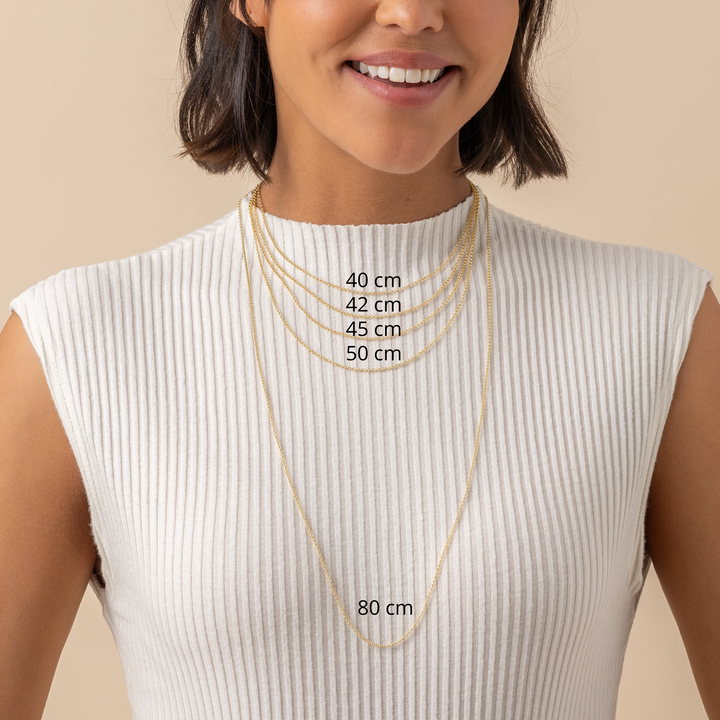
925 sterling silver, 42 mm pendant on a 45 cm sterling silver chain (ø 1.8 mm) with lobster clasp and 5 cm extender. Nickel-free and hypoallergenic. Free worldwide DHL Express in 1-5 business days, with all import duties and taxes covered. 30-day “Love It or Return It” returns.
Is there a gold version?
Yes. The dental mirror necklace is also available in 18K gold vermeil, same design, 42 mm pendant.

Medical & Lab tools
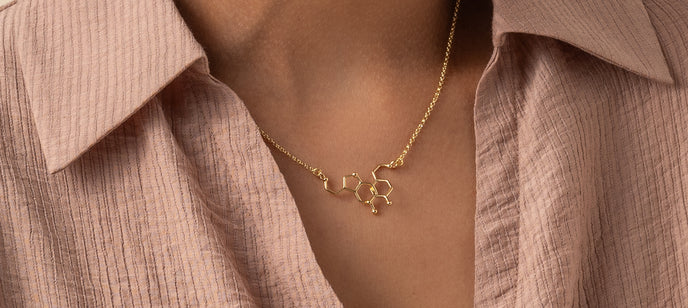
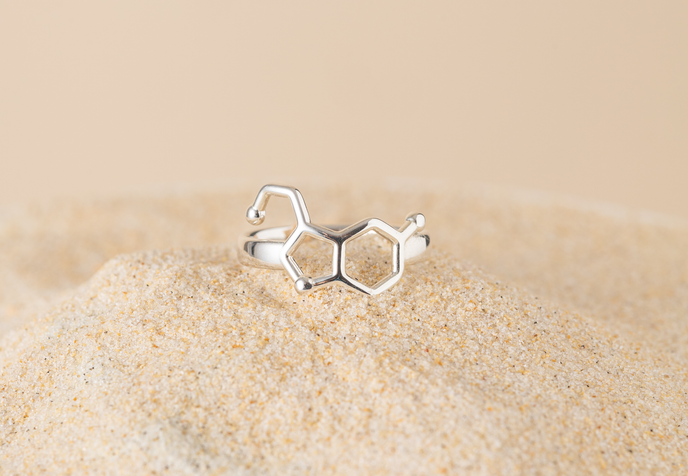
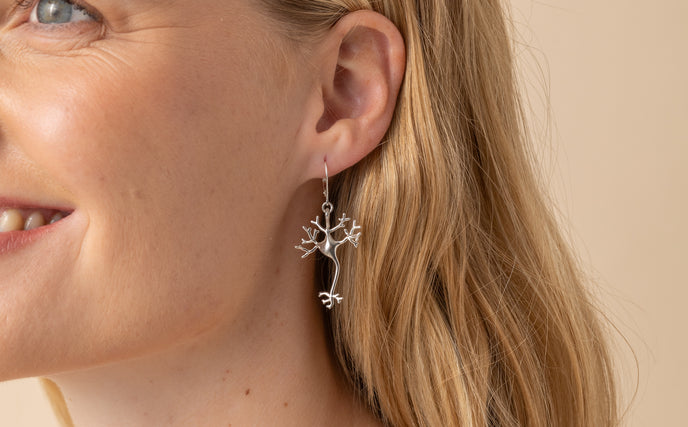
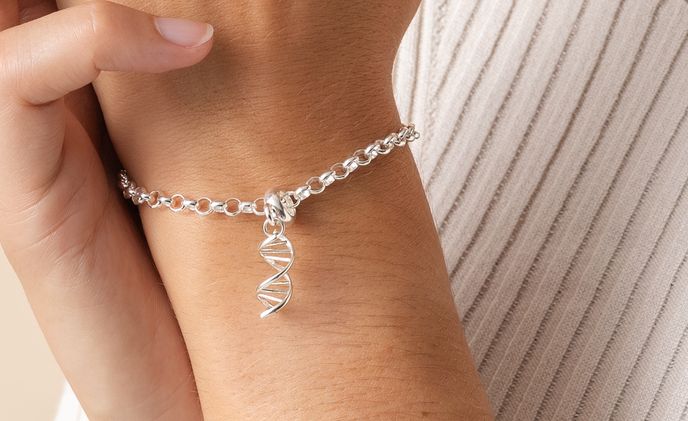
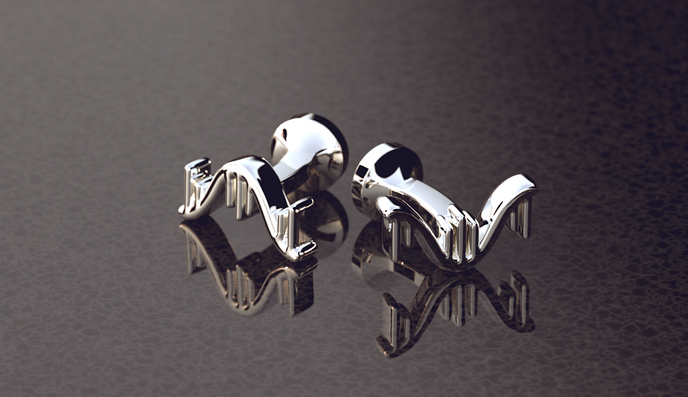
Dive into the captivating world of science-inspired jewelry, where intricate designs meet the essence of medical and laboratory tools. These masterfully crafted pieces act as subtle yet striking tributes to the instruments that have paved the way for scientific discovery. From DNA helices to microscope charms, each piece serves as a conversation starter, a talisman, and a small monument to human ingenuity. They're not just accessories; they're wearable artifacts that tell a story of scientific exploration and advancement.
Find your perfect fit: measure an Existing Ring
Finding out your ring size at home is a simple process and can help you shop for jewelry online with confidence.
Necklace length guide