€ 210


Still questions? Contact us
DNA earring hoops L | gold vermeil
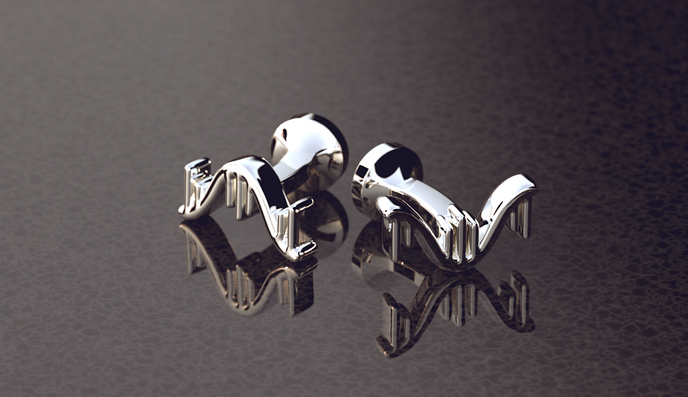
The double helix is the most reproduced shape in biology. Every cell in the body unspools 2 metres of it every time it divides. As earrings rather than a pendant, the helix becomes everyday wear: the molecule that defines the field, in a format you can wear into a meeting without it being the thing about you.
The Science of the Double Helix
The Watson-Crick model of 1953 resolved one of the open questions of mid-century biology: how does the genetic material physically store and copy information. Two antiparallel strands of phosphate-sugar backbone, paired through specific A-T and G-C hydrogen bonds, with the bases stacked inside and the backbones outside. The geometry is what makes replication possible. Each strand is a template for the other, the helical pitch of about 10.5 base pairs per turn keeps the structure stable, and the major and minor grooves give regulatory proteins access to the bases without unwinding the whole molecule. Roughly 70 years of molecular biology, structural biology, and genetics have unfolded inside the geometry of this shape, and the helix has stayed iconic because every undergraduate textbook and every PCR machine and every CRISPR diagram still depends on the same picture.
Worn By
The audience clusters around people whose work or training centres on DNA:
- geneticists, molecular biologists, and biochemists
- genetic counsellors and clinical geneticists
- biotech and pharma scientists working on nucleic acid therapeutics
- medical students and graduate students through their first molecular biology block
- science teachers and educators who want a quiet daily reminder of what they teach
The L size reads as the statement version, picked when the helix should be visible across a room. The S size is for the same person on a day when the work is the point and the jewelry is the accent.
Explore Related Genetics Jewelry
- DNA earring hoops S | gold vermeil
- DNA H necklace | silver
- DNA earrings | silver
- Genetics collection
FAQ
What is the difference between the L and S DNA earring hoops?
Size only. Same design, same gold vermeil construction, same hardware. The L is 33 mm, sized to read clearly as a double helix from across a room. The S is 20 mm, sized as a daily-wear piece that sits closer to the lobe and reads more as accent than statement. Most buyers pick one or the other depending on whether they want the helix to be the centerpiece of the look or a quieter signal.
Why a double helix in earring form rather than the usual pendant?
A pendant is a frontal piece that sits in conversation. Earrings sit in profile, frame the face, and stay visible when the wearer is mid-task at a bench or at a screen. For people who already own a DNA pendant, earrings are the obvious second piece. For people who want the molecule on their body but not as the focal point, earrings are often the first.
What is the size, material, and hardware?
33 mm in 18K gold vermeil (sterling silver core with 2.5 micron gold plating), nickel-free and hypoallergenic. Ear nuts with solid gold cores. Ships free worldwide via DHL Express in 1-5 business days, with all import duties prepaid. Comes in a ready-to-gift jewelry box with the 30-day “Love It or Return It” policy.
Are these the same as the DNA earrings?
No. The DNA earrings are stud-style, sitting flush against the ear with the helix as a small frontal motif. The hoops are full-circle pieces where the helix wraps around the hoop itself. Two different forms of the same molecule. The studs read as a small daily piece. The hoops read as the helix worn properly.
Genetics
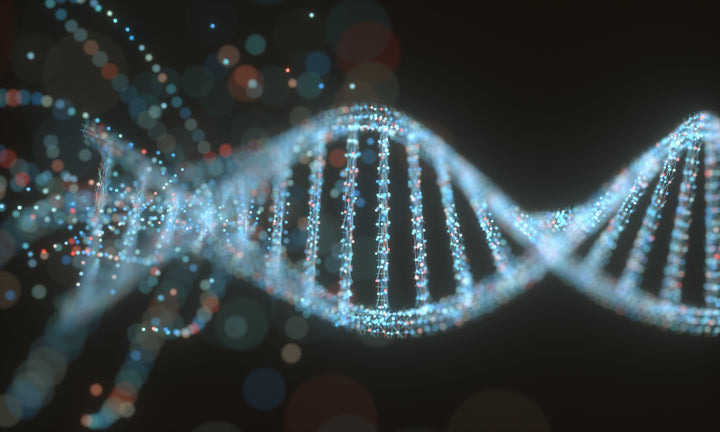
Our genetics-inspired jewelry captures the essence of life's code in striking detail. Crafted to mirror the DNA double helix, each piece is more than an aesthetic marvel—it's a tribute to the complexity of our genetic makeup. Far from ordinary, this collection combines scientific precision with artistic flair, making each item a captivating blend of form and function. It's not just an accessory; it's a meaningful representation of the miracle that is genetics.
Find your perfect fit
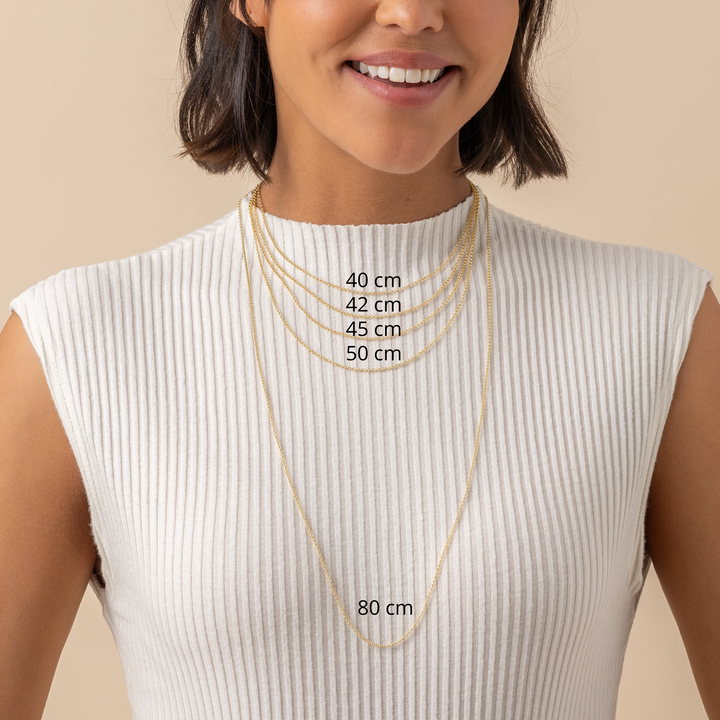
Necklace length guide