€ 210


Still questions? Contact us
Embryo necklace | sterling silver
Weeks 4 through 8 of human development are the most consequential 28 days of a body's existence. The neural tube closes, the heart starts beating, all major organ systems begin, the limb buds form, and the body plan is laid down. Almost everything about the structure of an adult human is decided in this window.
The Biology of the Embryonic Period
The embryonic period runs from week 3 (gastrulation) to week 8 of gestation. By week 4 the neural tube has closed, the heart tube has folded and started pumping, and the somites are segmenting along the length of the body to lay down the future vertebral column and skeletal muscle. By week 5 the limb buds have appeared. By week 6 the eyes, ears, and basic facial structure are recognisable. By week 8 organogenesis is largely complete: the embryo measures roughly 25 mm and from this point forward is called a foetus, with the remaining 32 weeks dedicated mostly to growth and maturation rather than new structure formation. The embryonic period is also the window of maximum vulnerability to teratogens (alcohol, retinoids, infections, radiation), which is why so much of obstetric medicine and birth-defect prevention concentrates on these few weeks.
A Meaningful Gift for Science Lovers
The audience splits cleanly between clinical specialists and personal:
- obstetricians, embryologists, and developmental biologists
- fetal medicine and maternal-fetal medicine specialists
- IVF clinicians and clinical embryologists
- geneticists working on developmental biology and birth defects
- parents who reached this stage through fertility treatment or pregnancy and want to mark it
Often a milestone gift in obstetrics, embryology, or reproductive medicine.
Explore Related Human Anatomy Jewelry
- Fetus necklace | silver
- Blastocyst necklace | silver
- 4 cell embryo necklace | silver
- Uterus necklace H | silver
FAQ
Why does the embryonic period matter so much clinically?
Because almost every structural birth defect originates here. Neural tube defects (spina bifida, anencephaly) trace to a failure of neural-tube closure around week 4. Cardiac defects originate from week 4-7 heart-tube folding errors. Cleft lip and palate trace to facial-prominence fusion in weeks 5-7. Limb defects trace to the limb-bud signalling in weeks 4-8. The embryonic period is also the window of maximum teratogenic vulnerability, which is why folate supplementation, alcohol avoidance, and careful drug selection in early pregnancy matter so much. A single environmental exposure during these weeks can produce lifelong structural consequences that would be impossible later.
What changes when an embryo becomes a foetus?
The vocabulary, mostly. Around week 9 (after fertilisation, week 11 from last menstrual period) the embryo is conventionally called a foetus, marking the end of organogenesis and the start of a long growth-and-maturation phase. The structural body plan is essentially complete by week 8, and from week 9 onward the foetus mostly grows, refines existing structures, and develops functional capacity (breathing movements, swallowing, cortical development). The embryonic-foetal boundary is a clinical convention more than a biological one, but it marks a real transition in the kind of changes happening week to week.
What is the size, material, and chain?
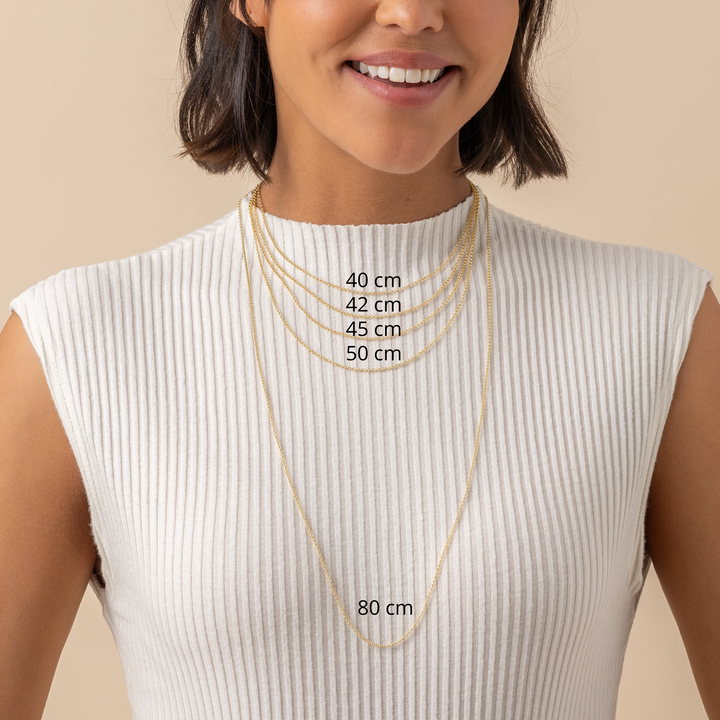
24 mm pendant in 925 sterling silver, nickel-free. 45 cm sterling silver chain with a 5 cm extender. Ships free worldwide via DHL Express in 1-5 business days, with all import duties prepaid. Comes in a ready-to-gift jewelry box with the 30-day “Love It or Return It” policy.
Is there a gold version?
Not currently. The embryo pendant is silver only. The catalog has gold versions of the fetus and the blastocyst if a paired silver-gold gift in early human development is the goal.

Human Anatomy
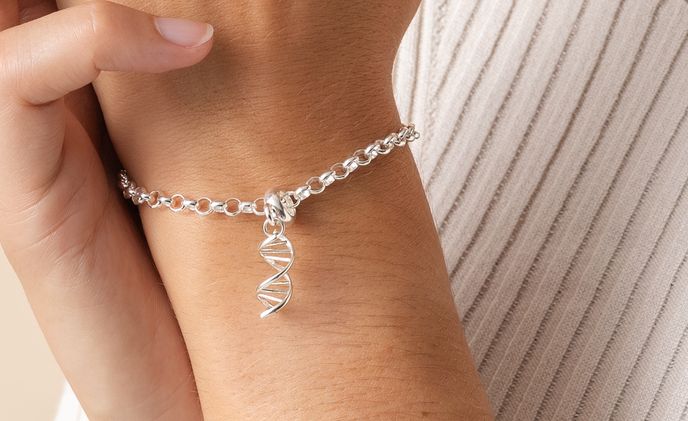
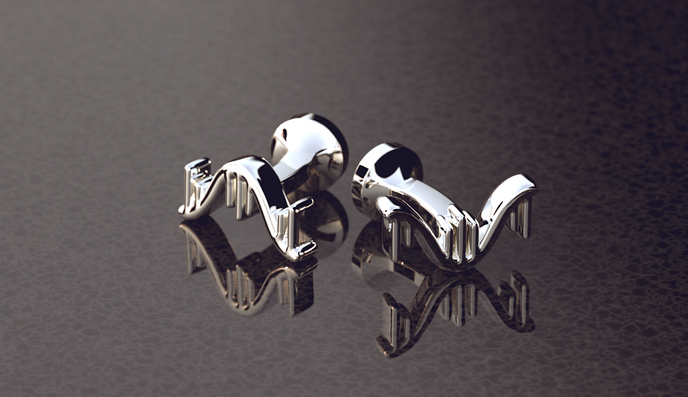
Anatomical wonders have never been so elegantly articulated. Our anatomical collection embodies the intricate and awe-inspiring structures that make us who we are. From DNA double helices to neuronal networks, our pieces don't merely imitate—they interpret. The collection serves as a tangible tribute to the hidden beauty within us all, elevating the realms of biology and medicine into wearable art. With exquisite attention to detail, each piece is a dialogue between form and function, revealing the enigmatic eloquence of the human body.
Find your perfect fit: measure an Existing Ring
Finding out your ring size at home is a simple process and can help you shop for jewelry online with confidence.
Necklace length guide