€ 180


Still questions? Contact us
eosinophil necklace | sterling silver
If you have ever called out an eosinophil on a peripheral blood smear, you know the cell by sight. Two-lobed nucleus and bright pink granules so dense they catch the dye like nothing else on the slide. The cell that announces itself before you label it.
How Eosinophils Work
Eosinophils are granulocytic white blood cells that make up roughly 1-4% of circulating leukocytes in healthy adults. Their cytoplasmic granules contain major basic protein, eosinophil cationic protein, and other cytotoxic molecules selected over evolution against parasites that are too large to be phagocytosed (helminths and other multicellular parasites). In modern medicine, eosinophils are mostly clinically relevant in allergic disease, asthma, eosinophilic oesophagitis, and certain autoimmune conditions. Eosinophilia (an elevated eosinophil count) is a routine flag on any complete blood count. The biology was first characterised by Paul Ehrlich in 1879, who used the eosin dye that gives the cell its name and a Nobel-winning research career its early footing.
Who Will Recognise It
Mostly clinicians and researchers who watch eosinophils for a living.
- haematologists and laboratory medicine specialists
- allergists and asthma clinicians
- immunologists and parasitology researchers
- medical technologists running blood smears
- respiratory physicians working on eosinophilic asthma
Often given to medical residents finishing haematology rotations or to allergy and immunology fellows finishing fellowship training.
Explore Related Cellular Biology Jewelry
- eosinophil necklace | gold vermeil
- red blood cells necklace | silver
- macrophage necklace | silver
- neutrophil necklace | silver
- monocyte necklace | silver
FAQ
Is this specific enough for a real haematologist?
Yes. The cell type is recognisable on a single glance at any peripheral smear, and the morphology is one of the first taught in medical haematology. If the recipient has spent any clinical time reading complete blood counts or thinking about allergy and parasitology, the piece is a peer-level reference. Outside laboratory medicine, expect to explain.
Why does the cell stain so vividly with eosin?
The granules are packed with strongly basic proteins, particularly major basic protein and eosinophil cationic protein. Eosin is an acidic dye, and acidic dyes bind tightly to basic proteins. The pairing is so consistent that "eosinophilic" became the standard descriptor for any cell or structure that takes up eosin readily, long before the underlying biochemistry was worked out.
Size, material, chain length?
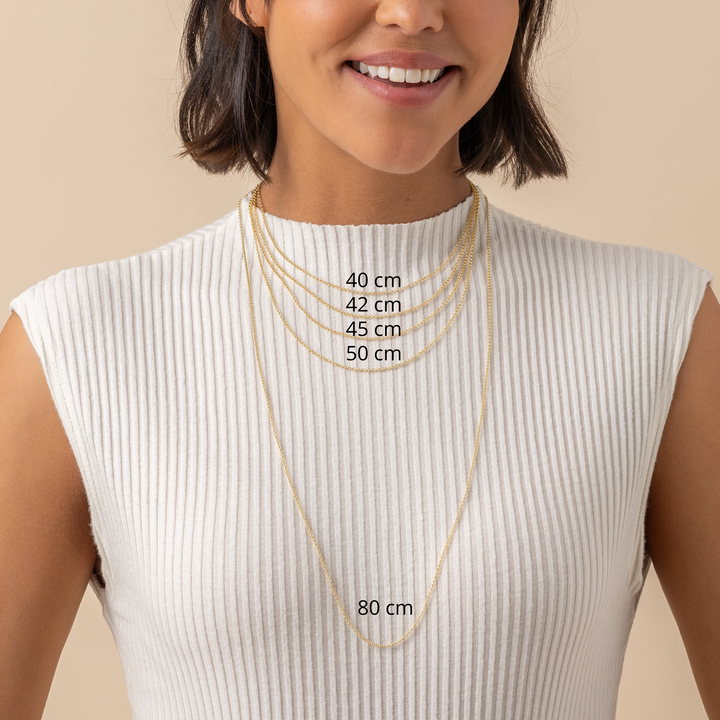
16 mm pendant in 925 polished sterling silver, nickel-free and hypoallergenic, on a 45 cm sterling silver chain (1.8 mm diameter) with lobster clasp and a 5 cm extender. Free DHL Express shipping worldwide in 1-5 business days, all duties and taxes covered, 30-day “Love It or Return It” policy.
Is there a gold version?
Yes. The eosinophil necklace is also available in 18K gold vermeil at the same 16 mm size. Choose the finish the recipient already wears: the design is the same in both.
Cellular Biology
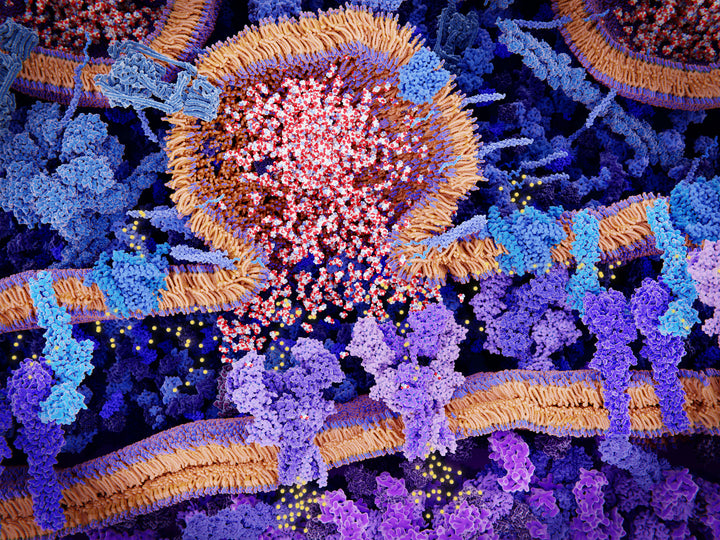
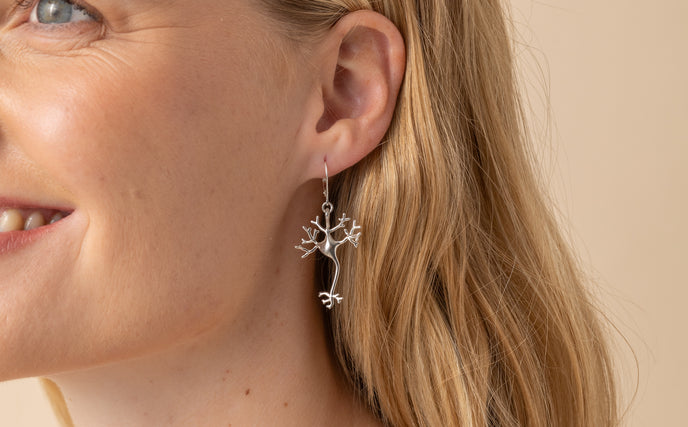
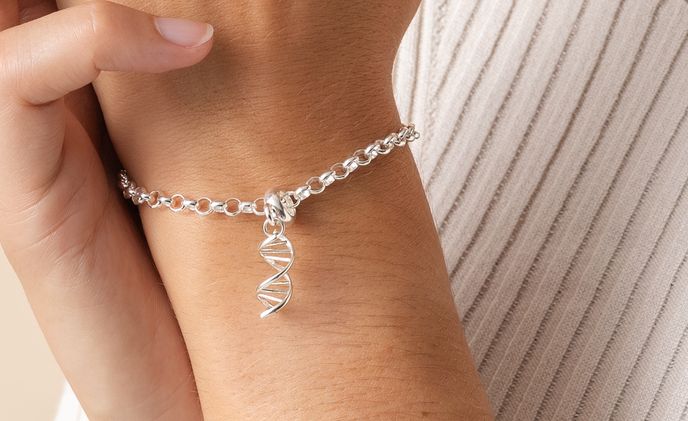
Step into the fascinating world of cellular biology through our unique jewelry designs. These pieces serve as wearable reflections of life's microscopic wonders, capturing the aesthetics of DNA strands, cellular formations, and more. Far from simple adornments, they spark dialogue and honor the captivating complexities found within biological research. Merging scientific accuracy with artistic flair, each creation offers a tactile experience that bridges the gap between scientific inquiry and aesthetic appreciation.
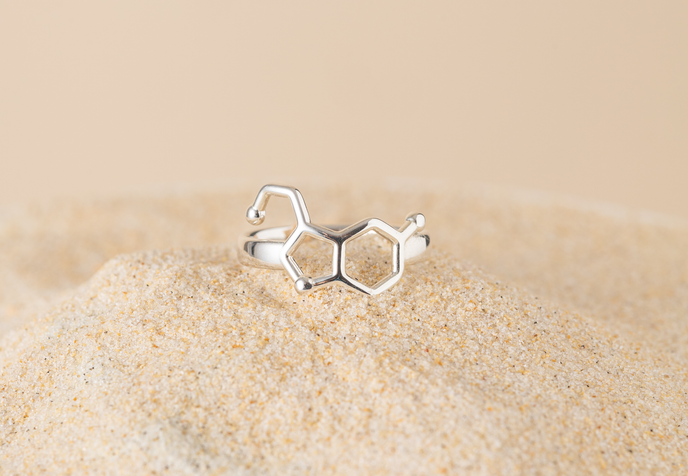
Find your perfect fit: measure an Existing Ring
Finding out your ring size at home is a simple process and can help you shop for jewelry online with confidence.
Necklace length guide