€ 160


Still questions? Contact us
Ethanol necklace | sterling silver
Ethanol is among the oldest biotechnological products in human history. Yeast have been fermenting sugars into ethanol and CO2 for thousands of years, long before anyone understood why it worked. The molecule is simple: two carbons, one oxygen. The history is deep.
The Science Behind Ethanol
Yeast produce ethanol through alcoholic fermentation, in which pyruvate from glycolysis is converted to acetaldehyde by pyruvate decarboxylase and then reduced to ethanol by alcohol dehydrogenase. This regenerates NAD+ from NADH, allowing glycolysis to continue without oxygen. Louis Pasteur demonstrated in the 1850s that fermentation required living microorganisms, overturning the prevailing chemical theory. Eduard Buchner's 1897 discovery that cell-free yeast extracts could ferment sugar proved the process was enzymatic, earning him the 1907 Nobel Prize. Today, fermentation remains one of the most industrially important biochemical processes, producing fuel ethanol, bread, and beverages through the same yeast metabolic pathway that has operated for millennia.
A Meaningful Gift for Science Lovers
For biochemists, microbiologists, fermentation researchers, and anyone who appreciates the history of biochemistry alongside the molecule itself.
- biochemists and metabolic biologists
- microbiologists and fermentation scientists
- food, beverage, and brewing professionals
- anyone who understands that simple molecules drive civilisation
Explore Related Molecules Jewelry
- Ethanol necklace | gold vermeil
- Glucose necklace | silver
- Caffeine necklace | silver
- Insulin necklace | silver
FAQ
Why is ethanol so important to biochemistry?
Because it connects chemistry, biology, and human civilisation. Yeast fermentation was the first biotechnology. Pasteur proved it was living organisms. Buchner proved it was enzyme chemistry. Fermentation gave us bread, beer, wine, and now biofuels.
Who typically wears this necklace?
Chemists, biochemists, distillers, brewers, and people who appreciate organic chemistry and microbiology.
What size, material, and chain?
Sterling silver pendant at 26 mm, nickel-free and hypoallergenic. 45 cm sterling silver chain with a 5 cm extender and lobster clasp. Ships free worldwide via DHL Express in 1-5 business days. Comes in a ready-to-gift jewelry box with the 30-day “Love It or Return It” policy.
Is there a gold version?
Yes. Ethanol is available in 18k gold vermeil at the same 26 mm size. Same design, same 26 mm size. Material is the only difference.
Molecules
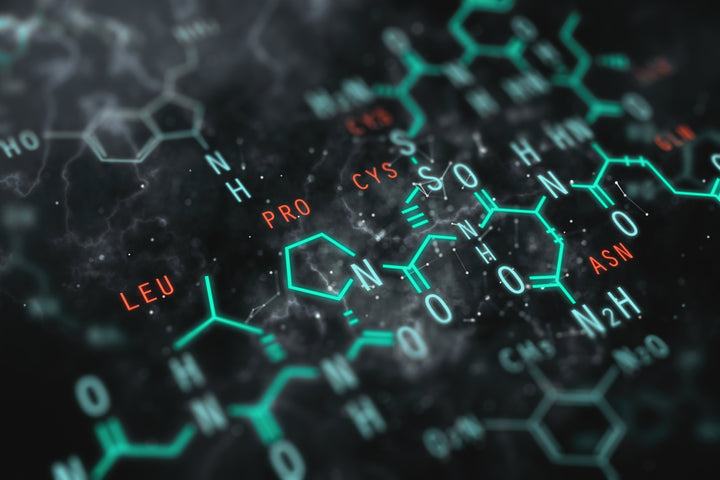
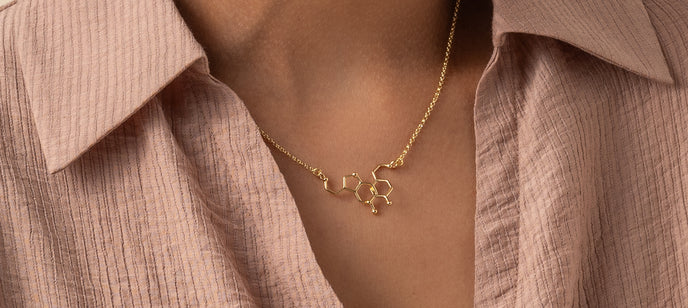
Delve into the hidden elegance of science with our meticulously crafted jewelry, inspired by the intricate structures of chemical molecules. Each piece serves as a tactile tribute to the building blocks of life and matter, capturing the allure of atoms and bonds in precious metals. A harmonious fusion of art and science, these creations are more than mere accessories; they're a celebration of the enigmatic beauty that underpins our universe.
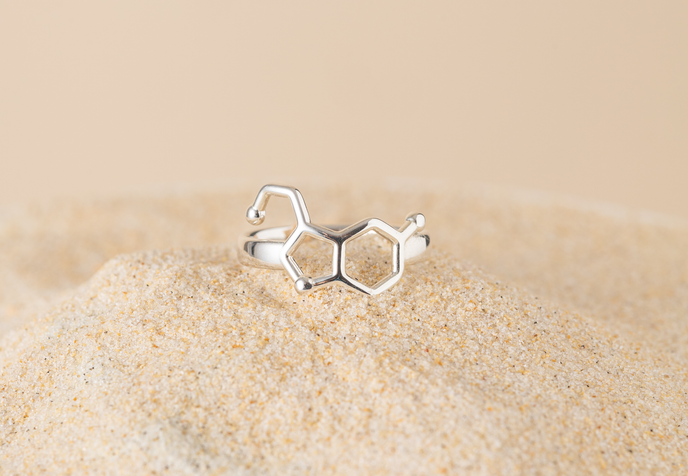
Find your perfect fit: measure an Existing Ring
Finding out your ring size at home is a simple process and can help you shop for jewelry online with confidence.
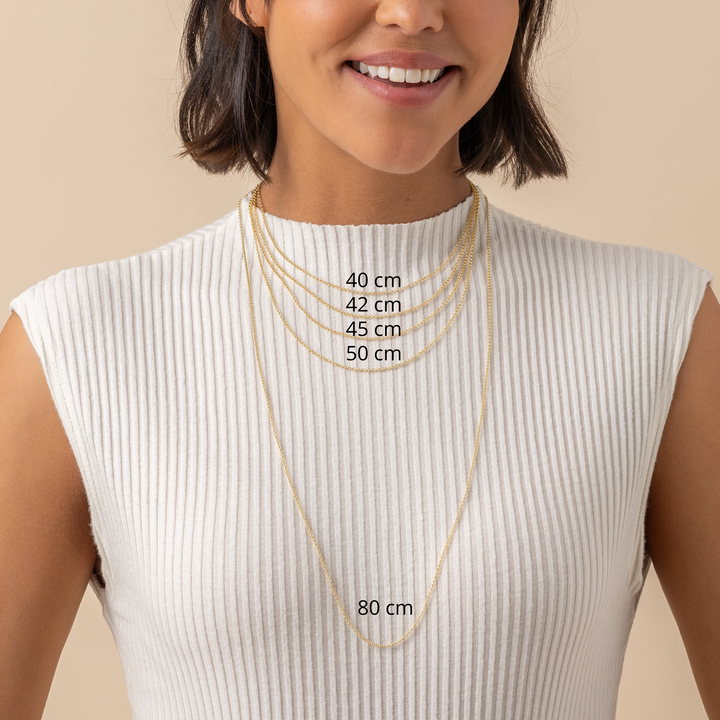
Necklace length guide