€ 300


Still questions? Contact us
eye necklace | sterling silver
A camera that rewires itself every time you use it. A structure so efficient that engineers are still trying to copy it. The human eye doesn't just see light, it learns from light, the way every moment of vision reshapes the neural circuits that process the next moment.
The Anatomy of the Eye
The human eye is approximately 24 mm in diameter, with the cornea and lens focusing light onto the retina. The retina contains roughly 120 million rod photoreceptors for low-light vision and 6 million cone photoreceptors for color vision, concentrated in the macula with peak density at the fovea centralis. These photoreceptors signal to bipolar and ganglion cells, whose axons form the optic nerve exiting at the optic disc (the physiological blind spot). The iris regulates pupil diameter to control light entry and depth of field. The aqueous and vitreous humours maintain intraocular pressure and optical clarity. The visual cortex at the back of the brain processes these signals into the world you see.
Who Will Recognise It
- ophthalmologists and ophthalmic surgeons
- visual neuroscientists studying perception and optics
- optometrists and orthoptists
- medical students who have memorized ocular anatomy
A piece for anyone who has studied how vision actually works.
Explore Related Anatomy Jewelry
FAQ
Would an ophthalmologist actually wear this?
Yes. Eye specialists recognize the anatomy instantly. Optometrists, vision researchers, and anyone passionate about the science of sight would wear this.
What makes the fovea so central to the eye?
The fovea is the region of highest visual acuity in the retina. It has the densest concentration of cone photoreceptors and the smallest ganglion cell receptive fields, allowing you to see fine detail in the center of your visual field. About 2% of the retina by area, the fovea accounts for much of your ability to read, recognize faces, and see color.
What material and chain length?
22 mm sterling silver pendant on a 45 cm sterling silver chain with 5 cm extender. 925 polished sterling silver, nickel-free and hypoallergenic. Ships free worldwide via DHL Express in 1-5 business days. Comes in a ready-to-gift jewelry box with the 30-day “Love It or Return It” policy.
Is this available in gold?
This design is sterling silver only. The same anatomical eye is available in other materials through custom order.

Human Anatomy
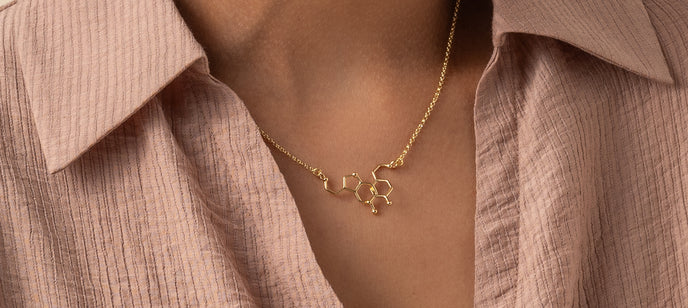
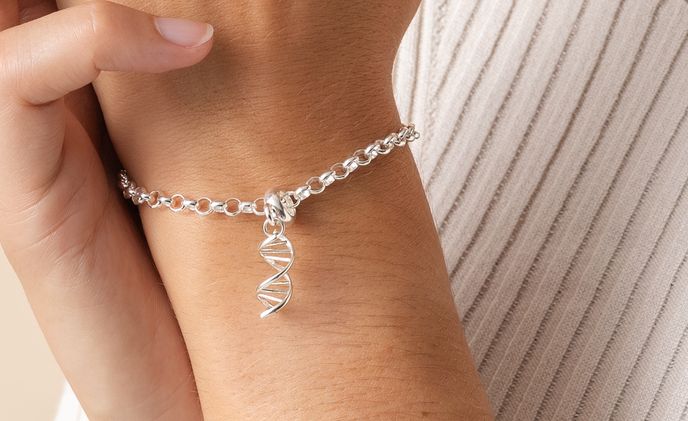
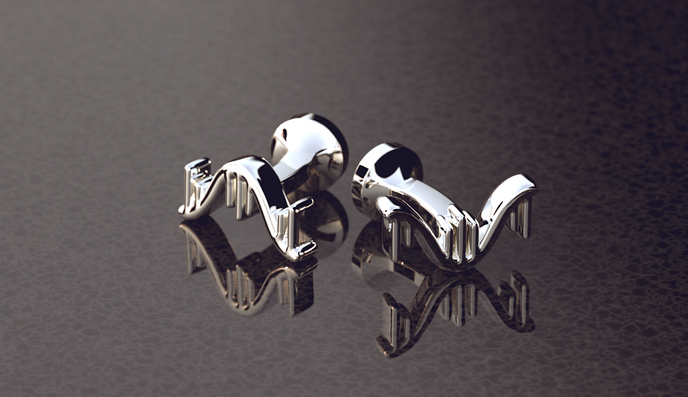
Anatomical wonders have never been so elegantly articulated. Our anatomical collection embodies the intricate and awe-inspiring structures that make us who we are. From DNA double helices to neuronal networks, our pieces don't merely imitate—they interpret. The collection serves as a tangible tribute to the hidden beauty within us all, elevating the realms of biology and medicine into wearable art. With exquisite attention to detail, each piece is a dialogue between form and function, revealing the enigmatic eloquence of the human body.


Find your perfect fit: measure an Existing Ring
Finding out your ring size at home is a simple process and can help you shop for jewelry online with confidence.
Necklace length guide