€ 205


Still questions? Contact us
Fetus necklace | sterling silver
Voyager 1 left Earth on 5 September 1977 carrying a gold-plated record with 115 images of life on our planet, and one of them is a diagram of a human fetus. An obstetrician who wears a fetus necklace in sterling silver works with that same stage of human life, the months before birth.
Who It's For
- a friend who has just finished her dissertation in midwifery
- a best friend who has recently become pregnant
- someone who works in perinatal care
- your mum
- a niece
Hilda S., on a dissertation present given with colleagues: “It was greatly appreciated, and she wore it from the next day.”
Elizabeth F.: “The pictures don’t do this piece justice.”
Why a Fetus Makes Its Own Haemoglobin
Before birth, a human fetus makes mainly a different haemoglobin from the one an adult makes. Fetal haemoglobin is built from two alpha and two gamma chains, where adult haemoglobin has two beta chains in place of the gamma pair. It binds less strongly to 2,3-BPG, a small molecule in red blood cells, and holds oxygen more tightly. That lets a fetus take up oxygen at the low levels found in the womb. Birth itself does not flip the switch. The change to adult haemoglobin happens gradually, over at least the first six months of life.
Explore Related Human Anatomy Jewelry
- fetus necklace | gold vermeil
- twin fetus necklace | silver
- embryo necklace | silver
- uterus necklace H | silver
FAQ
How big is the pendant, and how does it sit?
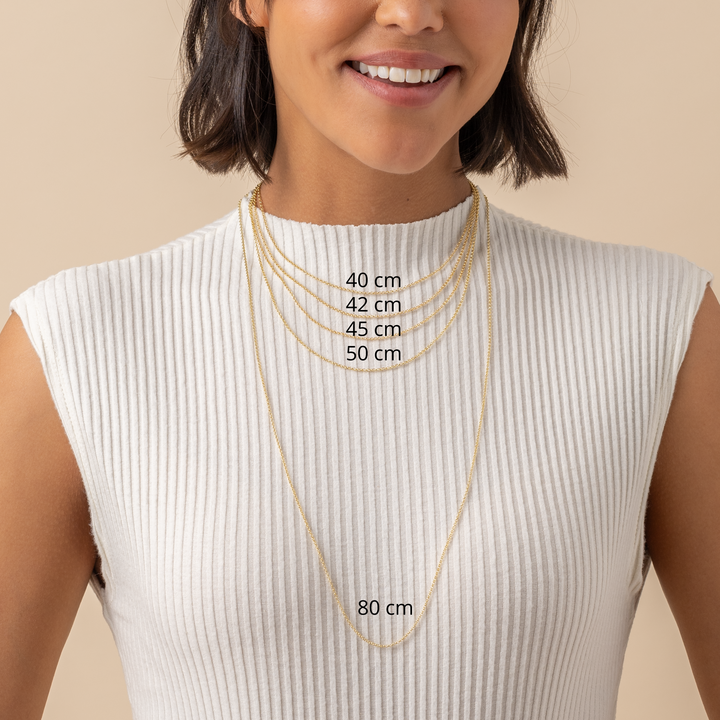
The pendant measures 25 mm (about 1 inch), 0.75 mm less than a 2-euro coin (25.75 mm). It hangs from a small ring at its top and rests on the upper chest, below the collarbone, on a 45 cm (17.7 inch) sterling silver chain with a 5 cm (2 inch) extender. Our 925 sterling silver is nickel-free and hypoallergenic.
Is there a gold version, or a twin fetus necklace?
Yes to both. The fetus necklace also comes in 18K gold vermeil, with the same 25 mm pendant on a 45 cm gold vermeil chain with a 5 cm extender. Choose the finish the recipient already wears. The design is the same in both finishes. Our vermeil is 2.5 microns of 18K gold over solid sterling silver. The twin fetus necklace is a separate design in sterling silver, with a 24 mm pendant on the same 45 cm chain and 5 cm extender.
Will it arrive in time, and what if it isn't right?
DHL Express delivers it free worldwide in 1-5 business days, and we pay the import duties and taxes, so nothing is due at the door. It arrives in a ready-to-gift jewelry box and festive envelope. If it isn't right, our 30-day “Love It or Return It” policy applies.
What did Anthony DeCasper and Melanie Spence find when mothers read aloud before birth?
They found that newborns preferred a passage they had heard before birth to one that was new to them. In their study, published in 1986, mothers-to-be read the same rhyming passage aloud again and again before their babies were born. Shortly after birth, the babies could switch on recordings by how they sucked on a dummy, and they sucked more to hear the familiar passage than a new one. They did so whether or not the voice was their mother's, so they preferred the passage itself.

Human Anatomy
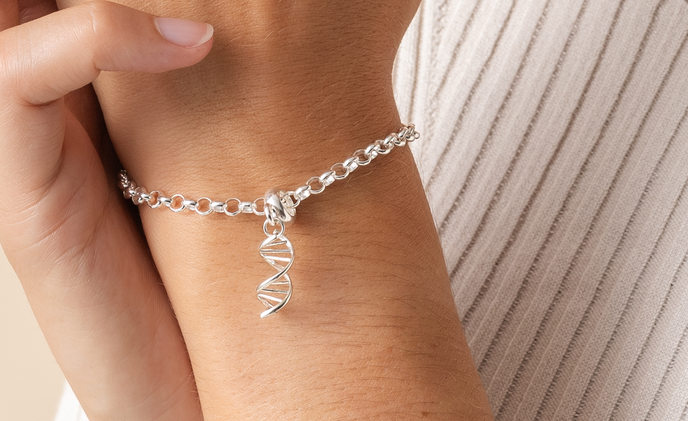
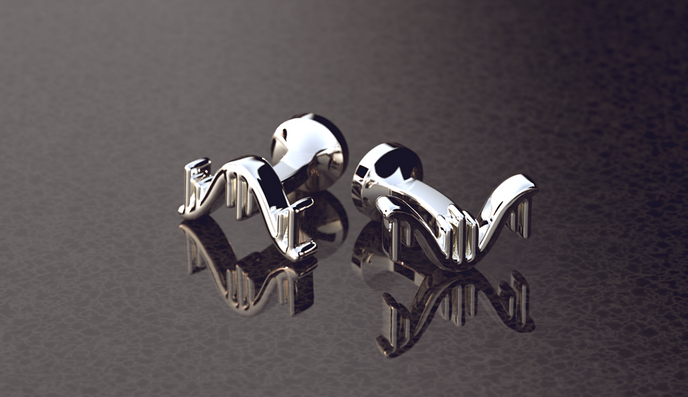
Anatomical wonders have never been so elegantly articulated. Our anatomical collection embodies the intricate and awe-inspiring structures that make us who we are. From DNA double helices to neuronal networks, our pieces don't merely imitate—they interpret. The collection serves as a tangible tribute to the hidden beauty within us all, elevating the realms of biology and medicine into wearable art. With exquisite attention to detail, each piece is a dialogue between form and function, revealing the enigmatic eloquence of the human body.
Find your perfect fit: measure an Existing Ring
Finding out your ring size at home is a simple process and can help you shop for jewelry online with confidence.
Necklace length guide