€ 145


Still questions? Contact us
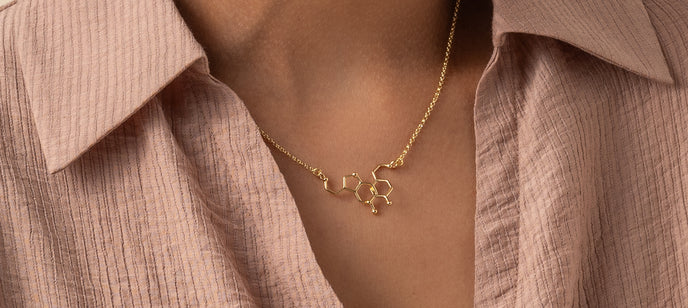
GABA necklace | sterling silver
GABA is what keeps the brain calm. Glutamate excites, GABA inhibits, and the balance between them sets everything from how easily a person falls asleep to whether a seizure threshold is crossed. Most psychiatric and neurological medicine reaches into this balance somewhere. Worn here as a 26 mm sterling silver pendant.
The Science Behind GABA
The excitatory-inhibitory (E/I) balance is the ratio of glutamatergic and GABAergic signalling across a circuit. Epilepsy results from too little inhibition. Many antiepileptic drugs work by enhancing GABAergic transmission: benzodiazepines, barbiturates, valproate, and vigabatrin all act somewhere on the GABA system. The developing brain has a notable twist. In immature neurons, GABA is excitatory rather than inhibitory, because intracellular chloride is high and GABA-A-receptor-mediated chloride flow is depolarising under those conditions. As the chloride co-transporter KCC2 is upregulated during postnatal development, intracellular chloride drops, and GABA flips to inhibitory. The switch is a major maturation milestone and a vulnerability point in early brain development.
Who Will Recognise It
- neuroscientists studying inhibitory interneurons or E/I balance
- neurologists treating epilepsy
- anaesthesiologists and pharmacologists working on GABAergic drugs
- anyone for whom GABA is a daily clinical or research molecule
Explore Related Molecules Jewelry
- GABA necklace | gold vermeil
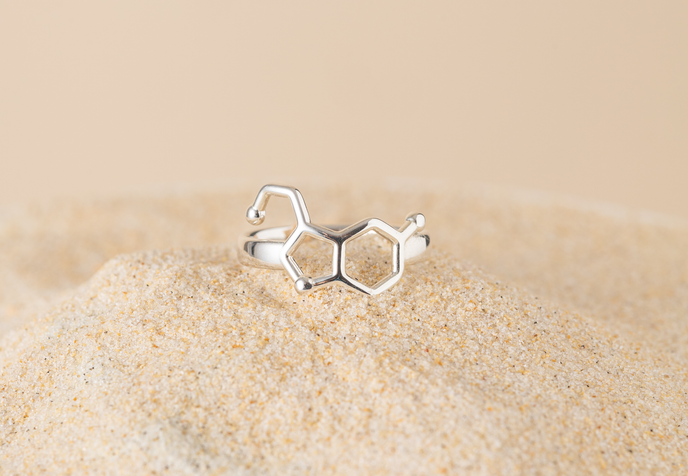
- GABA ring | silver
- Glutamate necklace | silver
- Propofol necklace | silver
- Ethanol necklace | silver
FAQ
Why GABA on its own rather than the GABA-glutamate pair?
Because the inhibitory side of the brain has its own quiet identity. Most clinical neuroscience that involves keeping a brain calm reaches for GABAergic drugs: benzodiazepines for anxiety and seizures, propofol for anaesthesia, alcohol for the recreational version, valproate and vigabatrin for epilepsy. The molecule has clinical reach the glutamate side does not. People who work in neurology, anaesthesia, or addiction medicine tend to recognise it on sight.
Why does GABA flip from excitatory to inhibitory during development?
The receptor itself does not change. What changes is intracellular chloride. In immature neurons, chloride is held at relatively high levels, so opening the GABA-A chloride channel lets chloride flow out, depolarising the cell. As the KCC2 transporter is upregulated postnatally, chloride drops, and the same channel opening now lets chloride flow in, hyperpolarising the cell. Same molecule, same receptor, opposite electrical effect. The switch is the moment the developing brain becomes electrically adult.
What size is the pendant and what is the return policy?
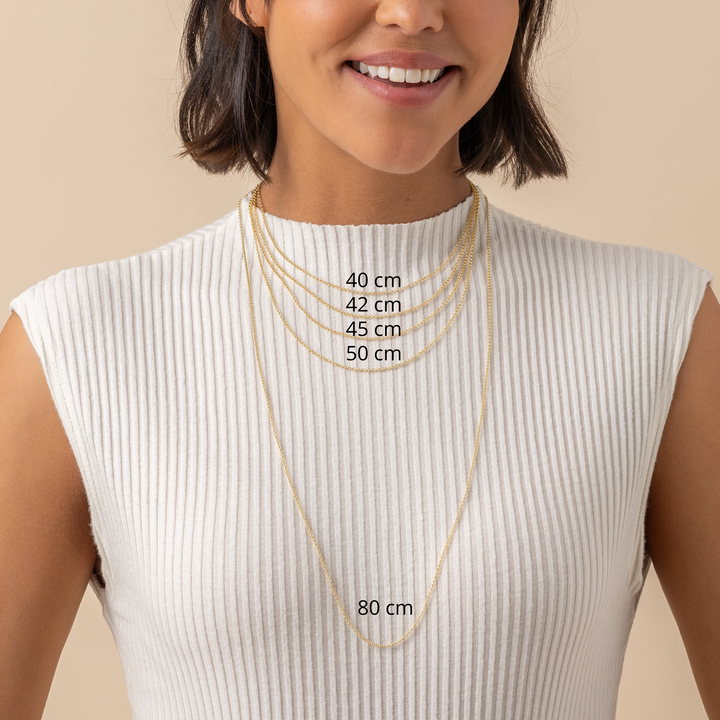
925 sterling silver, 26 mm pendant on a 45 cm sterling silver chain with a 5 cm extender. Nickel-free and hypoallergenic. Free worldwide DHL Express in 1-5 business days, with all import duties and taxes covered. 30-day “Love It or Return It” returns.
Is there a gold version, or other formats?
Both. The same 26 mm GABA pendant is available in 18K gold vermeil at the same chain length. A GABA ring also exists in sterling silver, in US sizes 5 to 9, for anyone who prefers the molecule on the hand. Pairing the necklace with the ring works as a graduation gift for someone finishing a neuroscience or anaesthesia training programme.
Molecules
Delve into the hidden elegance of science with our meticulously crafted jewelry, inspired by the intricate structures of chemical molecules. Each piece serves as a tactile tribute to the building blocks of life and matter, capturing the allure of atoms and bonds in precious metals. A harmonious fusion of art and science, these creations are more than mere accessories; they're a celebration of the enigmatic beauty that underpins our universe.
Find your perfect fit: measure an Existing Ring
Finding out your ring size at home is a simple process and can help you shop for jewelry online with confidence.
Necklace length guide