€ 145


Still questions? Contact us
Glutamate necklace | sterling silver
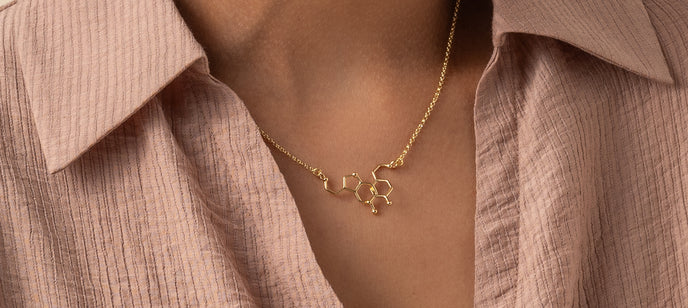
Glutamate is the dominant excitatory neurotransmitter in the mammalian central nervous system, present at roughly 80% of all synapses. The counterweight to GABA on the inhibitory side. Most of what makes the cortex compute happens through glutamate. Worn here as a 28 mm sterling silver pendant.
The Science Behind Glutamate
Glutamate is the major excitatory neurotransmitter in the mammalian CNS, balancing GABA on the inhibitory side. Receptors split into ionotropic (NMDA, AMPA, kainate) and metabotropic (mGluR1-8) families. NMDA receptor activation is the molecular substrate of long-term potentiation, the cellular basis of learning and memory. The glutamate-glutamine cycle between neurons and astrocytes recycles released glutamate, with glutamate transporters (EAAT1-5, with GLT-1 handling roughly 90% of uptake) clearing the synaptic cleft. Excitotoxicity in stroke, traumatic brain injury, and neurodegenerative disease arises when uptake fails and synaptic glutamate climbs to toxic levels. Memantine (NMDA antagonist) is approved for Alzheimer's disease, and ketamine's antidepressant action targets the same receptor. Kikunae Ikeda isolated glutamate from kombu in 1908, identifying it as the molecule behind umami taste.
Who Will Recognise It
- neuroscientists and neuropharmacologists working on excitatory transmission
- neurologists at the stroke or traumatic brain injury end of glutamate biology
- psychiatrists working on NMDA-targeting treatments (memantine, ketamine, riluzole)
- students and educators teaching synaptic transmission at any level
For someone who reaches for glutamate when the conversation is about LTP, NMDA receptor pharmacology, or the cellular mechanics of memory rather than the food-flavour side of the molecule.
Explore Related Molecules Jewelry
- Ketamine necklace | silver
- Dopamine necklace | silver
- Serotonin necklace V | silver
- Dopamine serotonin necklace V | silver
- Oxytocin necklace | silver
FAQ
Why does glutamate matter more than the other neurotransmitters that get more attention?
Because it is the system. Roughly 80% of CNS synapses are glutamatergic. Dopamine, serotonin, noradrenaline, acetylcholine, and other modulatory transmitters work on top of the excitatory backbone that glutamate provides. Most of what the cortex computes happens through glutamate. The monoamines get the clinical attention because they are easier to drug, but the underlying excitatory layer is glutamate, balanced against GABA on the inhibitory side.
Why is excitotoxicity such a recurring theme in neurology?
Because the same property that makes glutamate useful (rapid, strong excitation) makes it dangerous when uptake fails. Stroke, traumatic brain injury, and several neurodegenerative diseases all trigger excessive glutamate release with impaired clearance, driving NMDA receptor overactivation, calcium influx, and neuronal death. Memantine works in Alzheimer's by partially blocking NMDA receptors at pathologically high glutamate levels while preserving normal signalling. Riluzole in ALS reduces glutamate release. The therapeutic ceiling on the strategy is set by how much excitatory signalling you can dampen before normal cognition suffers.
What size is the pendant and what chain comes with it?
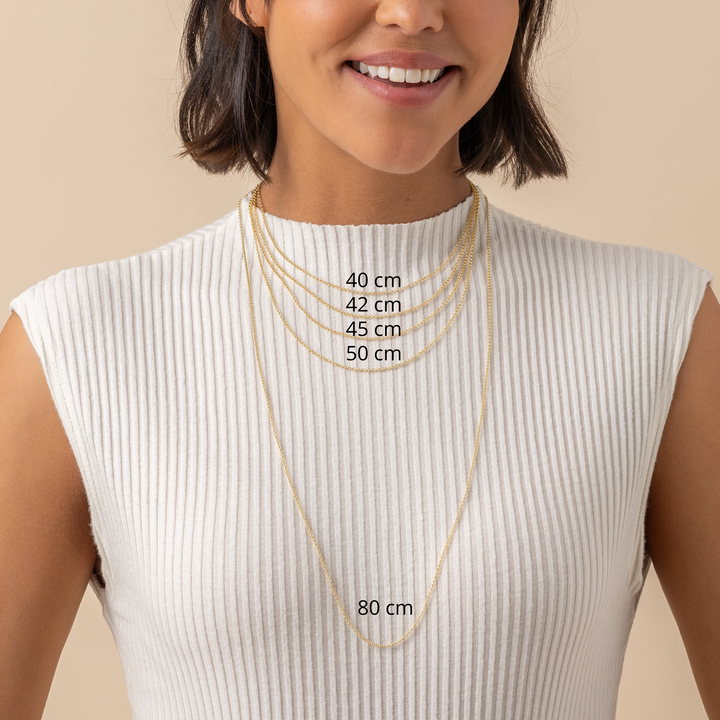
925 sterling silver, 28 mm pendant on a 45 cm sterling silver chain (ø 1.8 mm) with a 5 cm extender. Nickel-free and hypoallergenic. Free worldwide DHL Express in 1-5 business days, with all import duties and taxes covered. 30-day “Love It or Return It” returns.
Is there a gold version?
Not at present. Glutamate is sterling silver only. Other neurotransmitter pendants exist in 18K gold vermeil, including serotonin (V, gold) and the dopamine-serotonin gold pair, if a gold neurotransmitter pendant is the goal.
Molecules
Delve into the hidden elegance of science with our meticulously crafted jewelry, inspired by the intricate structures of chemical molecules. Each piece serves as a tactile tribute to the building blocks of life and matter, capturing the allure of atoms and bonds in precious metals. A harmonious fusion of art and science, these creations are more than mere accessories; they're a celebration of the enigmatic beauty that underpins our universe.
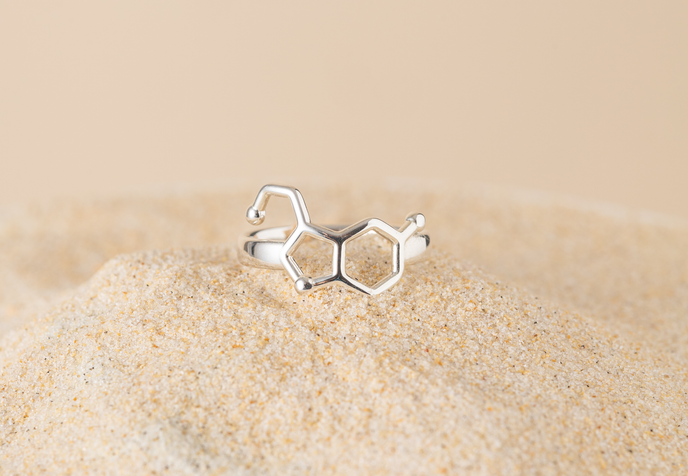
Find your perfect fit: measure an Existing Ring
Finding out your ring size at home is a simple process and can help you shop for jewelry online with confidence.
Necklace length guide