€ 220


Still questions? Contact us
Origami heart necklace | sterling silver
The origami heart is the human heart abstracted to its geometric essentials. Faceted planes, clean folds, the four-chambered form reduced to the angles that define it. The reduction is the point. What stays after the simplification is what the heart actually is.
The Heart as Geometry
Cardiology has always relied on geometric abstraction. The 17-segment model used to describe the left ventricle in echocardiography is a polar map, not an anatomical drawing. Ejection fraction is a volume calculation, not a shape. Surgical planning for ventricular reconstruction (the Dor procedure, the SAVE operation) treats the dilated ventricle as a geometric problem to be solved with the correct cone angle. The origami abstraction is the same move at a different scale: keep the shape, drop the histology, let the geometry carry the meaning.
A Quiet Symbol For
The audience splits into a few clear groups:
- cardiologists, cardiac surgeons, and cardiac nurses
- echocardiographers and cardiac imaging specialists who think in geometric terms daily
- anyone with a personal cardiac history (a diagnosis, a surgery, a recovery)
- designers and architects drawn to the cleanness of geometric reduction
- people who want a heart pendant that doesn't read as anatomical
Frequently picked as a gift to mark cardiac surgery recovery, or as the everyday-wear alternative to a more clinical anatomical heart.
Explore Related Human Anatomy Jewelry
- Origami heart necklace | gold vermeil
- Anatomical heart necklace | silver
- Heart section necklace | silver
- Heartbeat necklace | silver
FAQ
What do you give someone after open-heart surgery?
The origami heart is one of the better choices in the category. It names the organ that mattered without leaning into clinical anatomy, and it reads as a piece of design rather than a medical artefact. Often given by partners or family at the close of recovery, when the cardiac story has settled into something the recipient is ready to wear rather than think about.
Why does the origami abstraction work for the heart specifically?
Because the heart's function is essentially geometric. It pumps by deforming through a sequence of well-defined shapes (end-diastolic volume, end-systolic volume, the path of contraction from base to apex). Reducing the organ to faceted planes preserves what's mechanically essential and drops what isn't. The same logic underlies the ventricular models cardiac surgeons use to plan reconstructive procedures, and the segmental polar maps used in echocardiography. The origami isn't decoration. It's an abstraction of how the heart actually works.
What's the size, material, and chain?
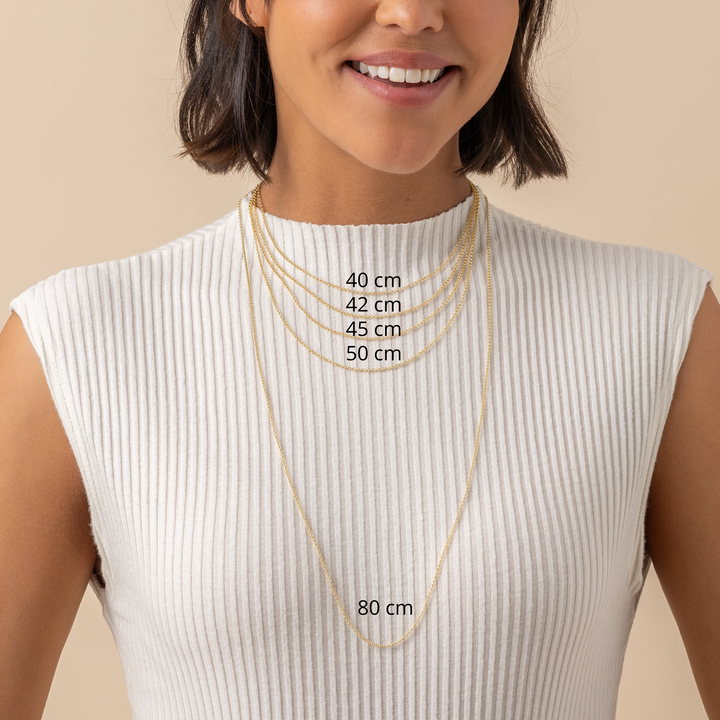
22 mm pendant in 925 sterling silver, nickel-free. 45 cm sterling silver chain with a 5 cm extender. Ships free worldwide via DHL Express in 1-5 business days, with all import duties prepaid. Comes in a ready-to-gift jewelry box with the 30-day “Love It or Return It” policy.
Is there a gold version?
Yes. The origami heart is also available in 18k gold vermeil at the same 22 mm size. Same model, warmer finish, more formal register.

Human Anatomy
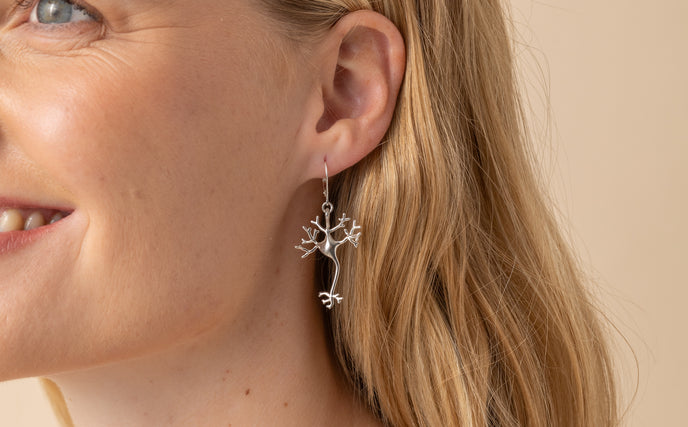
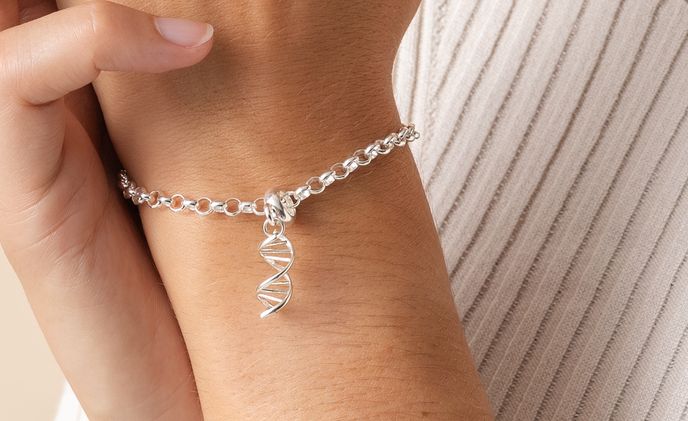
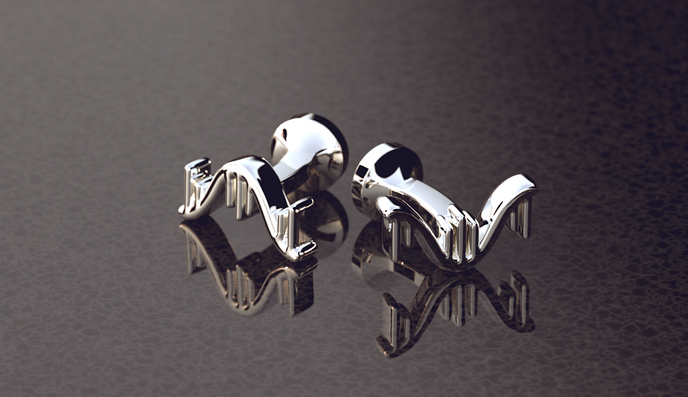
Anatomical wonders have never been so elegantly articulated. Our anatomical collection embodies the intricate and awe-inspiring structures that make us who we are. From DNA double helices to neuronal networks, our pieces don't merely imitate—they interpret. The collection serves as a tangible tribute to the hidden beauty within us all, elevating the realms of biology and medicine into wearable art. With exquisite attention to detail, each piece is a dialogue between form and function, revealing the enigmatic eloquence of the human body.
Find your perfect fit: measure an Existing Ring
Finding out your ring size at home is a simple process and can help you shop for jewelry online with confidence.
Necklace length guide