€ 155


Still questions? Contact us
Hummingbird skull necklace | sterling silver
A heart that beats up to 1,260 times a minute. A body that drops into near-ambient torpor overnight to survive on the metabolic edge. A tongue that licks nectar at 18 laps a second. The hummingbird is a study in physiological extremes, and it all begins at the skull. Worn here as a 40 mm sterling silver pendant.
The Anatomy of the Hummingbird Skull
The hummingbird skull is built for precision nectar extraction at speed while hovering. Unlike most birds, hummingbirds can flex the lower beak downward mid-flight via rhynchokinesis, opening the gape to fit a wider flower. Alejandro Rico-Guevara at UC Berkeley showed in 2015 that the tongue does not work by capillary action: it deforms elastically to trap nectar and springs back to load the next lap. The brain is approximately 4.2% of body weight, one of the highest ratios of any bird. The hippocampus is proportionally larger than in most birds, linked to the spatial memory the animal needs to track hundreds of individual flowers across a daily route.
Who Tends to Wear This
- ornithologists and avian biologists
- biomechanics researchers and comparative physiologists
- field biologists working on pollinator-flower coevolution
- anyone who has ever watched a hummingbird hover and wanted to know how
For the researcher whose work touches the boundary between biomechanics, energetics, and sensory neuroscience.
Explore Related Animal Skull and Skeleton Jewelry
- Raven skull necklace | silver
- Fruit bat skull necklace | silver
- Wishbone necklace | silver
- Seahorse skeleton necklace | gold vermeil
- Scarab beetle necklace | silver
FAQ
Is this really a working ornithologist's gift, or a pretty bird piece?
Working ornithologists who pick this up almost always frame it around the biomechanics. The hummingbird skull is one of the most studied avian morphologies because the trade-offs between size, mass, and metabolic rate are so extreme. Field biologists working on pollinator ecology buy it as a discipline marker. The pretty-bird audience is real but secondary, and the science the skull carries gives the pendant a different reading from a generic feather charm.
How does a hummingbird drink nectar so fast?
Not by capillary action, which was the textbook answer until 2015. Rico-Guevara's high-speed video and biomechanical modelling at UC Berkeley showed that the forked tongue deforms elastically as it enters the nectar pool, trapping liquid in flaps that fold open and shut. The tongue then springs back into the bill and the nectar is squeezed out by the beak's geometry. The full cycle repeats up to 18 times per second, which is what allows the bird to feed efficiently while hovering at metabolic rates no mammal could sustain.
What size is the pendant and what chain comes with it?
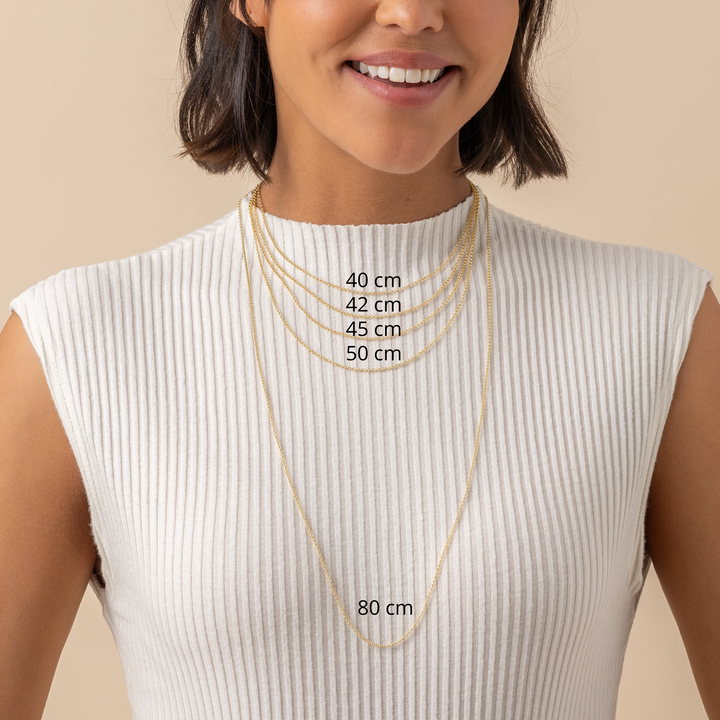
925 sterling silver, 40 mm pendant on a 45 cm sterling silver chain with a 5 cm extender. Larger scale than most pieces in the catalogue. Nickel-free and hypoallergenic. Free worldwide DHL Express in 1-5 business days, with all import duties and taxes covered. 30-day “Love It or Return It” returns.
Is there a gold version?
Not at present. The hummingbird skull is sterling silver only. If a gold animal-skeleton piece is the goal, the seahorse skeleton, raven skull, and T-Rex skull all exist in 18K gold vermeil with related stories from comparative biology.
Animal skulls & bones
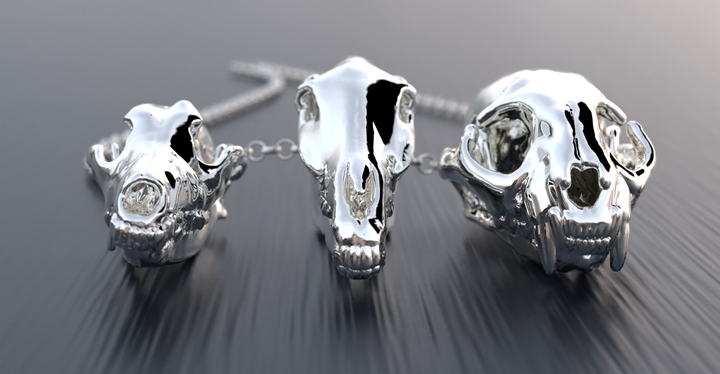
Drawing upon the intricate architecture of animal anatomy, our collection captures the haunting beauty of skulls and bones. Each piece serves as a tactile memento mori, reminding us of the delicate balance between life and death. Crafted with scientific accuracy, these masterpieces evoke a sense of awe and curiosity, offering a tribute to the intricacies of the natural world. Far more than mere adornments, they are conversation-starters that provoke intellectual dialogue.
Find your perfect fit: measure an Existing Ring
Finding out your ring size at home is a simple process and can help you shop for jewelry online with confidence.
Necklace length guide