€ 145


Still questions? Contact us
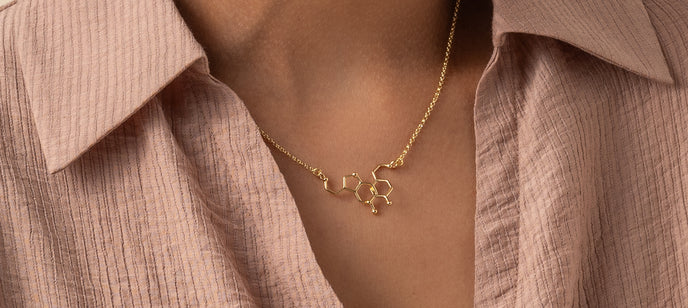
Ketamine necklace | sterling silver
If you have spent enough time in an emergency department or an operating theatre to have given ketamine and watched it work, you already know what the molecule does at the doses where it does it. The dissociative anaesthetic that started in 1962 and now reaches into psychiatry. Worn here as a 27 mm sterling silver pendant.
The Science Behind Ketamine
Ketamine was first synthesised by Calvin Stevens at Parke-Davis in 1962, derived from phencyclidine and selected as a less-prolonged dissociative anaesthetic. It received FDA approval in 1970 and became a battlefield anaesthetic in Vietnam, valued because it preserves airway reflexes and cardiovascular tone where most other anaesthetics suppress them. The primary mechanism is non-competitive antagonism of the NMDA glutamate receptor, with secondary effects on AMPA, opioid, and monoaminergic systems. The S-enantiomer (esketamine) was approved by the FDA in 2019 as Spravato for treatment-resistant depression, the first new-mechanism antidepressant in decades. Sub-anaesthetic doses produce rapid antidepressant effects within hours, distinct from the weeks-to-months timeline of monoamine-targeting drugs.
Who Reaches For This
- anaesthesiologists, emergency physicians, and intensive care doctors
- psychiatrists working in treatment-resistant depression or interventional psychiatry
- neuropharmacologists and translational psychiatry researchers
- paediatric and veterinary clinicians who use ketamine for procedural sedation
For someone who associates ketamine with stable obs and a quiet airway, not with the recreational reading the molecule sometimes attracts.
Explore Related Molecules Jewelry
- Ketamine necklace | gold vermeil
- Ketamine propofol necklace H | silver
- Serotonin necklace V | silver
- Dopamine necklace | silver
- Oxytocin necklace | silver
FAQ
Is the ketamine necklace meant for clinicians or for patients on Spravato?
Both, in roughly equal measure. Anaesthetists, emergency physicians, and intensive-care clinicians wear the molecule as a working reference. Psychiatrists running ketamine or esketamine clinics wear it as a marker of the new mechanistic generation in mood disorders. Patients on Spravato sometimes wear it as a quieter personal acknowledgment. The pendant works for any of those readings without committing to one.
Why is ketamine such a different antidepressant?
Because it works through a different system. Monoamine antidepressants (SSRIs, SNRIs, TCAs) act on serotonin, noradrenaline, or dopamine and need weeks to take effect. Ketamine antagonises the NMDA glutamate receptor and produces measurable antidepressant effects within hours. The mechanism is still being worked out, with current models pointing to rapid synaptogenesis and BDNF release, but the clinical observation is consistent enough that esketamine became the first non-monoamine antidepressant approved in fifty years.
What size is the pendant and what chain comes with it?
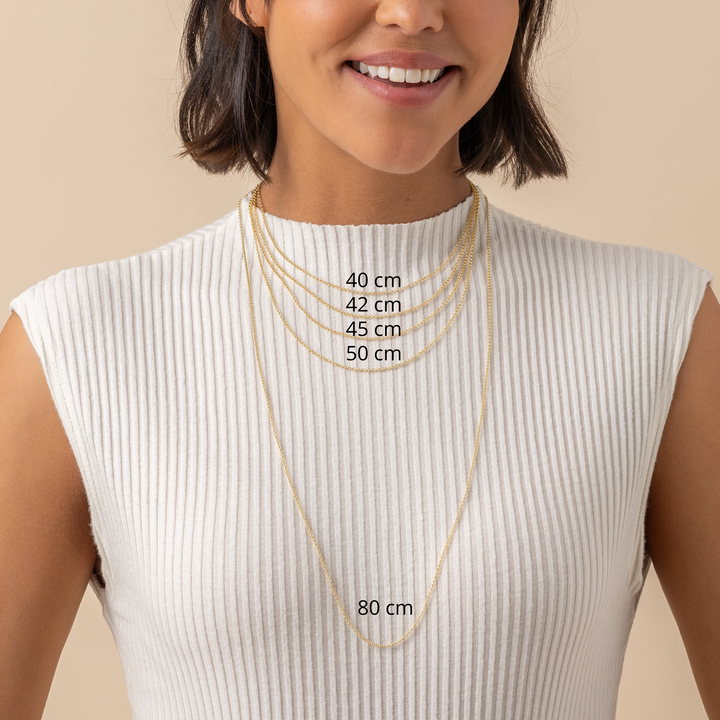
925 sterling silver, 27 mm pendant on a 45 cm sterling silver chain (ø 1.8 mm) with a 5 cm extender. Nickel-free and hypoallergenic. Free worldwide DHL Express in 1-5 business days, with all import duties and taxes covered. 30-day “Love It or Return It” returns.
Is there a gold version?
Yes. The same ketamine pendant is available in 18K gold vermeil at the same 27 mm size and chain length. Choose the finish the recipient already wears. Both versions carry the same design and the same meaning.
Molecules
Delve into the hidden elegance of science with our meticulously crafted jewelry, inspired by the intricate structures of chemical molecules. Each piece serves as a tactile tribute to the building blocks of life and matter, capturing the allure of atoms and bonds in precious metals. A harmonious fusion of art and science, these creations are more than mere accessories; they're a celebration of the enigmatic beauty that underpins our universe.
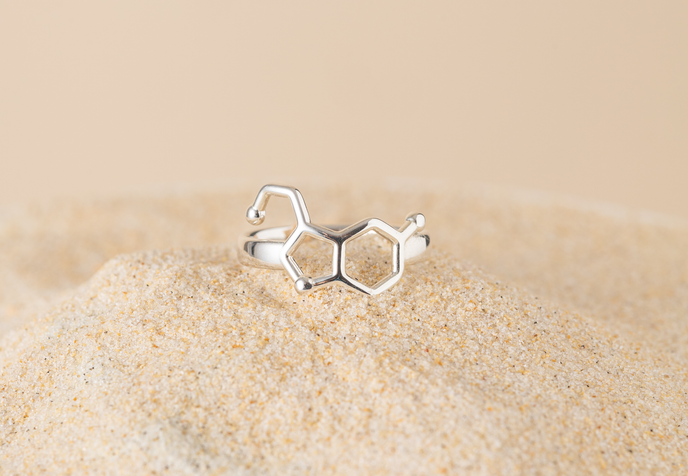
Find your perfect fit: measure an Existing Ring
Finding out your ring size at home is a simple process and can help you shop for jewelry online with confidence.
Necklace length guide