€ 225


Still questions? Contact us
mitochondrion necklace | silver & gold vermeil
Shona D.'s mum “loves biology and is obsessed with mitochondria”, and buys herself whatever she wants, so “presents can be really hard”. This mitochondrion necklace in silver and gold vermeil was “a huge hit”: she hadn't taken it off since Christmas. Give it to a woman just as hard to shop for and just as fond of biology.
Who It's For
- your mum, if biology is her favourite subject
- a woman who wears silver and gold together
- someone whose present has to arrive quickly
- yourself, if you are the one who loves mitochondria
Tanya C., who ordered it as a present: “Cannot quite believe how quickly I received the product”
Where Mitochondria Came From
Mitochondria began as bacteria. Their genes place their ancestors among, or close to, a group called the alphaproteobacteria, and the family likeness still shows. The outer membrane of a mitochondrion is studded with barrel-shaped pore proteins, a kind otherwise found only in the outer membranes of bacteria such as E. coli and in chloroplasts, which have a bacterial past of their own. The inner membrane holds cardiolipin, a lipid common in bacterial membranes and, in our cells, found almost only there. Most of the ancestor's genes have since moved to the nucleus or been lost: human mitochondria keep 37 genes of their own.
Explore Related Biology Jewelry
- mitochondrion necklace | silver
- mitochondrion necklace | gold vermeil
- mitochondria studs | silver
- ATP necklace | silver
FAQ
How big is the pendant, and how does it sit?
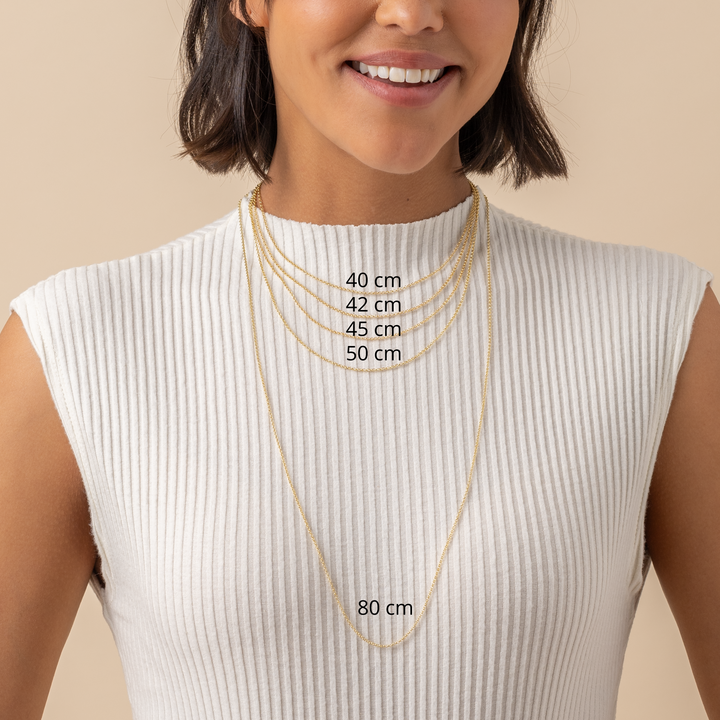
The pendant measures 33 mm (1.3 inches), a little more than a US half dollar and noticeably more than a 2-euro coin. It hangs upright from a small loop, below the collarbone, on a 45 cm (17.7 inch) sterling silver chain with a 5 cm (2 inch) extender. Extra chains for layering are sold on this page: 40, 42, 45 or 50 cm with an extender, or 80 cm. It is sterling silver and 18K gold vermeil (2.5 microns of 18K gold over solid sterling silver), nickel-free and hypoallergenic.
Is there an all-silver or all-gold version?
Not of this design, which pairs a sterling silver plate with an open gold vermeil outline in one pendant. A separate mitochondrion necklace design measures 24 mm and comes in sterling silver or in gold vermeil, each on a chain of the same metal. Choose the finish the recipient already wears, one metal or both. The mitochondria studs (13 mm) come in sterling silver.
Will it arrive in time, and what if it isn't right?
DHL Express delivers free in 1-5 business days worldwide, and we pay the import duties and taxes, so nothing is due at the door. It arrives in a ready-to-gift jewelry box and festive envelope. If it isn't right, our 30-day “Love It or Return It” policy applies.
Who found DNA inside mitochondria?
Margit Nass and Sylvan Nass, in 1963. Looking at chick embryo cells under the electron microscope, they saw fine fibres inside mitochondria that stained like DNA and vanished when treated with DNase, an enzyme that digests DNA. Within about a year, biochemists had isolated the DNA itself from yeast and fungal mitochondria. The find gave new weight to an older idea, argued by Paul Portier in 1918, Ivan Wallin in the 1920s and Lynn Margulis in 1967: that mitochondria were once bacteria.
Cellular Biology
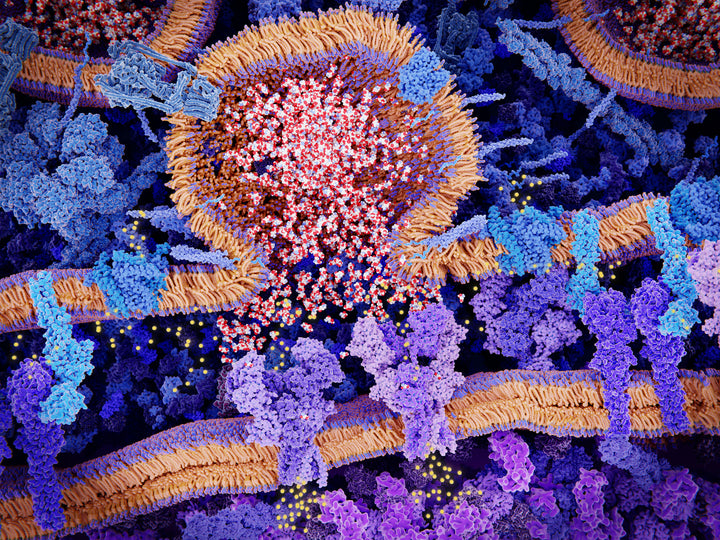
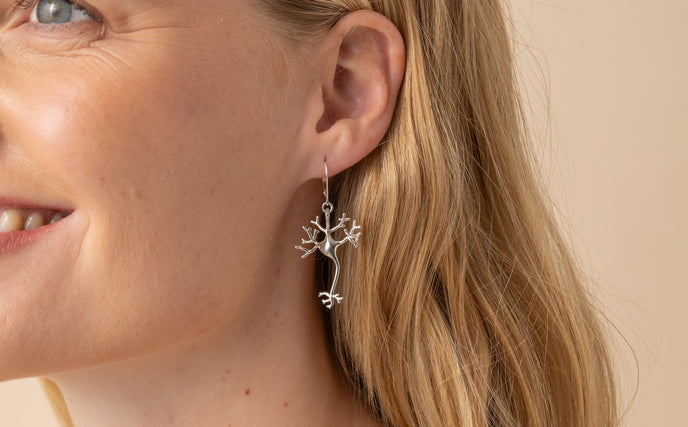
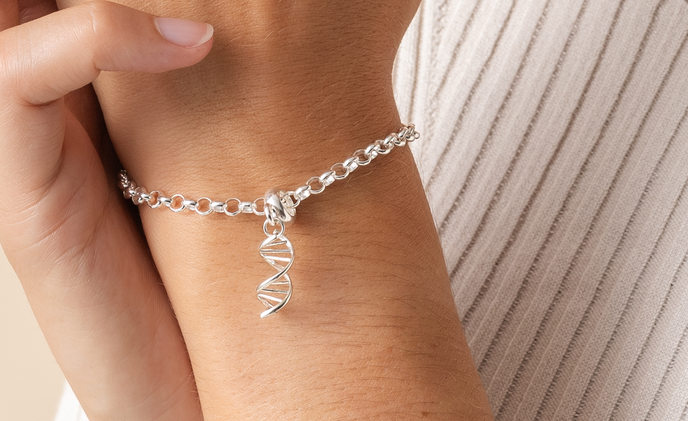
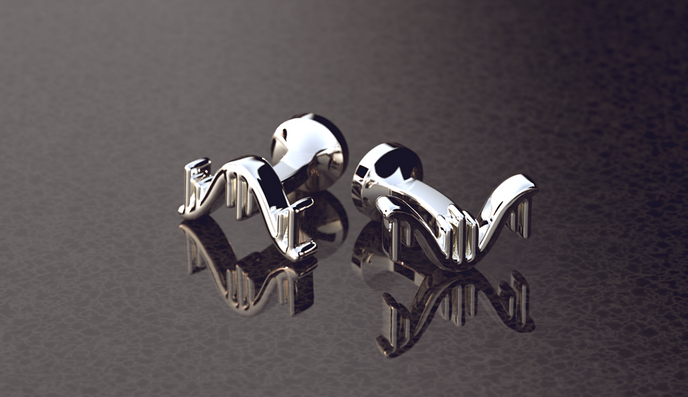
Step into the fascinating world of cellular biology through our unique jewelry designs. These pieces serve as wearable reflections of life's microscopic wonders, capturing the aesthetics of DNA strands, cellular formations, and more. Far from simple adornments, they spark dialogue and honor the captivating complexities found within biological research. Merging scientific accuracy with artistic flair, each creation offers a tactile experience that bridges the gap between scientific inquiry and aesthetic appreciation.
Find your perfect fit: measure an Existing Ring
Finding out your ring size at home is a simple process and can help you shop for jewelry online with confidence.
Necklace length guide