


€ 195


Still questions? Contact us
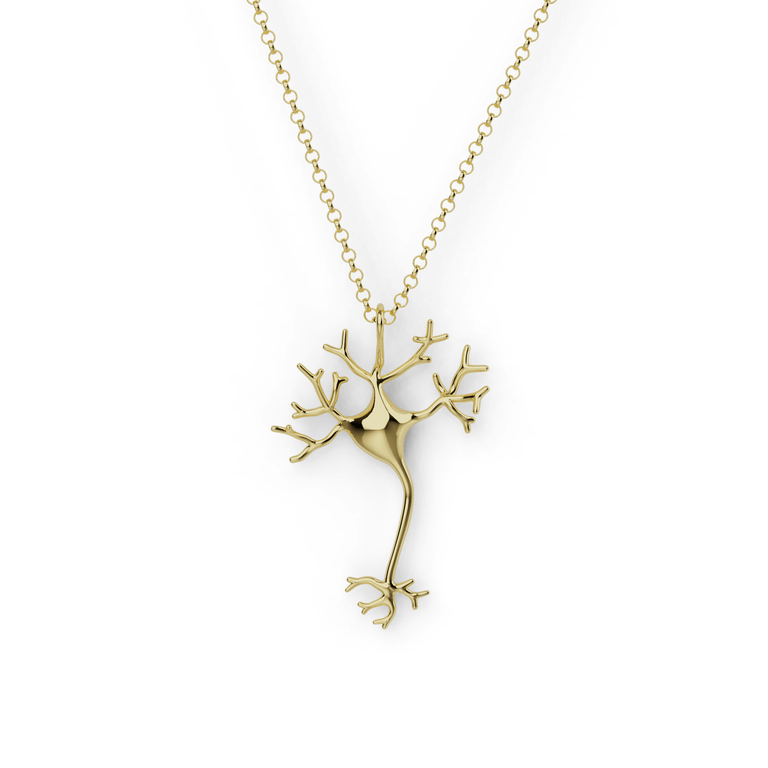
Neuron necklace | 18K gold vermeil
A first term of neuroscience, a graduation, a first post in the lab or the clinic. This gold neuron necklace is a gift for any of those steps, for a daughter, a partner or a student of your own. A single neuron can take in signals from thousands of others through its branches.
Who It's For
- a daughter leaving home to study neuroscience or psychology
- a graduate in neuroscience, psychology or medicine
- a wife or partner who is a neurologist or neuroscientist
- a student finishing in your lab, from the people who trained them
- yourself, if the brain is your work and gold is what you wear every day
Nikolas D. bought it as a gift: “The neuron is as lovely as I expected.” Laura S. bought her own: “I'm really content with this wonderful piece of science, delicate, looking like very high quality.”
What Makes a Neuron Different
Many cells in the body are renewed throughout life. The neurons of your cerebral cortex are not. In 2006, researchers in Stockholm used the carbon-14 that Cold War nuclear tests released into the air, which ended up in the DNA of every cell made at the time. The DNA of cortical neurons matched the year each person was born: those neurons are as old as you are. Keeping them running is costly. The brain is about 2 per cent of body weight but uses around 20 per cent of the body's energy at rest, much of it on the signalling between neurons.
Explore Related Neuroscience Jewelry
- neuron necklace | silver
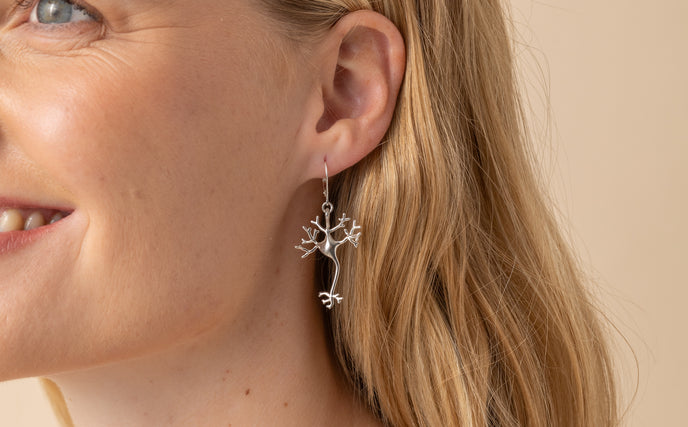
- neuron earrings | gold vermeil
- purkinje cell necklace | gold vermeil
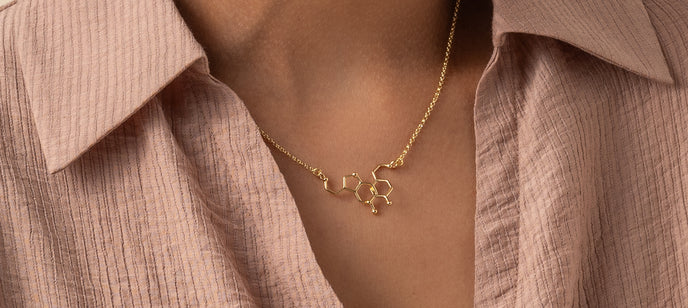
- dopamine serotonin necklace H | gold vermeil
FAQ
How big is the pendant, and what is gold vermeil?
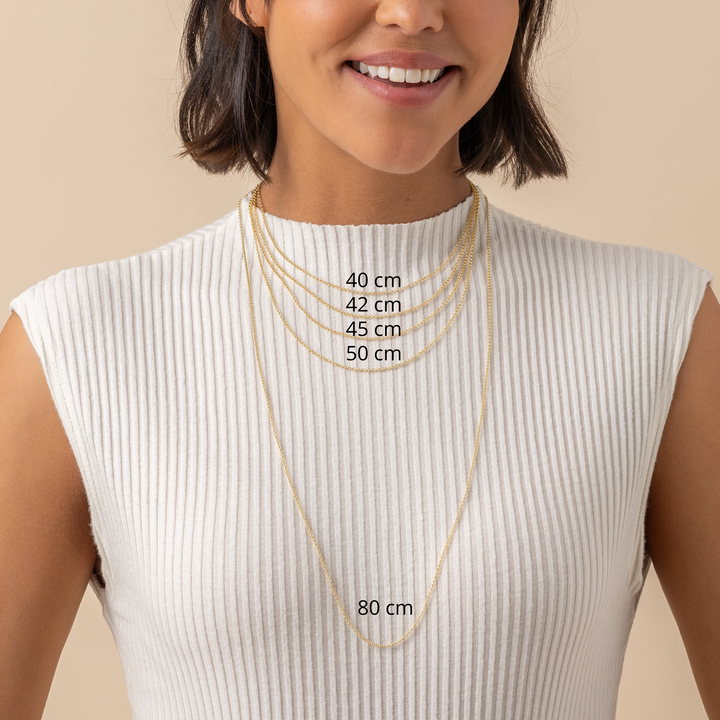
The pendant is 39 mm long (about 1.5 inches), one and a half times the width of a 2-euro coin. It hangs from a loop at the top on a 45 cm (17.7 inch) gold vermeil chain with a 5 cm (2 inch) extender, so it can sit anywhere from 45 to 50 cm. Gold vermeil is 2.5 microns of 18K gold over solid sterling silver. Nickel-free and hypoallergenic. The open branches can catch on loose knits, so take it off for sleep and sport.
Is there a silver version, or matching earrings?
Yes. The same neuron comes in sterling silver, at the same 39 mm on a silver chain. Choose the finish the recipient already wears: the design is identical in both. For a set, there are neuron earrings in gold vermeil, 31 mm on gold vermeil leverback hooks.
Will it arrive in time, and can it be returned?
DHL Express ships it free in 1-5 business days worldwide, and we pay the import duties and taxes, so there is nothing to pay at the door. It arrives in a ready-to-gift jewelry box and festive envelope. If it isn't right, our 30-day “Love It or Return It” policy applies.
Which dream showed that nerves signal with chemicals?
Otto Loewi recalled waking the night before Easter Sunday with an idea for an experiment. He scribbled it down, but by morning he could not read it. The next night it returned at three o'clock, and he went to his lab in Graz. He slowed a frog's heart through its vagus nerve, then moved the fluid around it to a second heart, which slowed too. The nerve had released a chemical, later shown to be acetylcholine. He published it in 1921 and shared the 1936 Nobel Prize with Henry Dale.

Neuroscience
Dive into the intricacies of the human mind with our neuroscience-inspired jewelry collection. Each piece is a tactile ode to the neural networks that shape our thoughts, memories, and consciousness. Crafted with meticulous attention to detail, our designs mirror the dendritic branches and synaptic connections that form the basis of mental activity. With these elegant pieces, wear the enigma of cognition close to your skin, offering a subtle yet profound exploration of what it means to be sentient.
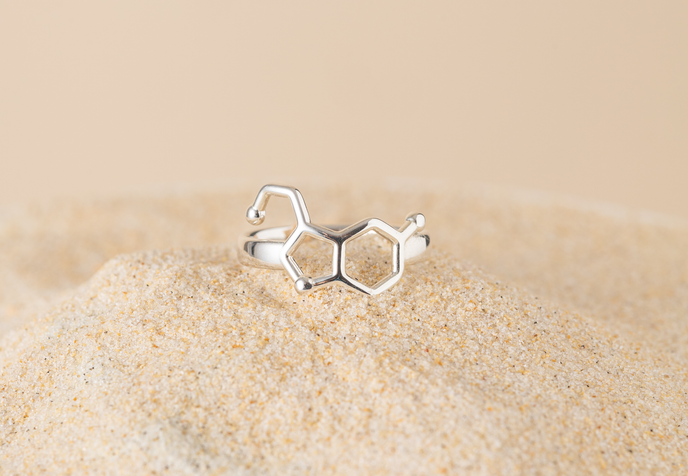
Find your perfect fit: measure an Existing Ring
Finding out your ring size at home is a simple process and can help you shop for jewelry online with confidence.
Necklace length guide