€ 225


Still questions? Contact us
Orangutan skull necklace | sterling silver
Birutė Galdikas arrived at the Tanjung Puting Reserve in Borneo in 1971 with a single mission: to understand orangutans in their forest. She lived among them, studied them, fought for them, and changed forever how we see the intelligence of our closest Asian relatives. This skull, worn as a 24 mm sterling silver pendant, honours her decades of work and the solitary, cognitively complex being that helped define what it means to be ape.
The Biology and Conservation of Orangutans
Orangutans (Pongo) are Asian great apes with three recognised species: Pongo pygmaeus (Bornean orangutan), Pongo abelii (Sumatran orangutan), and Pongo tapanuliensis (Tapanuli orangutan, formally recognised in 2017). They inhabit the rainforests of Borneo and Sumatra and are largely solitary, with adult males maintaining territories defended through long-distance calls. Orangutans share approximately 96.4 percent genetic similarity with humans and demonstrate complex cognition including tool use, individual personality, and learning across generations. Birutė Galdikas began her long-term field studies at Tanjung Puting Reserve in Borneo in 1971, producing decades of observational data on behaviour, ecology, and social dynamics. All three orangutan species are critically endangered due to habitat loss from deforestation, particularly for palm oil plantations, and illegal capture for the pet trade.
The Audience
- primatologists and conservation biologists working on endangered species protection and habitat preservation
- field researchers who have spent time in rainforest reserves studying great ape behaviour
- educators and science communicators teaching about human evolution and great ape cognition
- anyone moved by Galdikas' work to understand the solitary intelligence and ecological dependence of orangutans
Wear it as a statement of respect for an ape that does not live in the social complexities of groups but carries a sophisticated mind through the solitude of the forest.
Explore Related Primate Skull Jewelry
- Chimpanzee skull necklace | silver
- Macaque skull necklace | silver
- Raven skull necklace | silver
- T-Rex skull necklace | silver
- Horse skull necklace | silver
FAQ
How similar genetically are orangutans to humans?
Orangutans share approximately 96.4 percent genetic similarity with humans. This places them in the great ape family alongside chimpanzees and gorillas, all of which share 96 to 99 percent genetic identity with humans. The modest genetic differences underlie profound behavioural and cognitive divergences. Orangutans are solitary as adults (unlike the social complexities of chimpanzees and gorillas), but they demonstrate tool use, individual personality, learning across generations, and problem-solving abilities that challenge simple distinctions between human and animal intelligence.
Who is Birutė Galdikas and what did she do?
Birutė Galdikas is a Lithuanian-Canadian primatologist who began her groundbreaking research on Bornean orangutans at Tanjung Puting Reserve in 1971. She spent decades in the rainforest observing orangutan behaviour, ecology, and social dynamics in unprecedented detail. Her work revealed the intelligence, individual personality, and learning capacity of orangutans. She became a fierce advocate for orangutan conservation and habitat protection, founding the Orangutan Foundation International and working against deforestation and the illegal pet trade. Her research demonstrated that long-term field study in the field was essential to understanding great ape behaviour, a principle that transformed primatology.
What material is the pendant and what chain comes with it?
925 sterling silver, 24 mm pendant on a 45 cm sterling silver chain (ø 1.8 mm) with a 5 cm extender. Nickel-free and hypoallergenic. Free worldwide DHL Express in 1-5 business days, with all import duties and taxes covered. 30-day “Love It or Return It” returns.
Do you have this in gold?
Currently available in sterling silver only. If you are interested in a gold vermeil version, please contact us with a custom order inquiry.
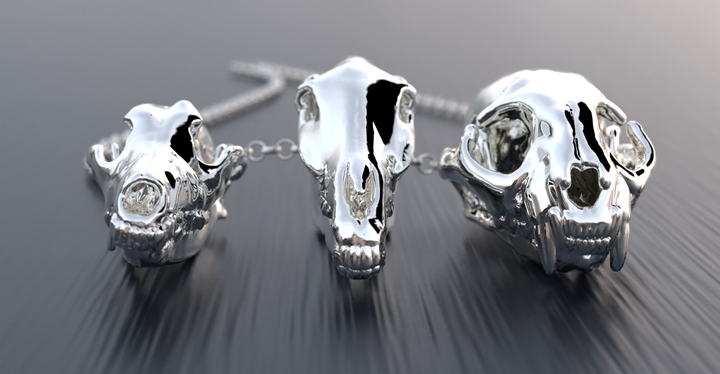
Animal skulls & bones
Drawing upon the intricate architecture of animal anatomy, our collection captures the haunting beauty of skulls and bones. Each piece serves as a tactile memento mori, reminding us of the delicate balance between life and death. Crafted with scientific accuracy, these masterpieces evoke a sense of awe and curiosity, offering a tribute to the intricacies of the natural world. Far more than mere adornments, they are conversation-starters that provoke intellectual dialogue.
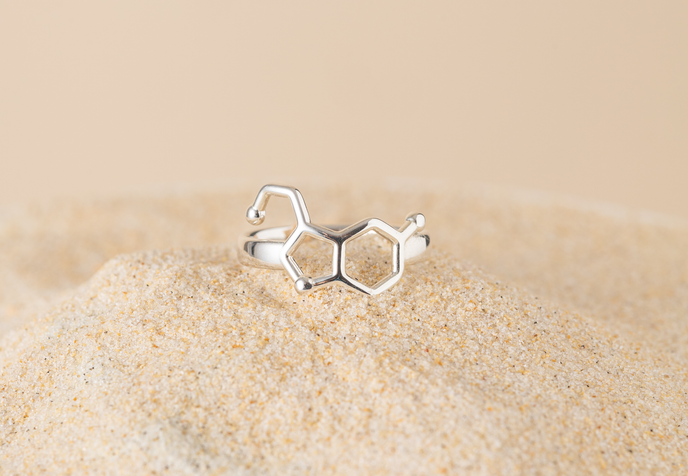
Find your perfect fit: measure an Existing Ring
Finding out your ring size at home is a simple process and can help you shop for jewelry online with confidence.
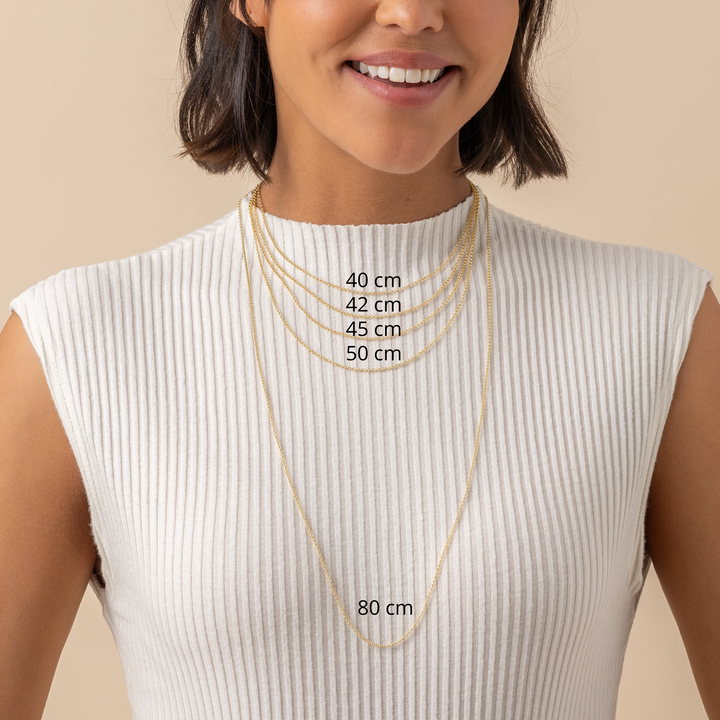
Necklace length guide