€ 175


Still questions? Contact us
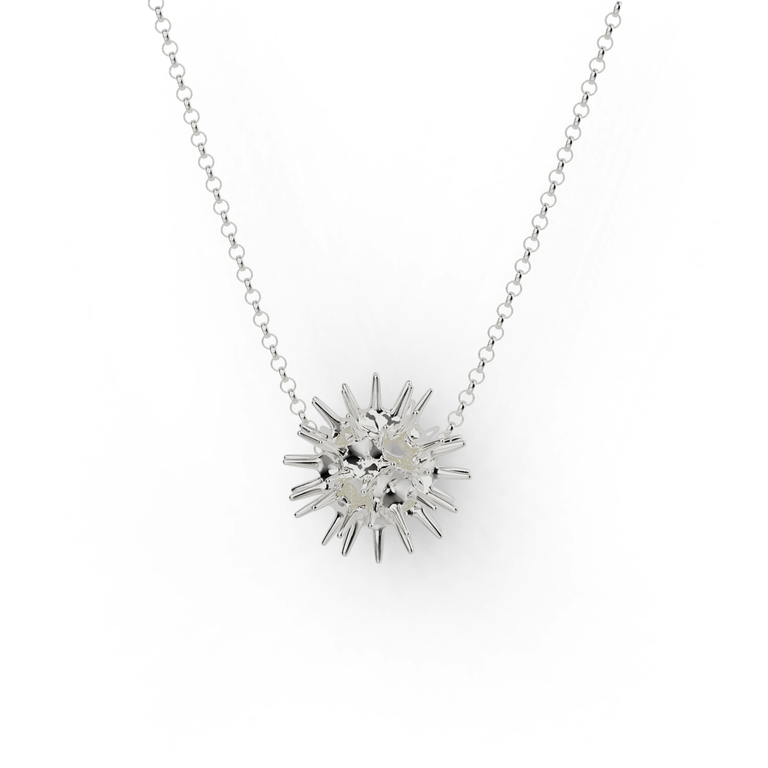
Pollen grain necklace | sterling silver
The pollen grain is the male gametophyte of seed plants. Every flowering species makes its own version, with a wall pattern so distinctive that palynologists can identify plant communities from sediment cores millions of years old. The thing carried on the wind in invisible quantities is, structurally, one of the most species-specific objects in biology.
The Science of the Pollen Grain
The outer wall of a pollen grain, the exine, is built from sporopollenin, one of the most chemically resistant polymers known. Sporopollenin survives strong acid and base treatment, high temperatures, and millions of years in anoxic sediments, which is why pollen records form a major part of the geological history of plants. Exine morphology is highly species-specific: the size, number, and shape of apertures (pores and colpi where the pollen tube emerges), the surface ornamentation (smooth, spiny, reticulate), and the symmetry are all characters palynologists use to identify species. Different dispersal strategies have produced different optimisations. Wind-pollinated species (anemophily) tend to have small, smooth, light grains. Insect-pollinated species (entomophily) tend to have larger, sticky, sculpted grains that adhere to pollinators.
Worn By
Researchers and curious eyes whose work runs through plant biology:
- botanists, plant evolutionary biologists, and pollination ecologists
- palynologists and archaeobotanists who identify species from fossil pollen
- allergists and immunologists working on pollen-driven respiratory disease
- climate and quaternary scientists who use pollen records to reconstruct past vegetation
- biology students who have spent an afternoon under a light microscope memorising species by their grains
Explore Related Cellular Biology Jewelry
- Arabidopsis necklace | silver
- Chloroplast necklace | silver
- Rotifer necklace | silver
- Ammonite necklace | silver
FAQ
Is this for a plant biologist or for someone with hay fever?
Either, in practice. Plant biologists tend to receive it as a piece naming the structure their work is built on. People with seasonal allergies sometimes pick it as a wry choice, the structure responsible for a complicated relationship with spring. Palynologists and archaeobotanists are the more specialised audience, with their work depending on exine morphology directly. The piece reads as legitimate to all three.
Why is sporopollenin so chemically resistant, and why does that matter?
Sporopollenin is a polymer of long-chain fatty acids and phenolic precursors with extensive cross-linking, and the exact chemistry has resisted full characterisation for decades. It survives concentrated acid and base, high temperatures, and millions of years in oxygen-poor sediments where almost everything else organic decays. That stability is what makes the geological pollen record possible. Cores taken from lake beds, peat bogs, or ocean sediments can be processed to extract intact pollen from any depth, identified to species or genus from the exine pattern, and used to reconstruct the vegetation, climate, and human land-use history of an entire region.
What's the size, material, and chain?
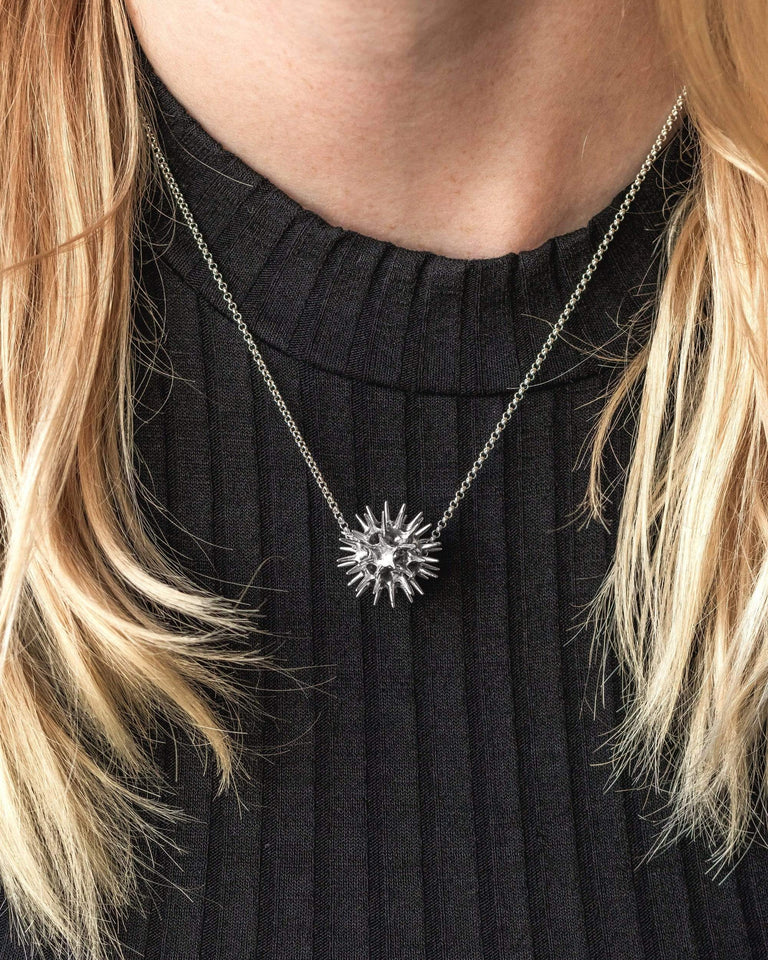
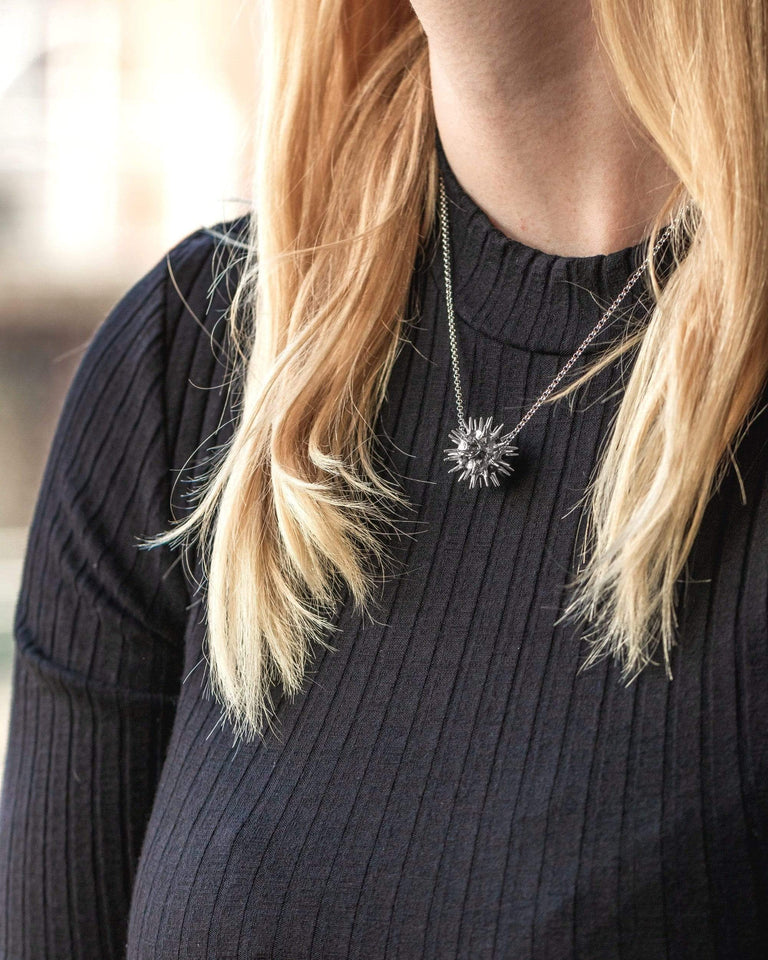
20 mm pendant in 925 sterling silver, nickel-free. 45 cm sterling silver chain with a 5 cm extender. Ships free worldwide via DHL Express in 1-5 business days, with all import duties prepaid. Comes in a ready-to-gift jewelry box with the 30-day “Love It or Return It” policy.
Is there a gold version?
Not currently. The pollen grain is silver only. Several other plant-biology pieces in the catalog (chloroplast, arabidopsis) are available in both materials, but pollen is single-material for now.

Other
In a world where art and science often exist in separate realms, our "Curiosities" collection serves as a harmonious confluence. Drawing inspiration from an eclectic range of scientific phenomena not covered elsewhere. Each piece is meticulously crafted to evoke a sense of wonder. It's jewelry that doesn't just adorn; it educates and fascinates, sparking conversations about the lesser-explored but equally awe-inspiring facets of our universe.
Find your perfect fit: measure an Existing Ring
Finding out your ring size at home is a simple process and can help you shop for jewelry online with confidence.
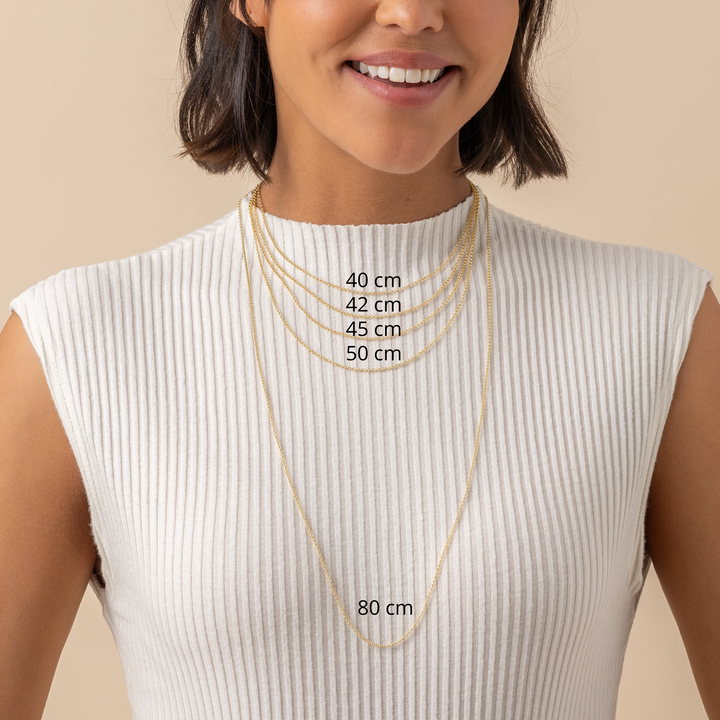
Necklace length guide