
€ 265


Still questions? Contact us
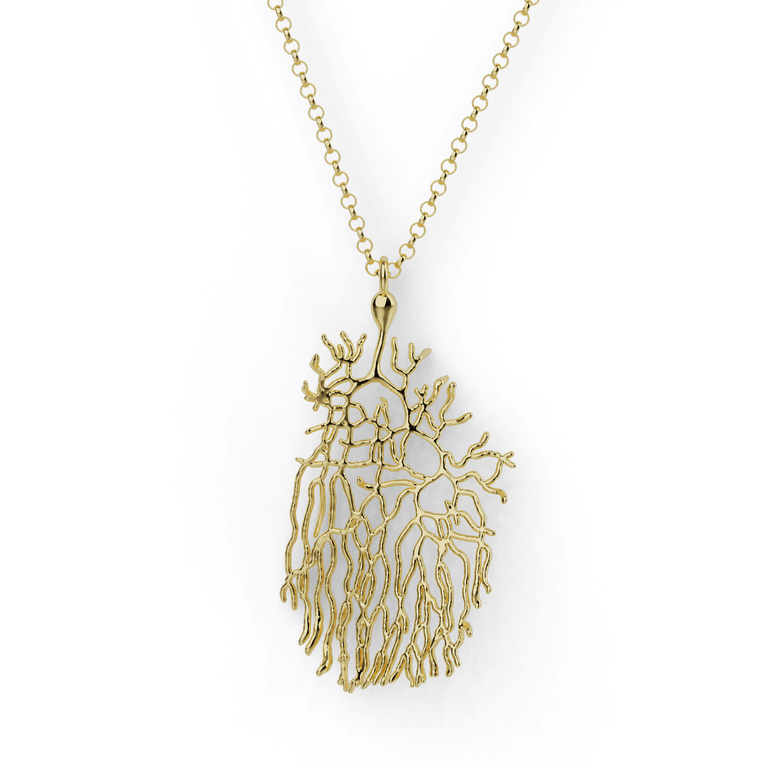
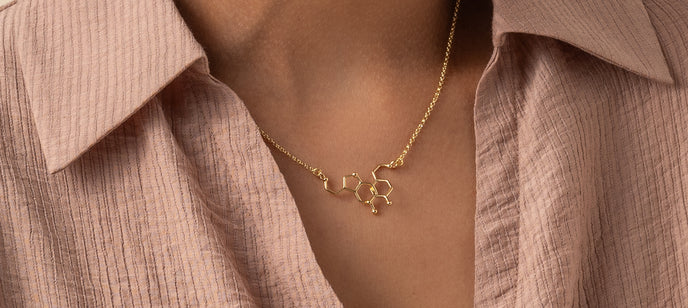
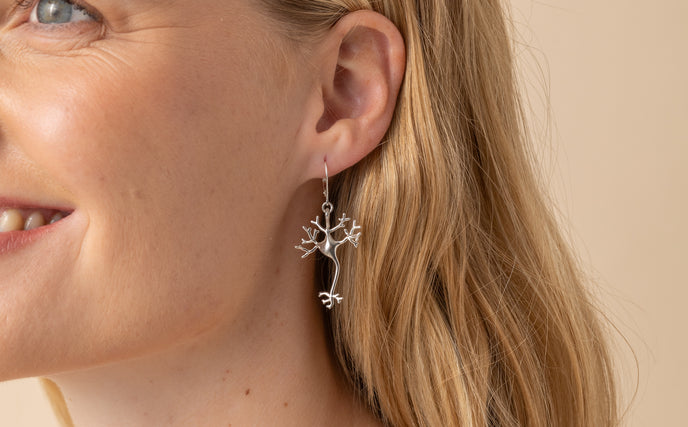
Purkinje cell necklace | 18K gold vermeil
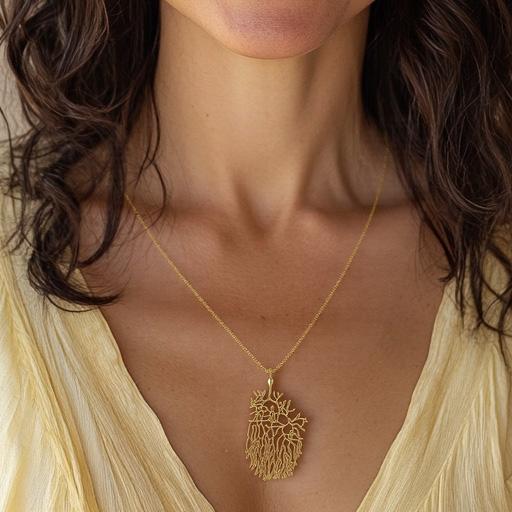
In 1837 Jan Evangelista Purkinje, the Bohemian physiologist whose name carries through neuroscience and cardiology, described a class of large flask-shaped cells in the cerebellum. The cell type now bears his name across every neuroscience textbook in print. Worn here as a 47 mm 18K gold vermeil pendant.
The Science Behind the Purkinje Cell
Purkinje cells are GABA-ergic neurons that form a single layer between the molecular layer and the granular layer of the cerebellar cortex. Their dendritic trees are flat, planar, and the most elaborate of any vertebrate neuron, with up to 200,000 parallel-fibre synapses on a single cell. They are the sole output of the cerebellar cortex, projecting to the deep cerebellar nuclei and from there to thalamus, motor cortex, brainstem, and spinal cord. Each Purkinje cell receives input from one climbing fibre (originating in the inferior olive) and from hundreds of thousands of parallel fibres (granule cell axons). Long-term depression at parallel-fibre-Purkinje synapses, induced by climbing-fibre activity, is the cellular substrate of cerebellar motor learning. Loss of Purkinje cells is the defining cellular pathology in spinocerebellar ataxia and several other cerebellar disorders.
Worn By
- cerebellar neuroscientists at career milestones
- retiring movement-disorder neurologists or clinical cerebellum specialists
- academic neuroanatomists at major appointments or named lectureships
- graduate students at thesis defence in cerebellar physiology or motor neuroscience
Most often given on a cerebellar-neuroscience graduation, on retirement from a movement-disorder clinical career, or on a major appointment in motor neuroscience research.
Explore Related Neuroscience Jewelry
- Purkinje cell necklace | silver
- Neuron necklace | gold vermeil
- Sagittal brain necklace | gold vermeil
- Spindle neuron necklace | silver
- purkinje cell earrings | gold vermeil
- Neuron earrings | silver
FAQ
Gold or silver?
Same 47 mm pendant, same chain length, same Purkinje cell, also in sterling silver. Choose the finish the recipient already wears. Both versions carry the same design and the same meaning.
Why does Purkinje's name appear in cardiology too?
Because Jan Purkinje did not stop at the cerebellum. In 1839 he described the network of conducting fibres in the heart's ventricles that carry the electrical impulse from the bundle of His to the ventricular myocardium. Those fibres are now called the Purkinje fibres of the heart. The same physiologist who saw the largest neurons in the cerebellum also saw the cardiac conduction system, two centuries before electrophysiology had the tools to measure either one.
What size is the pendant and what chain comes with it?
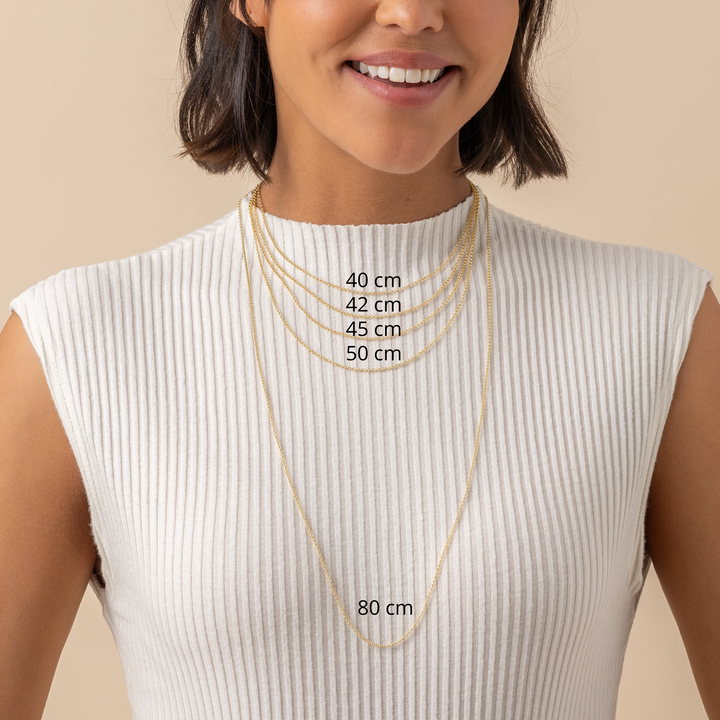
18K gold vermeil over a sterling silver core, 47 mm pendant on a 45 cm gold vermeil chain (ø 1.8 mm) with a 5 cm extender. Nickel-free and hypoallergenic. Free worldwide DHL Express in 1-5 business days, with all import duties and taxes covered. 30-day “Love It or Return It” returns.
Is there a silver version?
Yes. The same Purkinje cell is available in sterling silver at the same 47 mm size and chain length.
Neuroscience
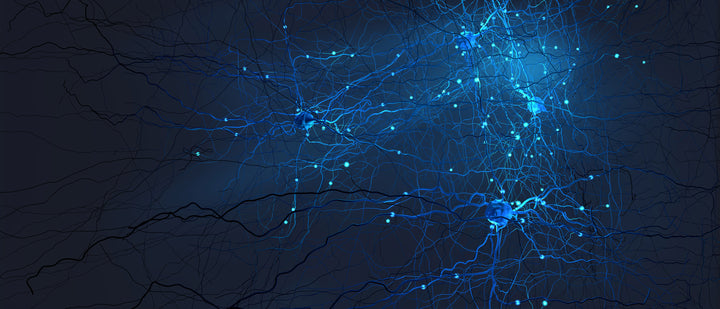
Dive into the intricacies of the human mind with our neuroscience-inspired jewelry collection. Each piece is a tactile ode to the neural networks that shape our thoughts, memories, and consciousness. Crafted with meticulous attention to detail, our designs mirror the dendritic branches and synaptic connections that form the basis of mental activity. With these elegant pieces, wear the enigma of cognition close to your skin, offering a subtle yet profound exploration of what it means to be sentient.
Find your perfect fit: measure an Existing Ring
Finding out your ring size at home is a simple process and can help you shop for jewelry online with confidence.
Necklace length guide