€ 140


Still questions? Contact us
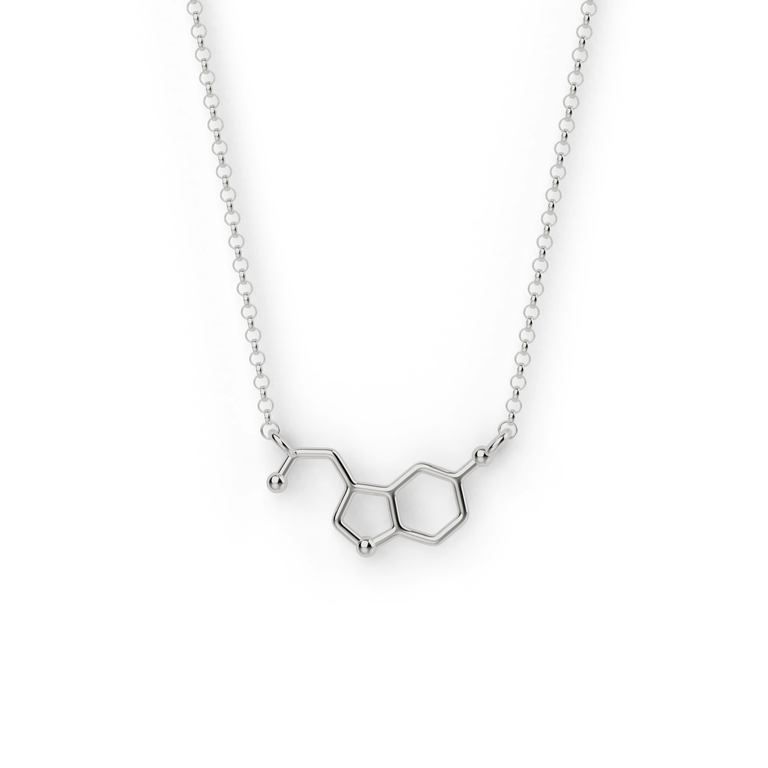
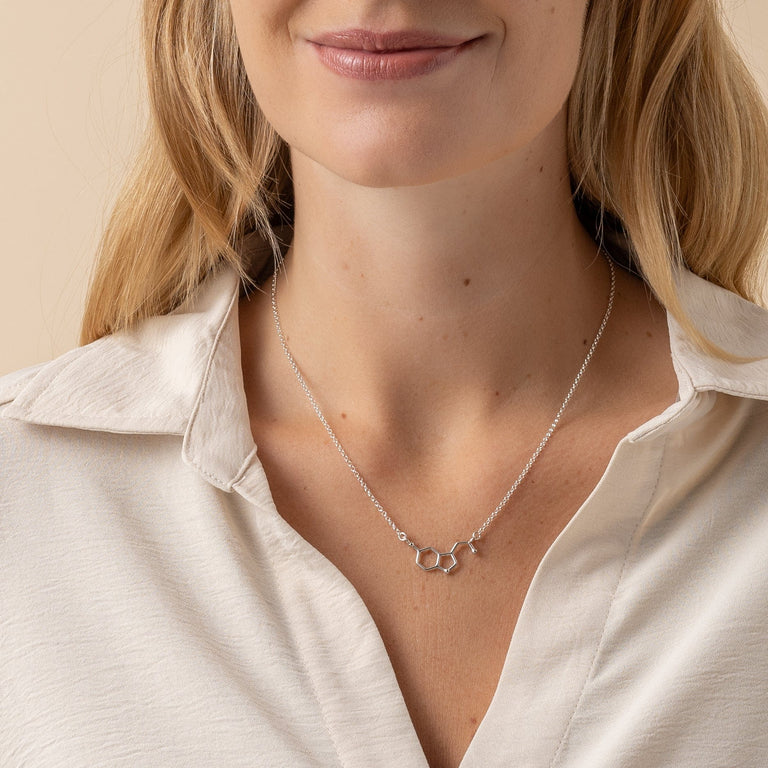
Serotonin necklace H | sterling silver
A serotonin necklace is a quiet way to tell a friend that she brightens your days. Serotonin is one of the chemical messengers involved in mood, sleep and appetite. Give it for her birthday or for no reason at all, or keep one for yourself.
Who It's For
- a best friend, the one who cheers everyone else up
- a daughter or granddaughter studying chemistry, psychology or pharmacy
- a girlfriend or wife, for Valentine's Day or Christmas
- a colleague in medicine or science, as a necklace for long days at work
- yourself, as a daily reminder to find joy in small things
Dru R. bought it as a gift: “The design is eye catching but subtle. She really loves it.” Chelsea C. bought one for herself: “My go-to work necklace, I'm constantly getting compliments on it. The clasp is super tight so you know you won't lose it in the middle of a long shift.”
The Chemistry of Serotonin
Serotonin is 5-hydroxytryptamine, often written 5-HT. The name describes the molecule: a tryptamine (an indole ring with a two-carbon chain ending in an amine) with a hydroxyl group at position 5 of the ring. The body makes it in two steps from tryptophan, an amino acid we get from food. The first step is the slow one, and the body has two separate enzymes for it. TPH1 works mainly in the lining of the gut, which makes most of the body's serotonin. TPH2 works in nerve cells, including the brain's serotonin neurons, and was identified only in 2003. Serotonin cannot pass from the blood into the brain, so the brain relies on its own supply.
Explore Related Neuroscience Jewelry
- serotonin necklace H | gold vermeil
- serotonin necklace V | silver
- dopamine serotonin necklace H | silver
- serotonin earring hoops | silver
FAQ
How big is the pendant, and how does it sit?
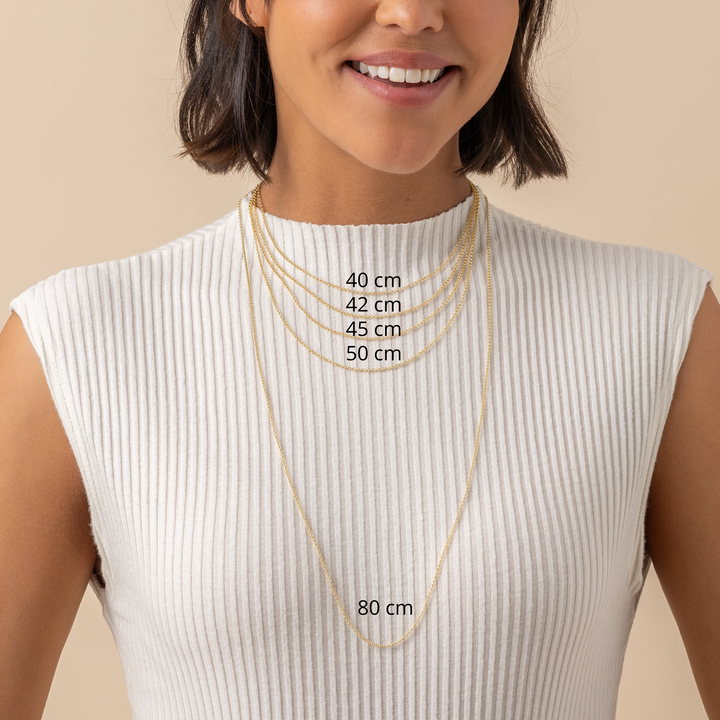
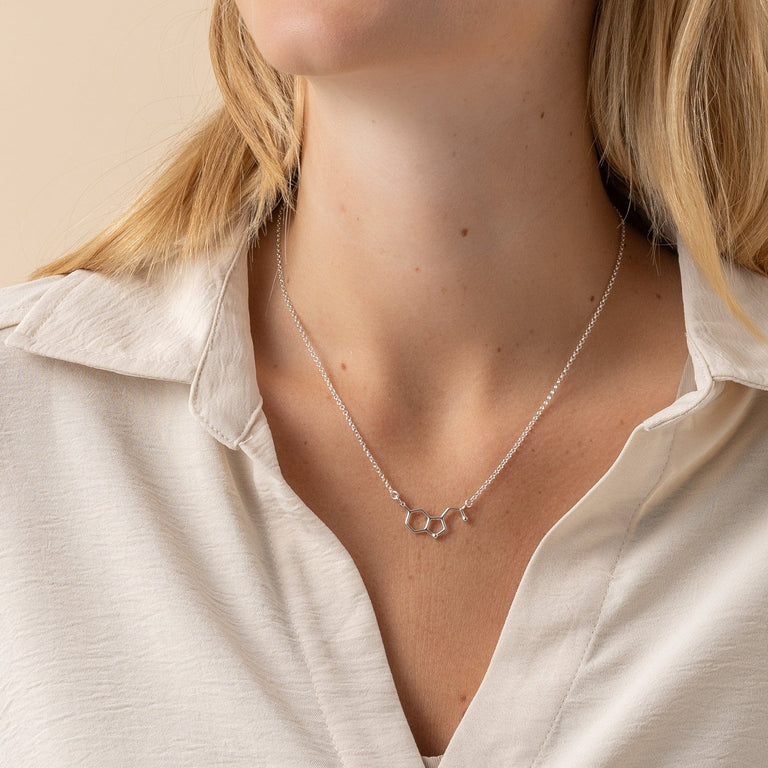
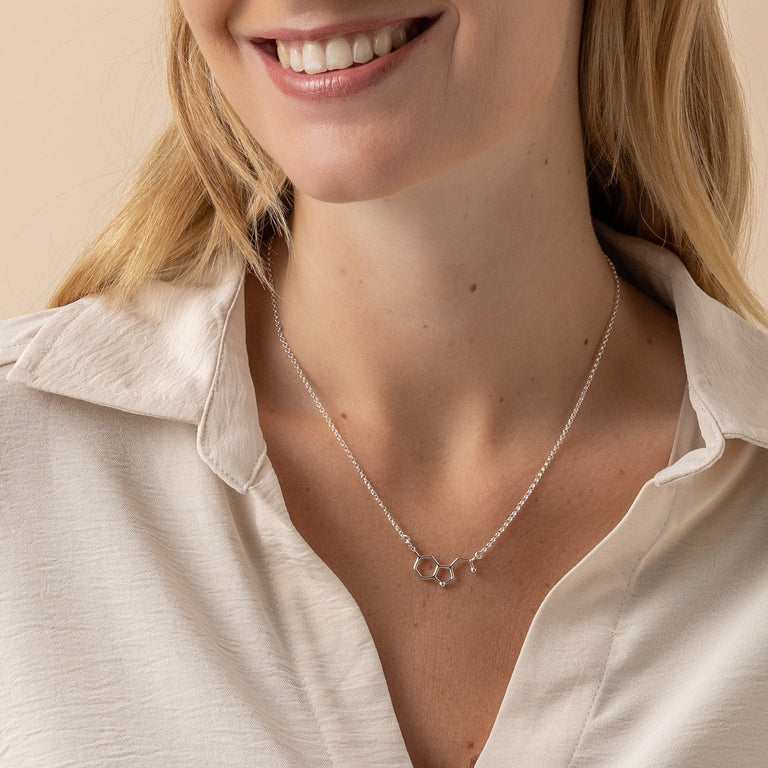
The pendant is 26 mm across (about 1 inch), close to the width of a 2-euro coin and a little wider than a US quarter, and smaller than the close-up photos may suggest. The chain is fixed at both ends, so it sits sideways just below the collarbone, on a 45 cm (17.7 inch) sterling silver chain with a 5 cm (2 inch) extender. You can add an extra chain of 40, 42, 45 or 50 cm with extender, or 80 cm, on this page. Pendant and chain are nickel-free.
Is there a gold version, or a vertical one?
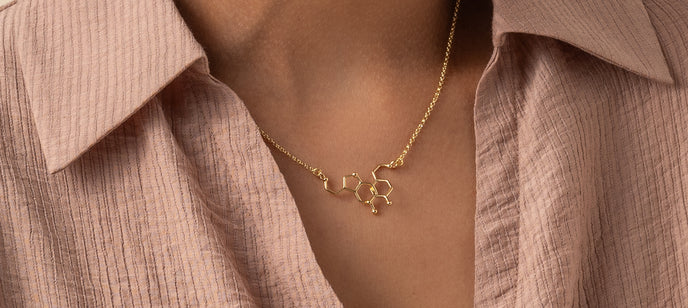
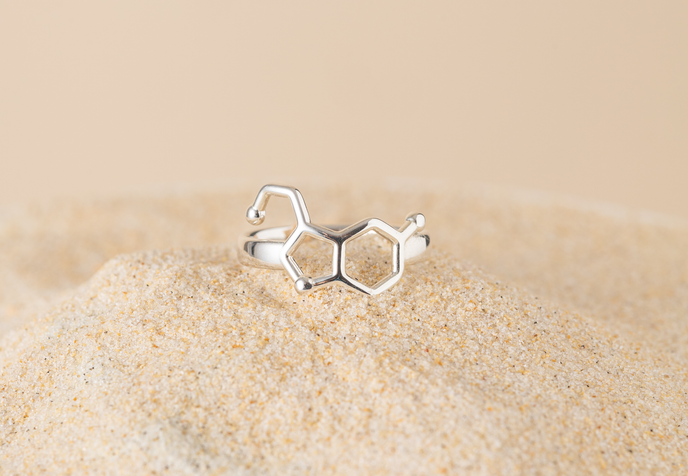
Yes to both. The same horizontal pendant comes in 18K gold vermeil, also 26 mm. Choose the finish she already wears: the design is identical in silver and gold. The vertical serotonin necklace (25 mm) hangs from a single point, so the molecule sits upright, in silver or gold vermeil. To match, there are serotonin studs (19 mm) in silver or gold vermeil, and earring hoops (25 mm), a bracelet and a ring in sterling silver.
When will it arrive, and can it be returned?
It ships free worldwide with DHL Express and arrives in 1-5 business days. We pay the import duties and taxes, so there is nothing to pay on delivery. It comes in a ready-to-gift jewelry box and festive envelope. If it isn't right, our 30-day “Love It or Return It” policy applies.
How is serotonin related to melatonin?
Melatonin is made from serotonin. Mainly at night, the pineal gland turns serotonin into melatonin in two steps, and melatonin signals darkness to the body. The first clue came in 1917, when two American researchers fed cow pineal extract to tadpoles and their skin turned pale. In 1958 Yale dermatologist Aaron Lerner and his team isolated the substance and named it melatonin, hoping it would treat vitiligo. It didn't. Two years later Julius Axelrod and Herbert Weissbach found the pineal enzyme that completes the conversion.
Molecules
Delve into the hidden elegance of science with our meticulously crafted jewelry, inspired by the intricate structures of chemical molecules. Each piece serves as a tactile tribute to the building blocks of life and matter, capturing the allure of atoms and bonds in precious metals. A harmonious fusion of art and science, these creations are more than mere accessories; they're a celebration of the enigmatic beauty that underpins our universe.
Find your perfect fit: measure an Existing Ring
Finding out your ring size at home is a simple process and can help you shop for jewelry online with confidence.
Necklace length guide