€ 200


Still questions? Contact us
Tardigrade earrings | sterling silver
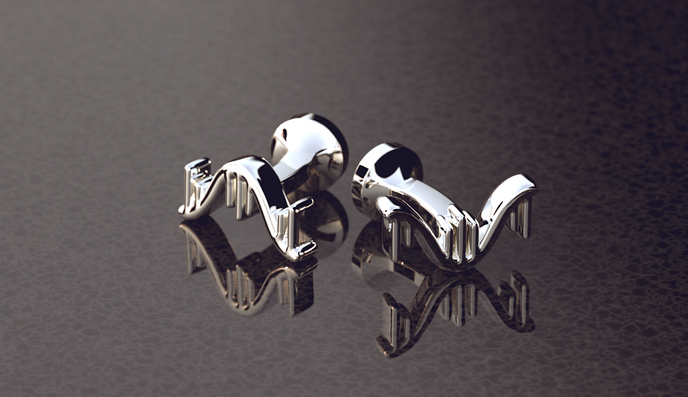
Tardigrades survive boiling, freezing, vacuum, and decades without water. They also happen to be 0.1 to 1.5 mm long and easy to mistake for chubby little bears under a microscope. Two of them, one per ear, in sterling silver.
The Science of the Tardigrade
At 0.1 to 1.5 mm, tardigrades are invisible to the naked eye but fully visible through a low-power microscope, which has made them a favourite of anyone who has ever looked closely at pond water or moss. Their characteristic lumbering motion and chubby, translucent bodies have made them unusually beloved for microscopic animals. In cryptobiosis, a tardigrade dehydrates almost completely and can remain viable for decades. Specimens have been revived after 30 years in storage. Their resilience to extreme conditions, including cosmic radiation and the vacuum of space, has made them a serious subject in astrobiology, the study of life's potential beyond Earth.
Who Tends to Wear This
- biologists and microscopists who have looked at moss and pond water through a lens
- science enthusiasts who want something more specific than a generic biology piece
- educators who teach extremophile biology
- molecular ecologists working on extremotolerance
- people who think the water bear is the cutest thing science has named
Why earrings instead of a necklace? Two ears, two water bears.
Explore Related Microbiology Jewelry
- Tardigrade necklace | silver
- Tardigrade necklace | gold vermeil
- Rotifer necklace | silver
- Bacteriophage earrings | silver
FAQ
Are these a gift for a specific kind of biologist?
Mostly people who've actually looked at tardigrades through a microscope: biology and ecology students, environmental microbiologists, anyone who teaches lab. Astrobiologists also tend to love them for the cryptobiosis angle. They also work as a small science gift for anyone whose interest in biology runs deeper than the standard list of charismatic megafauna.
How exactly does a tardigrade survive being completely desiccated?
The tardigrade replaces most of the water in its cells with a sugar called trehalose, which forms a glass-like state that protects cellular machinery during dehydration. The metabolism slows to undetectable levels, and the organism can stay in this state (called cryptobiosis) for decades. Once rehydrated, it picks up roughly where it left off. The same trick lets some tardigrades survive radiation, vacuum, and temperatures from near absolute zero to over 150 degrees Celsius in short exposures.
What are the earrings made of and how do they attach?
925 sterling silver, polished, nickel-free and hypoallergenic. Each earring is a small tardigrade with secure leverback hooks. Free worldwide DHL Express shipping in 1-5 business days, all import duties covered, in a ready-to-gift jewelry box.
Is there a tardigrade necklace too?
Yes. The tardigrade is also a single pendant in silver and in gold vermeil. The earrings are the lighter format, often picked when someone wants the science worn but doesn't want a necklace. If you're buying for a tardigrade enthusiast who doesn't yet own anything tardigrade-shaped, the necklace is the more obvious starter piece.

Other
In a world where art and science often exist in separate realms, our "Curiosities" collection serves as a harmonious confluence. Drawing inspiration from an eclectic range of scientific phenomena not covered elsewhere. Each piece is meticulously crafted to evoke a sense of wonder. It's jewelry that doesn't just adorn; it educates and fascinates, sparking conversations about the lesser-explored but equally awe-inspiring facets of our universe.

Find your perfect fit

Necklace length guide