€ 145


Still questions? Contact us
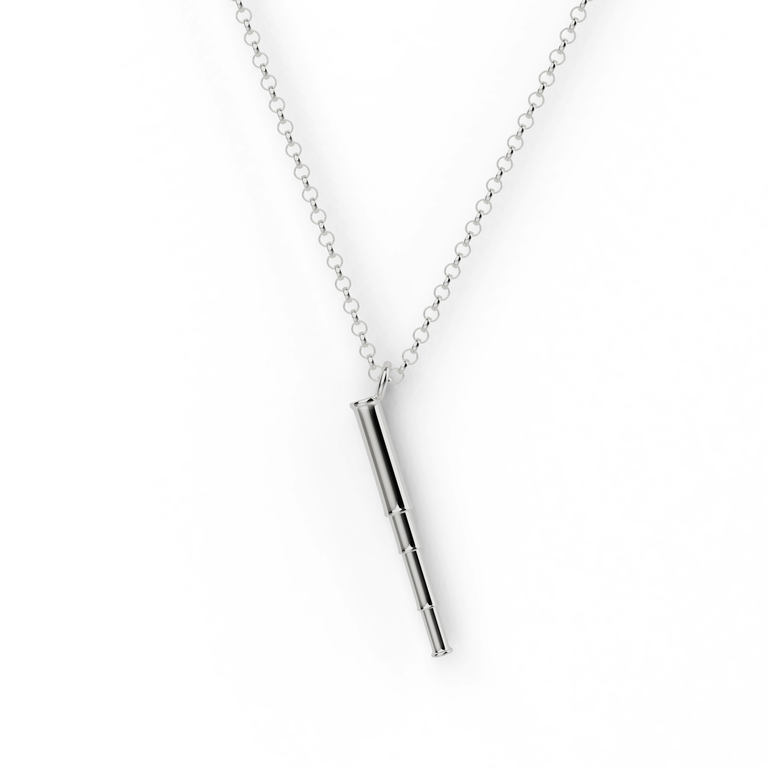
Telescope necklace | sterling silver
Galileo first turned a telescope on the sky in 1609 and saw Jupiter's four largest moons, mountains on the Moon, and stars invisible to the human eye. The instrument that extended human vision beyond the body became the tool that rewrote our understanding of the universe.
The History of the Telescope
Hans Lippershey patented the first refracting telescope in 1608. Galileo improved the design and began his observations in 1609, discovering the moons of Jupiter, the phases of Venus, and lunar topography. Isaac Newton invented the reflecting telescope in 1668, using a curved mirror to eliminate chromatic aberration, a principle that underlies virtually all large modern telescopes. The Hubble Space Telescope (launched 1990) measured the expansion rate of the universe and contributed to the discovery of dark energy. The James Webb Space Telescope (launched 2021) observes the infrared universe and reaches the first galaxies to form after the Big Bang.
Worn By
- astronomers and astrophysicists who use telescopes professionally
- amateur astronomers who own their first telescope
- cosmologists and physicists who study the universe
- anyone whose sense of scale was transformed by looking through one
Explore Related Math & Physics Jewelry
- Telescope necklace | gold vermeil
- Saturn necklace | silver
- Orion necklace L | silver
- CubeSat necklace | silver
FAQ
Is this for an astronomer or just a space enthusiast?
Both. Astronomers will recognise the historical anchor immediately. But the piece also speaks to anyone whose view of the universe changed the moment they looked through a telescope, whether they became a professional or remained a stargazer.
Why was the telescope such a revolutionary invention?
Because it extended human sensory capacity. Everything we know about the universe beyond the solar system comes from light collected by telescopes. Without telescopes, we would not know there are other galaxies, other stars, or that the universe is expanding. Every question modern astronomy answers depends on this invention.
What is the size, material, and chain?
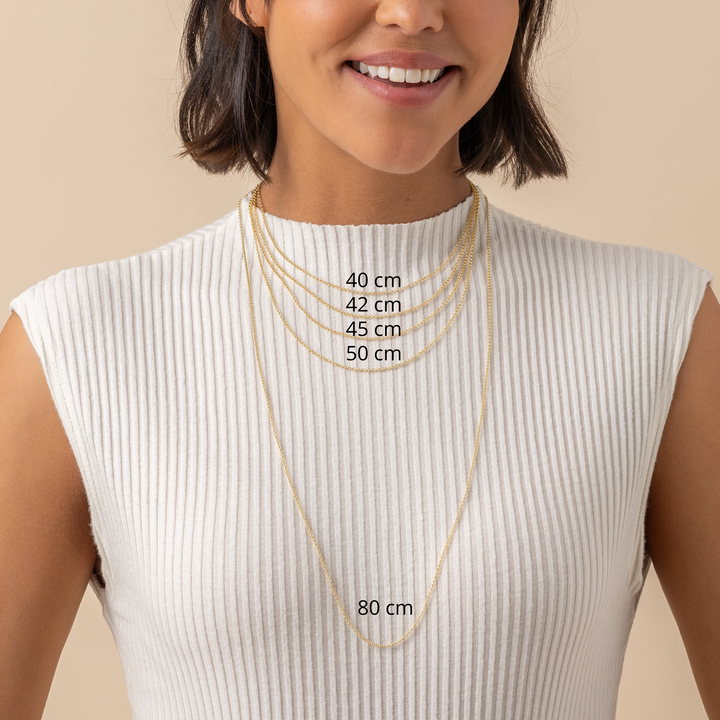
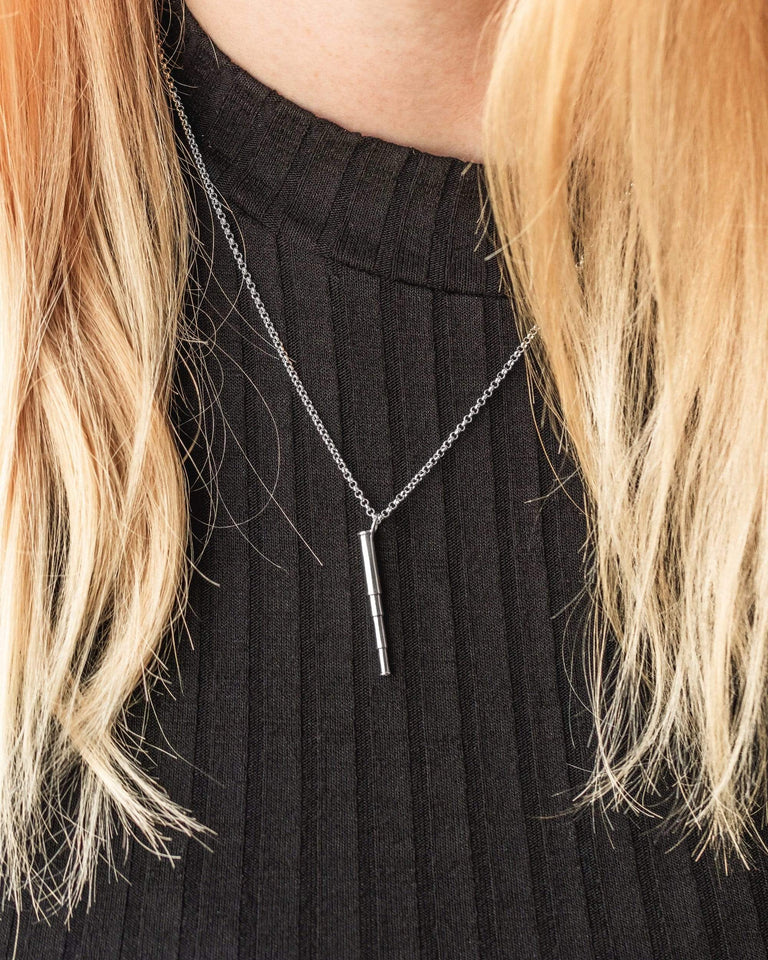
31 mm pendant in 925 sterling silver, nickel-free and hypoallergenic. 45 cm sterling silver chain with 5 cm extender. Ships free worldwide via DHL Express in 1-5 business days, with all import duties prepaid. Comes in a ready-to-gift jewelry box with the 30-day “Love It or Return It” policy.
Is there a gold version?
Yes. Telescope is available in 18k gold vermeil at the same 31 mm size. Material is the only difference between them.
Math & Physics
Unlock the elegance of the abstract with our math and physics-inspired jewelry collection. These carefully crafted pieces mirror the profound equations and natural laws that shape our understanding of the universe. Experience the allure of fractals, the rhythmic beauty of pi, and the celestial wonder of astral formations—each piece serves as a wearable homage to the artistry inherent in scientific inquiry.
Find your perfect fit: measure an Existing Ring
Finding out your ring size at home is a simple process and can help you shop for jewelry online with confidence.
Necklace length guide