€ 190


Still questions? Contact us
THC necklace | sterling silver
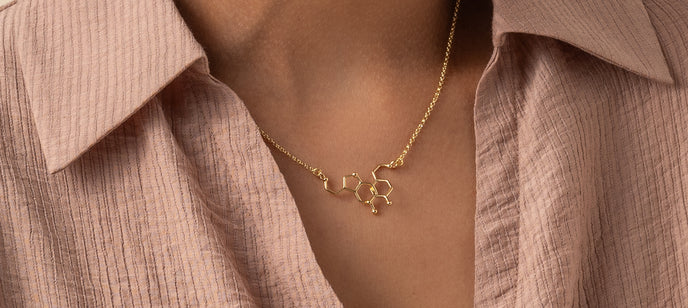
What made tetrahydrocannabinol scientifically interesting was not what it did to the brain but what it found there. The receptor THC binds to was discovered because of THC. The brain's own ligand for that receptor, anandamide, was named after the Sanskrit word for bliss. As a 45 mm sterling silver pendant, the full Δ9-THC structure rendered in three dimensions.
The Science Behind THC
Δ9-tetrahydrocannabinol is the principal psychoactive compound in Cannabis sativa, isolated and structurally characterised by Raphael Mechoulam and Yechiel Gaoni at the Hebrew University of Jerusalem in 1964. The receptor it binds to, CB1, was identified by Lisa Matsuda's group in 1990 and is now known to be the most abundant G-protein-coupled receptor in the brain. CB2 sits primarily on immune cells. The brain's own cannabinoids, anandamide (1992) and 2-arachidonoylglycerol (1995), function as retrograde lipid messengers that modulate synaptic transmission, pain processing, mood regulation, appetite, and immune response. The molecule that put the entire endocannabinoid system on the map.
Who Will Recognise It
- neuropharmacologists and cannabinoid researchers
- medicinal chemists working on receptor pharmacology
- clinicians prescribing cannabinoid-based therapies for nausea, pain, or epilepsy
- anyone for whom the structure of THC is a working object, not a recreational reference
For someone who reaches for THC when the conversation is about endocannabinoid signalling, not what the plant feels like.
Explore Related Molecules Jewelry
- THC necklace | gold vermeil
- THC necklace flat | silver
- Serotonin necklace V | silver
- Dopamine necklace | silver
- Glutamate necklace | silver
FAQ
Is this a research piece or a recreational reference?
For most buyers, a research piece. Working cannabinoid pharmacologists and clinicians who use cannabinoid-based therapies pick this up as a reference to the molecule's pharmacology, not its plant-extract origin. The molecule that revealed the endocannabinoid system is also the one that drove the development of dronabinol for chemotherapy-induced nausea and cannabidiol-based therapies for refractory epilepsy. The recreational reading exists, but it is not the reading the audience tends to bring.
Why does THC reveal so much about the brain even though it comes from a plant?
Because the brain already had the receptor and the natural ligand. THC works in humans by occupying CB1, the receptor the brain evolved for its own lipid messenger anandamide. The plant just happened to produce a compound that mimics what the brain already does to itself, which is why the molecule has been such a productive research tool.
What size is the pendant and what chain comes with it?
925 sterling silver, 45 mm pendant on a 45 cm sterling silver chain with a 5 cm extender. Larger scale than most pieces in the catalogue, the full 3D Δ9-THC structure rendered in detail. Nickel-free and hypoallergenic. Free worldwide DHL Express in 1-5 business days, with all import duties and taxes covered. 30-day “Love It or Return It” returns.
Is there a gold version, or a smaller silver one?
Both. The same 45 mm 3D structure is available in 18K gold vermeil. A smaller, flatter silver THC pendant exists for daily-wear at a more discreet scale. Three different formats of the same molecule.
Molecules
Delve into the hidden elegance of science with our meticulously crafted jewelry, inspired by the intricate structures of chemical molecules. Each piece serves as a tactile tribute to the building blocks of life and matter, capturing the allure of atoms and bonds in precious metals. A harmonious fusion of art and science, these creations are more than mere accessories; they're a celebration of the enigmatic beauty that underpins our universe.
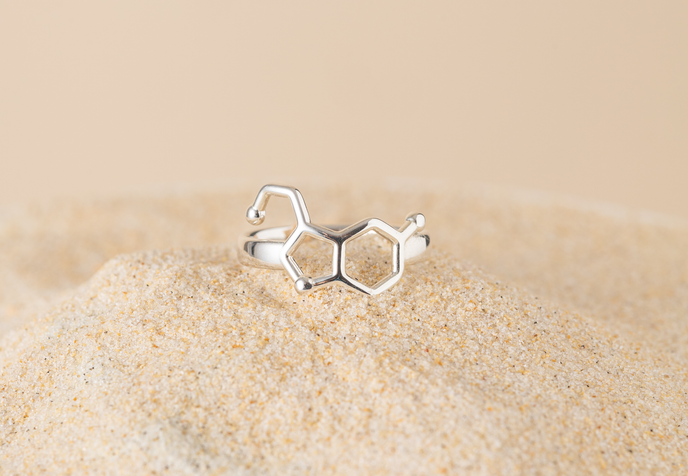
Find your perfect fit: measure an Existing Ring
Finding out your ring size at home is a simple process and can help you shop for jewelry online with confidence.
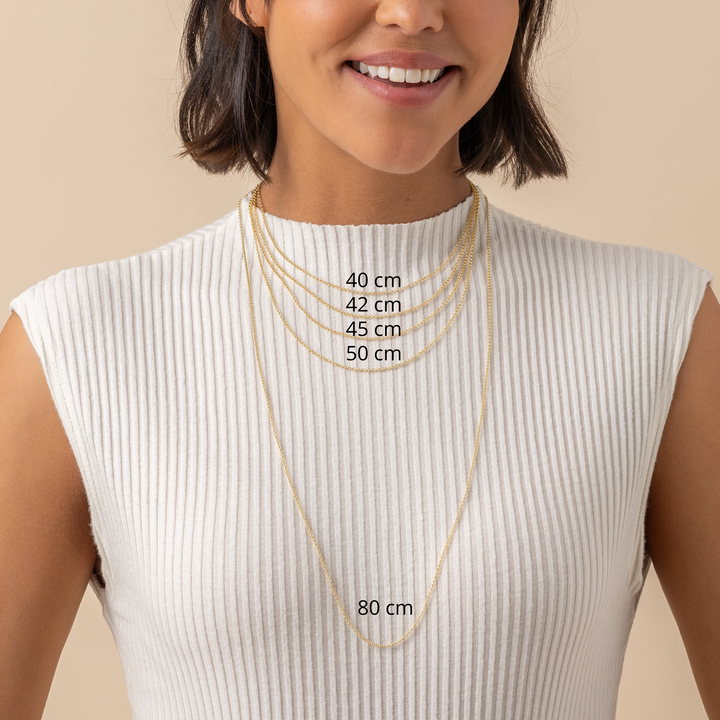
Necklace length guide