€ 140


Still questions? Contact us
Thymine necklace | sterling silver
If you teach genetics and have ever explained why DNA uses thymine while RNA uses uracil, you already know the trick. The methyl group is a fidelity marker. The cell pays the cost of adding it because the alternative is missing damaged DNA. Thymine paid for genetic stability with one extra carbon.
The Science Behind Thymine
Thymine, formally 5-methyluracil, is a pyrimidine base that pairs with adenine in DNA through two hydrogen bonds. The methyl group at position 5 is what distinguishes it from uracil, which fills the same role in RNA. That methyl group has a specific function in DNA repair. Cytosine in DNA spontaneously deaminates to uracil at a rate of around 100 events per cell per day. If uracil were a normal DNA base, those damage events would be invisible. Because thymine is the normal DNA base instead, uracil in DNA is recognised as aberrant and removed by uracil-DNA glycosylase. The methyl group is therefore a recognition tag that lets the repair machinery distinguish damaged bases from intended ones.
The Audience
- molecular biologists and geneticists
- biochemists working on DNA repair, nucleotide metabolism, or replication fidelity
- chemistry students and educators
- anyone curious about why DNA and RNA use different bases
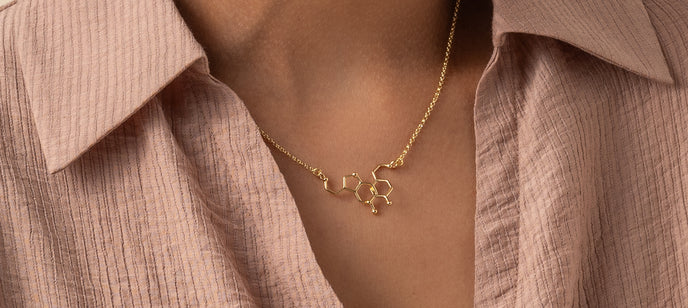
The methyl group that earned DNA its stability over RNA, at 19 mm in sterling silver.
Explore Related Molecules Jewelry
- Adenine necklace | silver
- Adenine-thymine earrings | silver
- Cytosine-guanine necklace | silver
- Cytosine necklace | silver
- Guanine necklace | silver
FAQ
Who is the thymine pendant really for?
People who care about the difference between DNA and RNA at a chemical level. That tends to mean DNA repair specialists, nucleotide chemists, replication-fidelity researchers, and the molecular biologists or biochemists who teach the topic. Educators picking up a thymine pendant usually do it after teaching the same uracil-thymine substitution to enough cohorts that the pendant becomes a quiet shorthand.
Why one methyl group as the dividing line between DNA and RNA?
Because that methyl group is a marker the repair machinery uses. Without it, the cell could not distinguish a deaminated cytosine from a thymine that was always meant to be there. The same methyl group also adds a small amount of hydrophobic stability to the base pair. Two functions, one chemical change, and a gap of about 100 million years in the evolutionary record between RNA-based and DNA-based information storage.
What size is the pendant and what is the return policy?
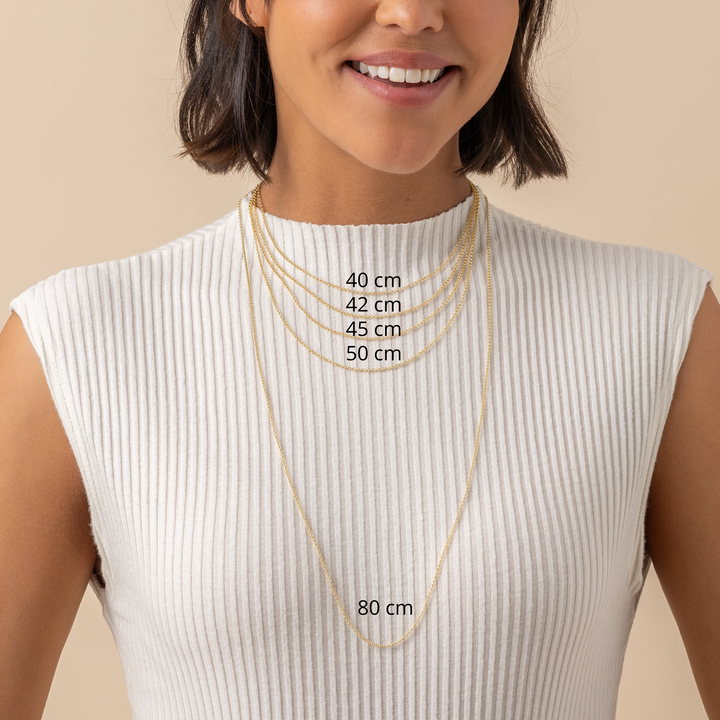
925 sterling silver, 19 mm pendant on a 45 cm sterling silver chain with a 5 cm extender. Nickel-free and hypoallergenic. Free worldwide DHL Express in 1-5 business days, with all import duties and taxes covered. 30-day “Love It or Return It” returns.
Does this come in a base-pair set with adenine?
The two bases are sold as separate necklaces, with the adenine pendant slightly larger at 21 mm versus thymine at 19 mm. Most people buying both at once also pick up the adenine-thymine earrings, which carry the AT pair as a paired set. Cytosine and guanine are also available individually if the goal is to assemble all four DNA bases.
Molecules
Delve into the hidden elegance of science with our meticulously crafted jewelry, inspired by the intricate structures of chemical molecules. Each piece serves as a tactile tribute to the building blocks of life and matter, capturing the allure of atoms and bonds in precious metals. A harmonious fusion of art and science, these creations are more than mere accessories; they're a celebration of the enigmatic beauty that underpins our universe.
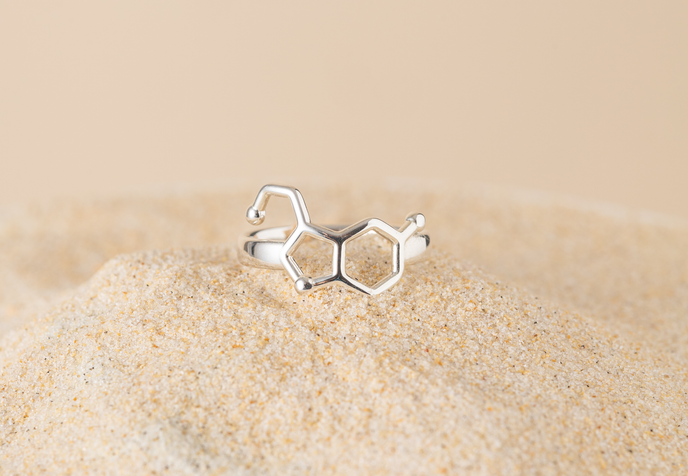
Find your perfect fit: measure an Existing Ring
Finding out your ring size at home is a simple process and can help you shop for jewelry online with confidence.
Necklace length guide