

$335


Still questions? Contact us
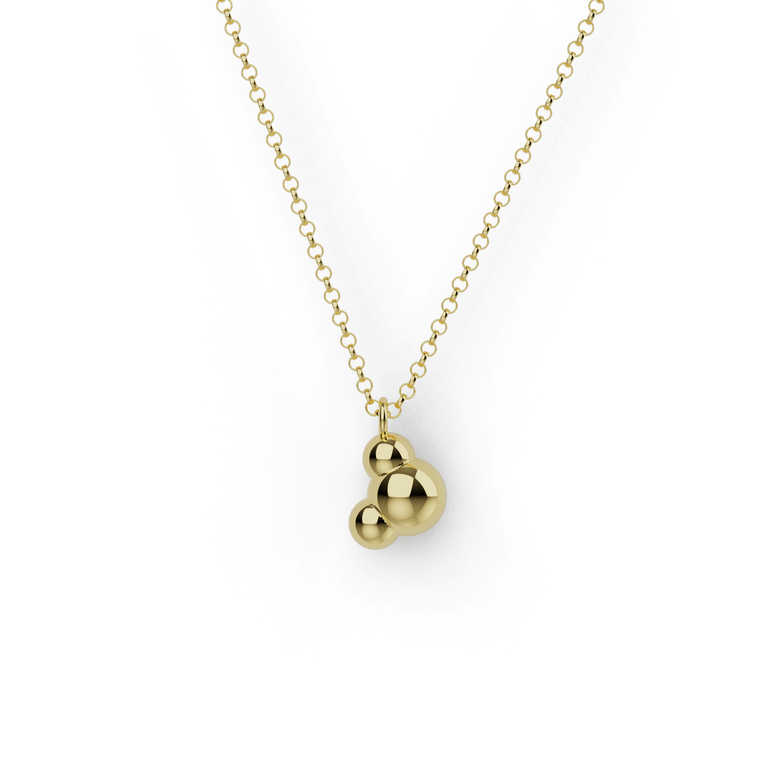
water - H2O necklace | gold vermeil
Of all the molecules a friend in chemistry could wear, water is the one everyone shares, in every cup of tea and most experiments. Give her this H2O necklace in gold vermeil, or let it be the present she buys herself.
Who It's For
- a hydrologist or an oceanographer
- a physicist or a physical chemist
- a science teacher
- a chemistry student
- yourself, if you have wanted a water necklace for a long time
Giulia M., on the silver version: “Accurate and very beautiful!”
Why Ice Floats
In a single water molecule, the two O-H bonds meet at an angle of about 104.5 degrees. Oxygen pulls the shared electrons towards itself, and because the molecule is bent, the two pulls do not cancel: the oxygen side is slightly negative, the hydrogen side slightly positive. Neighbouring molecules hold on to each other through hydrogen bonds. When water freezes, each molecule locks into four of them in an open, hexagonal lattice, and the water expands by about 9 per cent. So ice floats. Fresh water is densest at about 4 °C, so as a lake cools in winter, water colder than that stays on top and freezes first, and the ice shelters the water beneath.
Explore Related Molecules Jewelry
- water - H2O necklace | silver
- caffeine necklace | gold vermeil
- glucose necklace | gold vermeil
- chlorophyll necklace | silver
FAQ
How big is the pendant, and how does it sit?
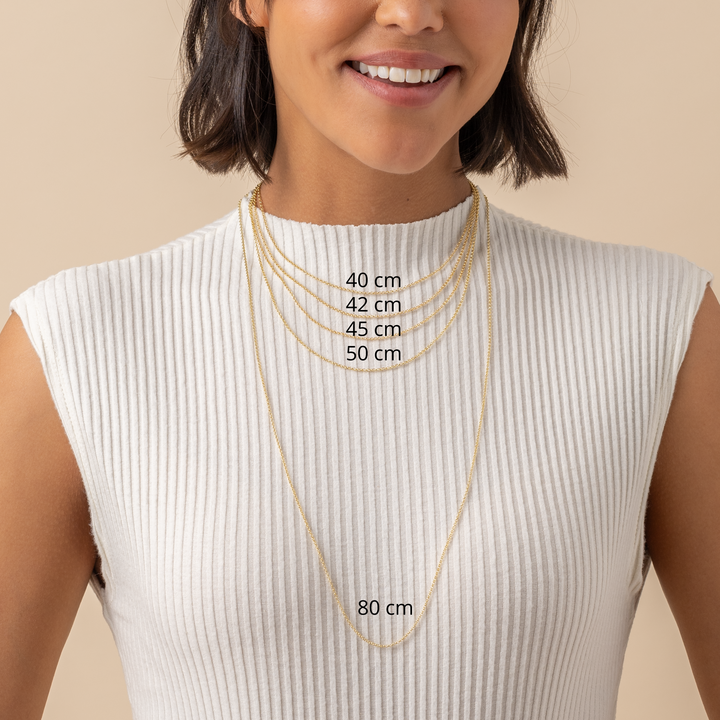
The pendant measures 15 mm (about 0.6 inch), a little smaller than a 1-cent euro coin and smaller than a US dime. It hangs from a small loop on a 45 cm (17.7 inch) gold vermeil chain with a 5 cm (2 inch) extender, and sits below the collarbone. Extra chains of 40, 42, 45 and 50 cm (each with the extender) or 80 cm are sold here. Gold vermeil is 2.5 microns of 18K gold over solid sterling silver, nickel-free and hypoallergenic. Wipe it with a soft cloth.
Is there a silver version?
Yes. The same 15 mm water pendant comes in sterling silver, hanging the same way from a small loop, on a 45 cm sterling silver chain with a 5 cm extender. Choose the finish the recipient already wears. The design is the same in both finishes.
Will it arrive in time, and what if it isn't right?
DHL Express delivers it free worldwide in 1-5 business days, and we pay the import duties and taxes, so nothing is due at the door. It arrives in a ready-to-gift jewelry box and festive envelope. If it isn't right, our 30-day “Love It or Return It” policy applies.
Who found out what water is made of?
Several people, within a few years. In London in 1781, Henry Cavendish exploded “inflammable air” with ordinary air and found that the gas, with part of the air, “turned into pure water”, though his paper was only read at the Royal Society in 1784. In Paris in 1783, Antoine Lavoisier and Pierre-Simon Laplace made water from two gases and announced that it was not a simple substance. In 1787, Lavoisier and three colleagues gave the flammable gas a new name, hydrogène, from the Greek for water and for making.
Molecules
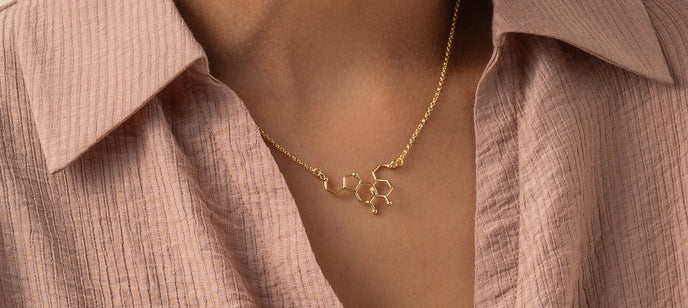
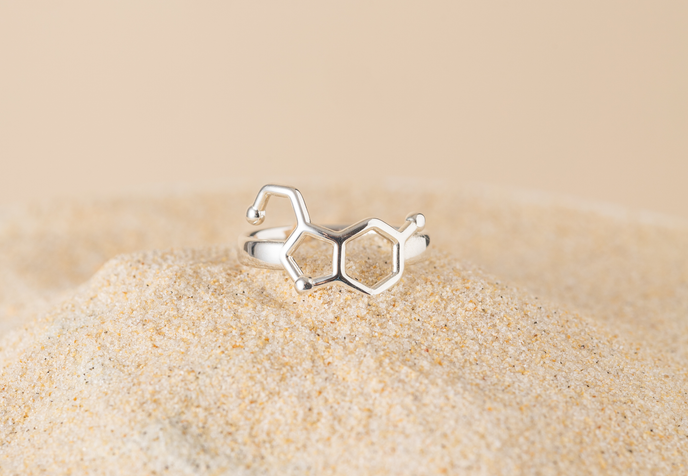
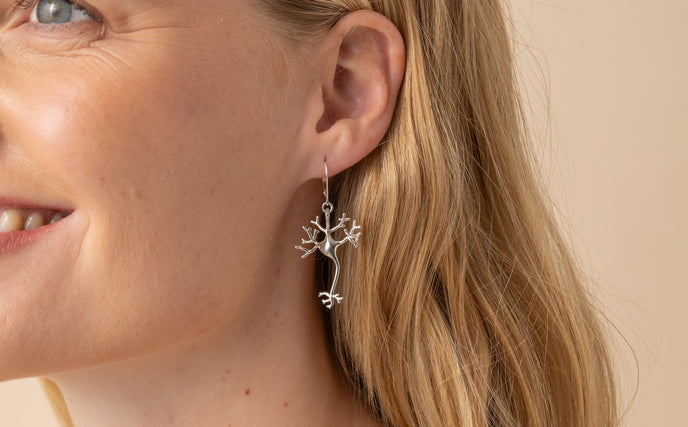
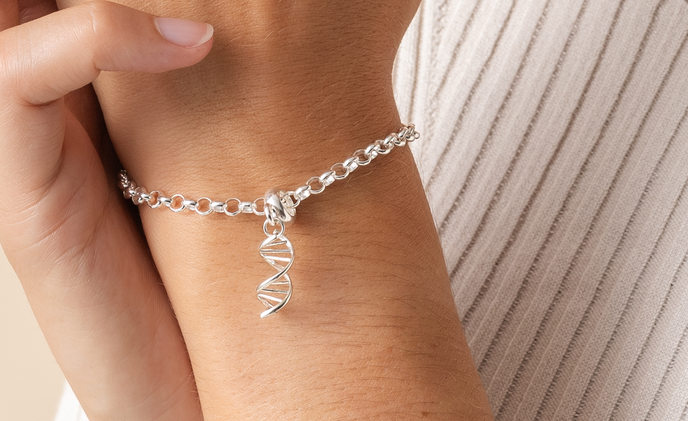
Delve into the hidden elegance of science with our meticulously crafted jewelry, inspired by the intricate structures of chemical molecules. Each piece serves as a tactile tribute to the building blocks of life and matter, capturing the allure of atoms and bonds in precious metals. A harmonious fusion of art and science, these creations are more than mere accessories; they're a celebration of the enigmatic beauty that underpins our universe.
Find your perfect fit: measure an Existing Ring
Finding out your ring size at home is a simple process and can help you shop for jewelry online with confidence.
Necklace length guide