€ 155


Still questions? Contact us
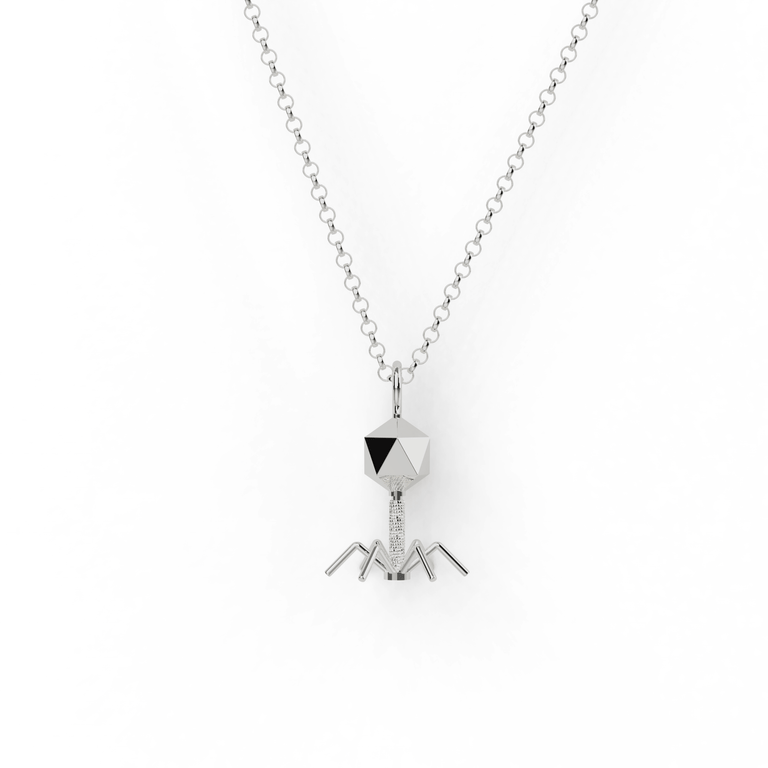
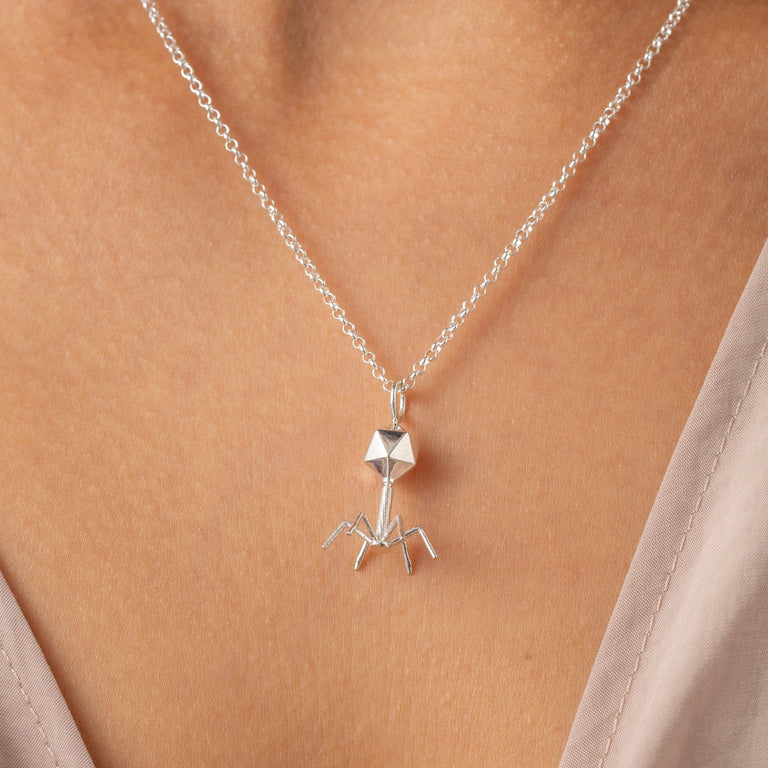
Bacteriophage necklace | sterling silver
A bacteriophage is a virus that attacks bacteria and leaves our own cells alone, which is why doctors are testing phages again as antibiotics lose their grip. This bacteriophage necklace is for the woman whose work runs on microbes: a wife in biomedical science, a daughter who teaches biology, or a partner writing her thesis on phages.
Who It's For
- a wife or partner who works in microbiology or infectious disease, for her birthday
- a daughter who teaches biology, to wear in front of her class
- a friend finishing her PhD on phages or bacteria
- a student heading to a university interview in the life sciences
- yourself, if viruses are your favourite part of biology
Andrew B. gave it to his wife, a biomedical scientist: “I have no idea what a bacteriophage is, she knew as soon as she opened the box!” Anastasia K. bought her own: “Absolutely loved it. It's small, cute and looks gorgeous.”
The Science Behind the Bacteriophage
Phages are viruses that infect bacteria, and each kind is choosy, usually attacking only certain strains of one species. Many phages land on their host, inject their DNA and turn the cell into a factory. For the phage T4 growing in E. coli, a hundred or more new phages burst out in about half an hour. Phages are thought to be the most numerous biological entities on Earth, an estimated 1031 particles, far more than the bacteria they infect. Bacteria fight back, and one of their defences, CRISPR, became the gene-editing tool used in labs today.
Explore Related Microbiology Jewelry
- bacteriophage necklace | gold vermeil
- bacteriophage earrings | silver
- CRISPR necklace | silver
- coronavirus necklace | silver
FAQ
How big is it, and how does it wear?
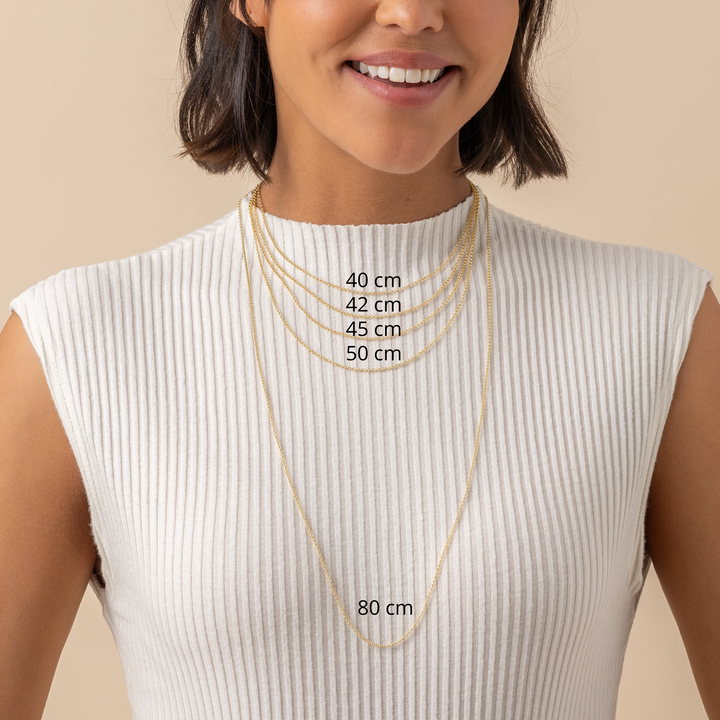
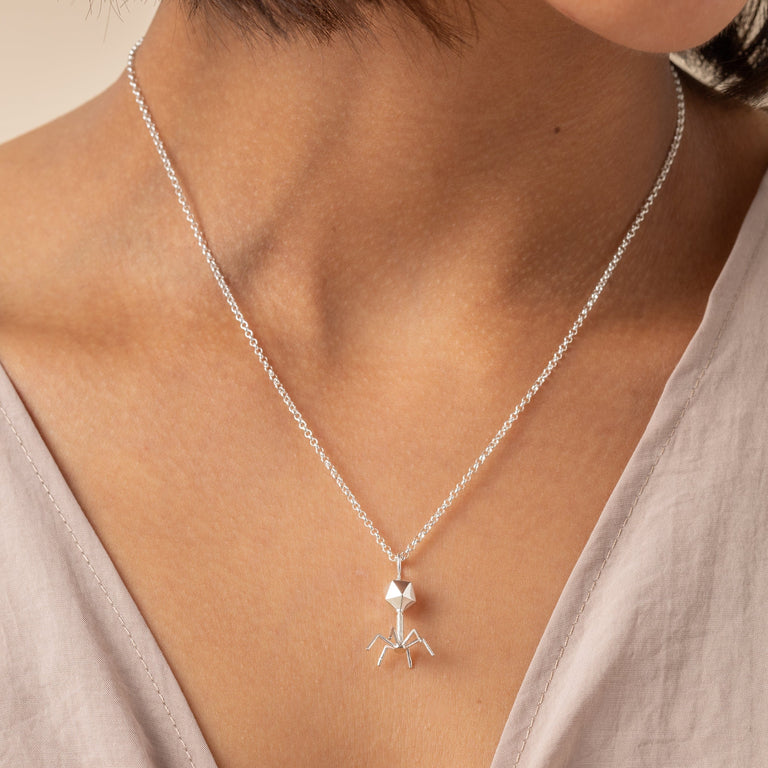
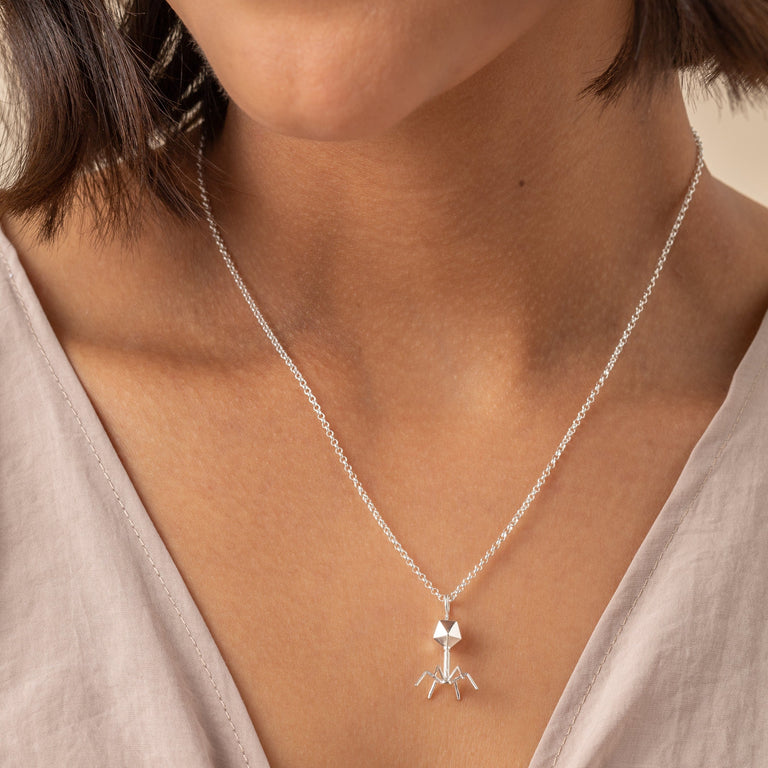
The pendant is 23 mm (about 0.9 inches), a little smaller than a US quarter or a 2-euro coin. It comes on a 45 cm (17.7 inch) sterling silver chain with a 5 cm (2 inch) extender, so the length adjusts from 45 to 50 cm, and longer chains up to 80 cm can be added on this page. It is 925 sterling silver, nickel-free and hypoallergenic. It sits best over smooth fabrics, since loose knits can catch on it.
Is there a gold version, or bacteriophage earrings?
Yes. The same 23 mm bacteriophage necklace comes in 18K gold vermeil. Choose the finish she already wears: the design is identical in both. There are also bacteriophage earrings in sterling silver, 23 mm, on leverback hooks.
Is delivery free, and what if it isn't right?
Yes. DHL Express delivers free in 1-5 business days worldwide, and we pay the import duties and taxes, so nothing is due at the door. It arrives in a ready-to-gift jewelry box and festive envelope. If it isn't right, our 30-day “Love It or Return It” policy applies.
Can a virus cure a bacterial infection?
Sometimes, though phage therapy is still experimental. In 2016 phages helped save Tom Patterson, a UC San Diego professor who had caught a drug-resistant Acinetobacter baumannii in Egypt and lay in a coma with no antibiotic still working. His wife, the epidemiologist Steffanie Strathdee, tracked down matching phages through Texas A&M University, the US Navy and the San Diego company AmpliPhi. In mid-March his doctors gave them, first into infected pockets in his abdomen, then into his bloodstream. He woke from his coma within days and recovered.
Cellular Biology
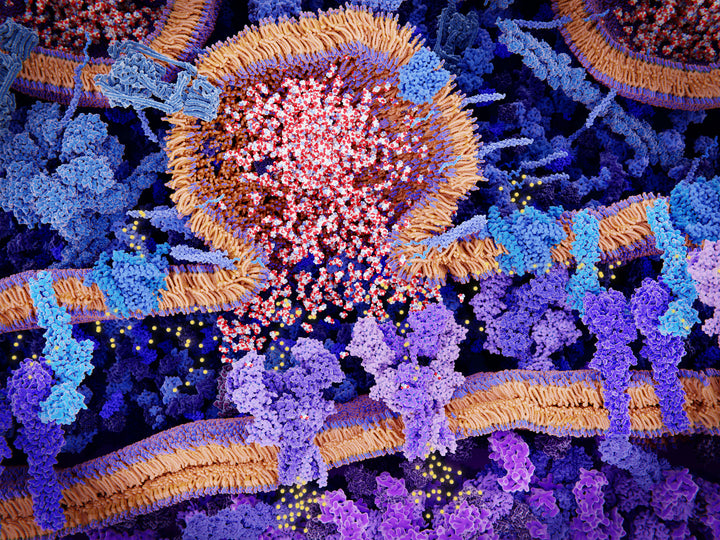
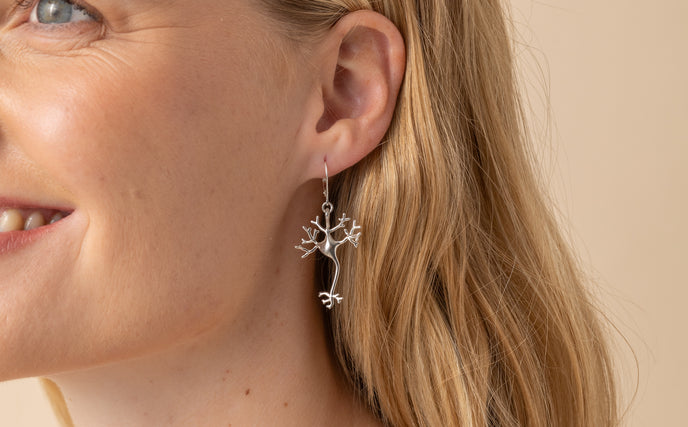
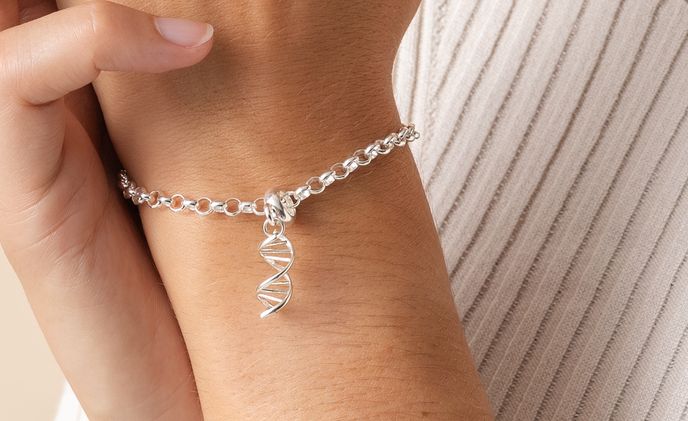
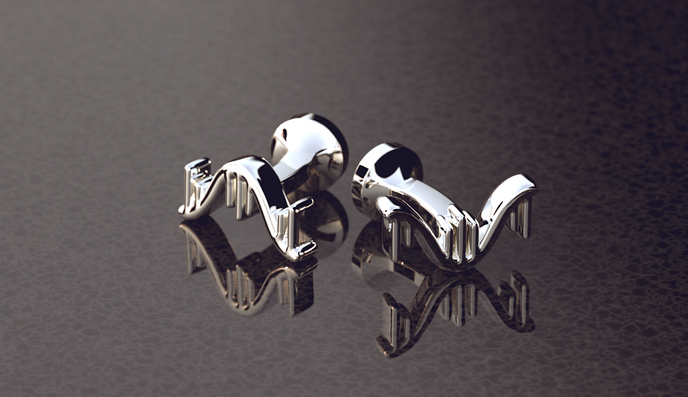
Step into the fascinating world of cellular biology through our unique jewelry designs. These pieces serve as wearable reflections of life's microscopic wonders, capturing the aesthetics of DNA strands, cellular formations, and more. Far from simple adornments, they spark dialogue and honor the captivating complexities found within biological research. Merging scientific accuracy with artistic flair, each creation offers a tactile experience that bridges the gap between scientific inquiry and aesthetic appreciation.
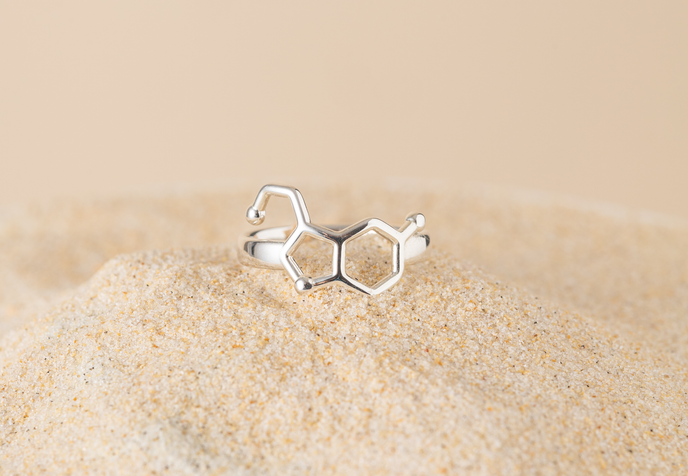
Find your perfect fit: measure an Existing Ring
Finding out your ring size at home is a simple process and can help you shop for jewelry online with confidence.
Necklace length guide