€ 175


Still questions? Contact us
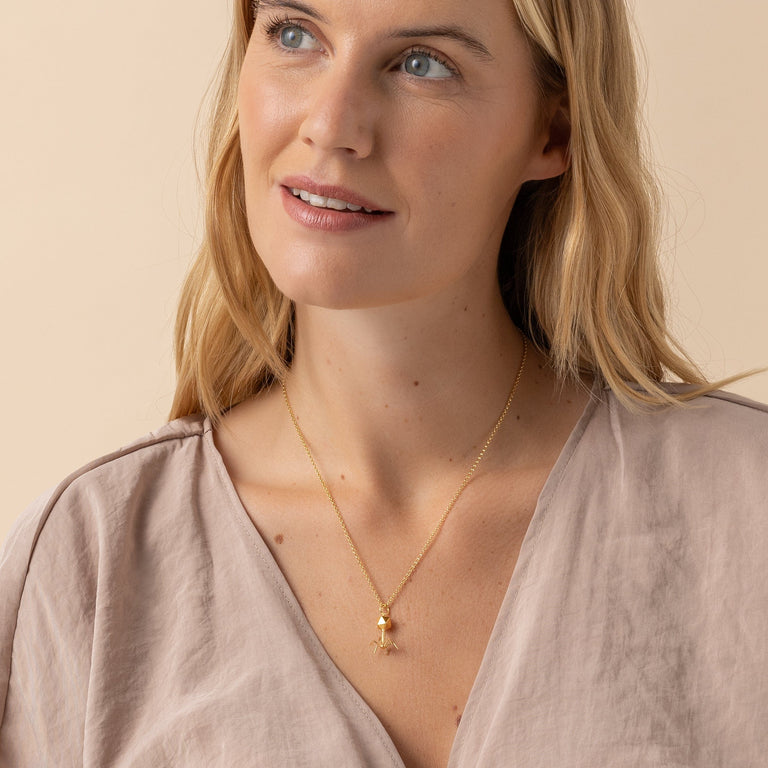
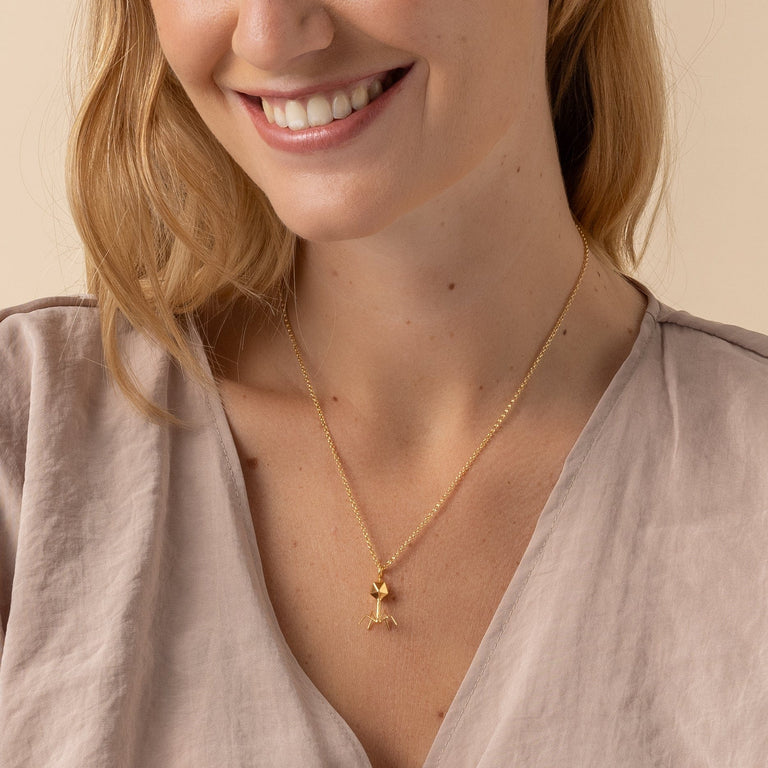
Bacteriophage necklace | gold vermeil
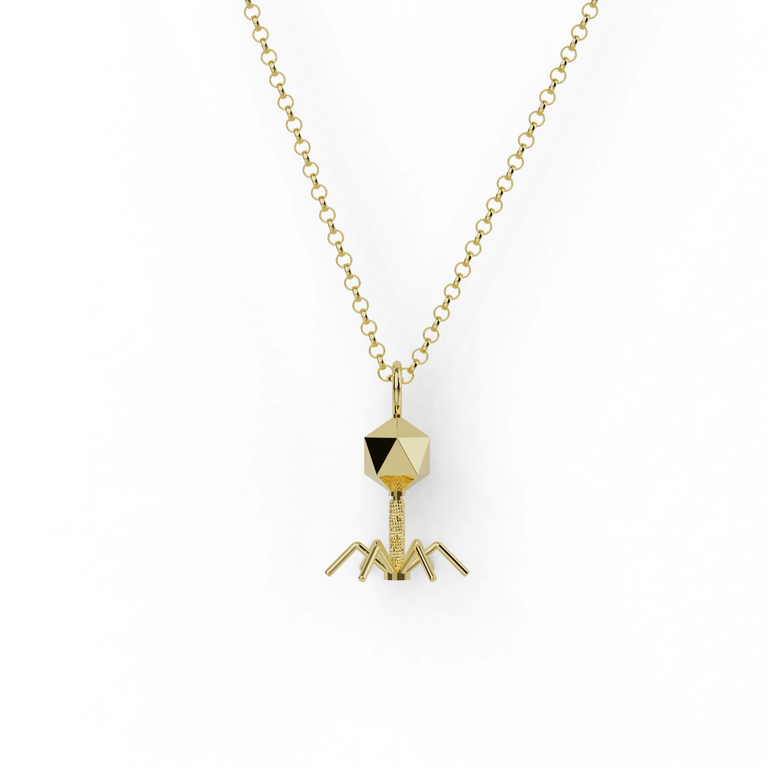
If you have spent enough time looking at electron micrographs of T4 phage to think the icosahedral head and contractile tail might be one of the most beautiful objects in biology, you already know what this is. The gold vermeil version is the same phage as the silver, in a warmer key.
The Science of the Bacteriophage
Bacteriophages are viruses that infect bacteria, present in virtually every environment in extraordinary abundance: an estimated 1031 phage particles exist on Earth, outnumbering all other biological entities combined. The T4 phage has become iconic in structural biology. Its icosahedral head, containing a roughly 170 kilobase double-stranded DNA genome, sits on top of a helical tail with a contractile sheath, a baseplate, and tail fibres that recognise specific surface receptors on the bacterial host. When a phage attaches, the sheath contracts, the inner tail tube punctures the bacterial membrane, and the DNA is injected into the cell. Phage played a central role in establishing the fundamentals of molecular biology: Hershey and Chase used T2 phage in 1952 to show that DNA, not protein, is the genetic material. With antibiotic resistance rising, phage therapy is now a serious clinical research area, with FDA approvals beginning to appear for compassionate-use treatment of multi-drug-resistant infections.
Worn By
The audience is the same as the silver version:
- microbiologists, virologists, and phage biologists
- infectious disease clinicians and antimicrobial stewardship pharmacists
- phage therapy researchers and biotech founders working on phage-based therapeutics
- structural biologists studying viral assembly and packaging
- molecular biologists who appreciate phage as the tools that built the field
Explore Related Virology Jewelry
- Bacteriophage necklace | sterling silver
- Bacteriophage earrings | sterling silver
- Adenovirus necklace | sterling silver
- Coronavirus necklace | sterling silver
FAQ
Same model as the silver bacteriophage?
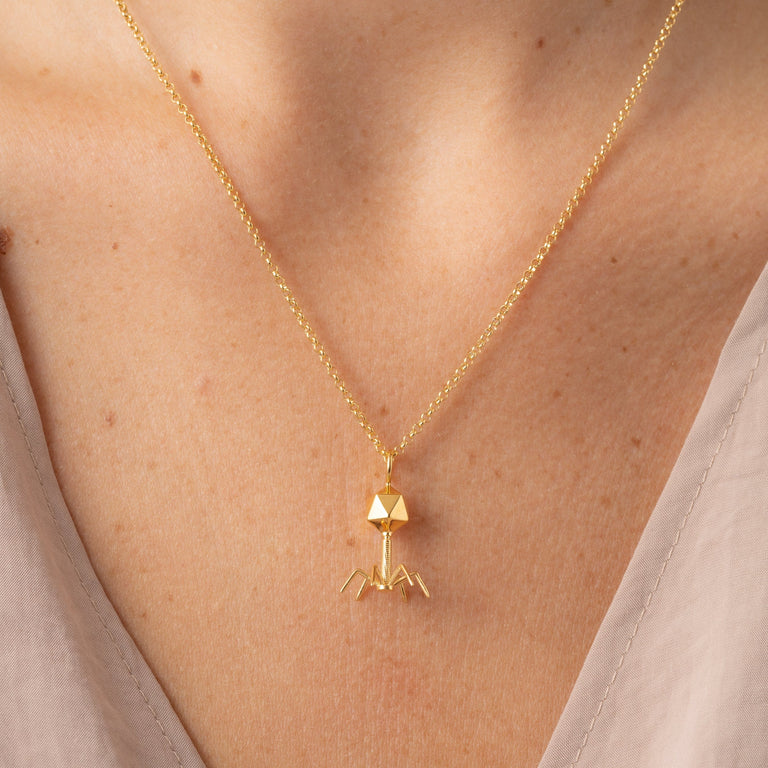
Yes. Same 23 mm pendant, identical T4 phage geometry, identical proportions. Material is the only difference.
How can a virus cure a bacterial infection?
Bacteriophages infect bacteria and only bacteria, leaving human cells alone. They have been used clinically since the 1920s, mostly in Eastern Europe, and were largely sidelined in the West when antibiotics arrived. With multi-drug-resistant bacteria now killing more people than HIV and malaria combined globally, phage therapy is going through a research revival. Several FDA-approved compassionate-use phage treatments have been used successfully against multi-drug-resistant infections, and dozens of phage-based programmes are in clinical trials.
What is the size, material, and chain?
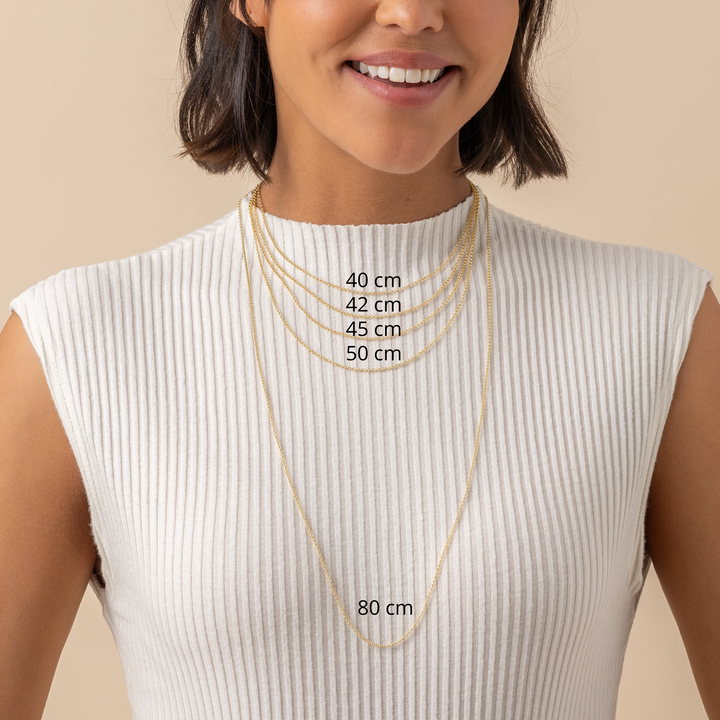
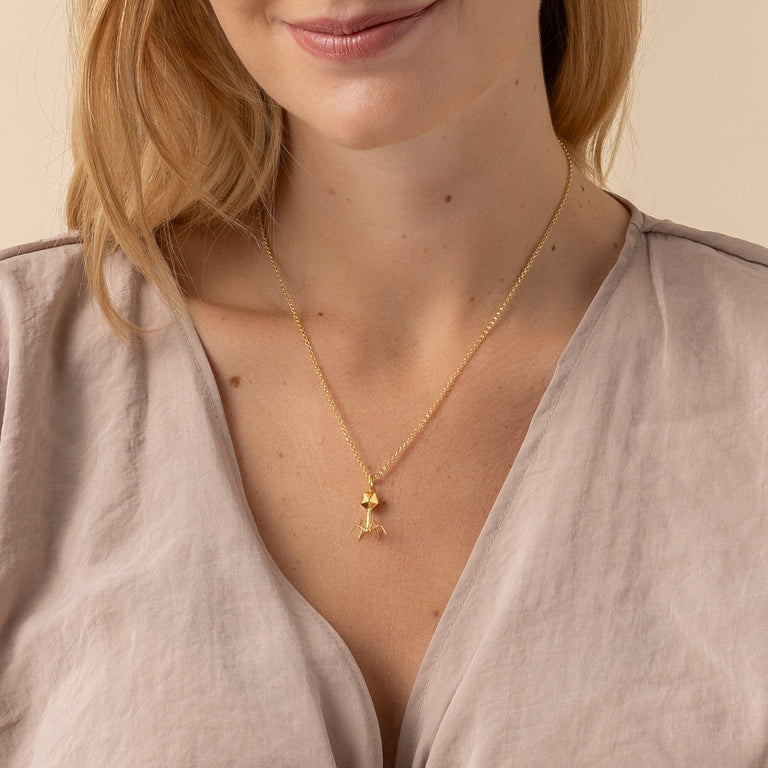
23 mm pendant in 18K gold vermeil (sterling silver core with 2.5 micron gold plating), nickel-free and hypoallergenic. 45 cm gold vermeil chain with a 5 cm extender. Ships free worldwide via DHL Express in 1-5 business days, with all import duties prepaid. Comes in a ready-to-gift jewelry box with the 30-day “Love It or Return It” policy.
Is the pendant available in silver or as earrings?
Yes to both. The bacteriophage is also available as a silver necklace and as earrings. The phage geometry is identical across the three. Choose the format and the finish the recipient already wears.
Cellular Biology
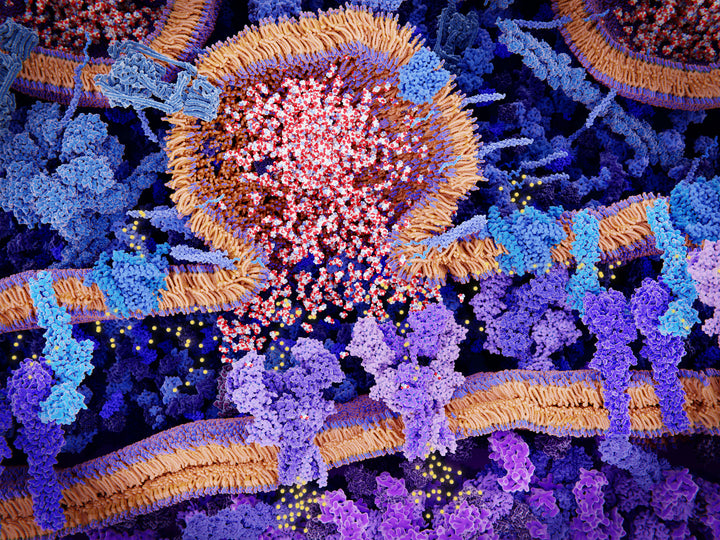
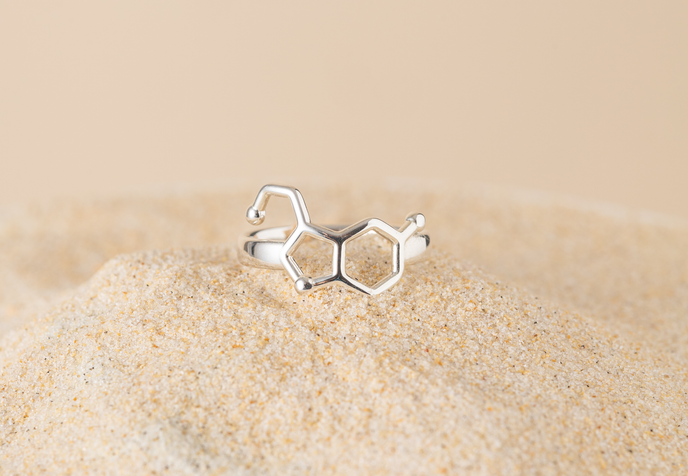
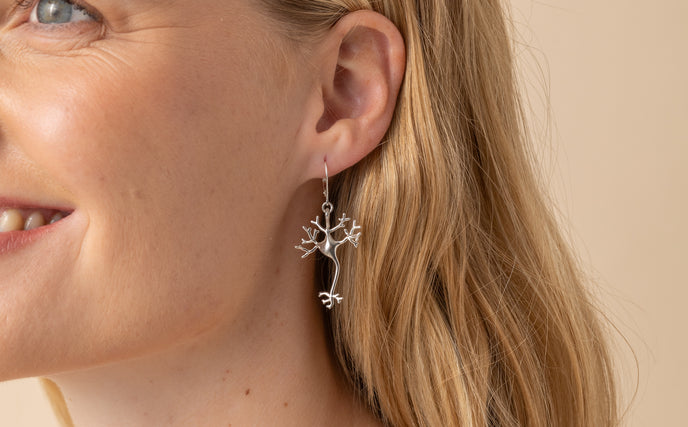
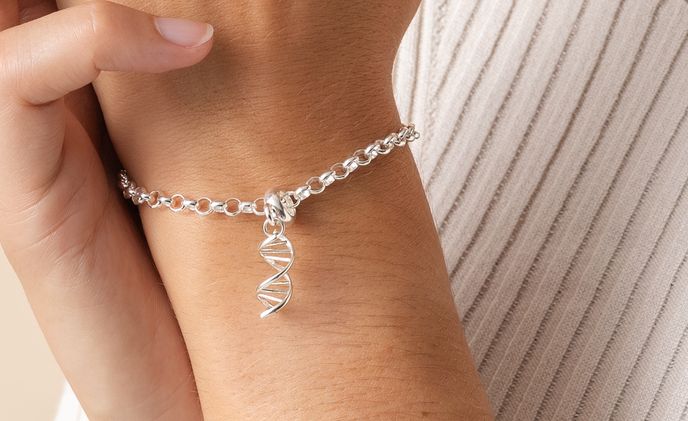
Step into the fascinating world of cellular biology through our unique jewelry designs. These pieces serve as wearable reflections of life's microscopic wonders, capturing the aesthetics of DNA strands, cellular formations, and more. Far from simple adornments, they spark dialogue and honor the captivating complexities found within biological research. Merging scientific accuracy with artistic flair, each creation offers a tactile experience that bridges the gap between scientific inquiry and aesthetic appreciation.
Find your perfect fit: measure an Existing Ring
Finding out your ring size at home is a simple process and can help you shop for jewelry online with confidence.
Necklace length guide