€ 210


Still questions? Contact us
Adenovirus necklace | sterling silver
If you have cloned an Ad5 vector or designed an Ad26 expression cassette, you already know what this pendant shows. The icosahedral capsid of the most flexible viral delivery system in molecular biology, the platform that carried two of the COVID-19 vaccines into the world, and the one most gene therapy programmes still build around.
The Science Behind the Adenovirus
Adenoviruses were first isolated in 1953 by Wallace Rowe and colleagues from cultured human adenoid tissue, which is where the name comes from. The capsid is a non-enveloped icosahedron built from 252 capsomers (240 hexons forming the faces and edges, plus 12 pentons at the vertices) with a fibre projecting from each penton that mediates attachment to host-cell receptors. The geometry is T=25 quasi-symmetry, one of the most studied capsid architectures in structural virology, and the form rendered on this pendant. Beyond clinical adenovirus infections (typically common-cold-like illness in immunocompetent hosts, more severe in immunocompromised patients), the virus has become one of the most consequential tools in modern biomedicine. Replication-deficient adenoviral vectors are used to deliver foreign genes into target cells for vaccine development, gene therapy, and oncolytic therapy. The Ad26 platform was used in Johnson & Johnson's single-dose COVID-19 vaccine, and a chimpanzee adenovirus (ChAdOx1) was the backbone of the Oxford-AstraZeneca COVID-19 vaccine. Ad5-based vectors have been in clinical trials for decades for cancer, infectious disease, and inherited disorders.
Who Will Recognise It
- vaccine developers and gene therapy researchers
- virologists studying viral vectors and capsid biology
- molecular biologists who clone in adenoviral systems
- vaccinologists and clinical trial scientists working on viral platforms
- biotech professionals in vector development and CDMO operations
Explore Related Virology Jewelry
- Adenovirus necklace | gold vermeil
- Bacteriophage necklace | silver
- Coronavirus necklace | silver
- Circular DNA necklace | silver
- CRISPR necklace | silver
FAQ
Why is the adenovirus rendered as an icosahedron?
Because that is what it is. The adenoviral capsid is a non-enveloped icosahedron, T=25 quasi-symmetric, built from 240 hexon proteins on the faces and 12 pentons at the vertices. It is one of the most studied capsid geometries in structural virology, solved by both X-ray crystallography and cryo-EM at near-atomic resolution. The pendant follows the geometry honestly. Stylised viral pendants tend to soften the symmetry. This one keeps it.
Is this the vaccine vector or the cold virus?
Both. They are the same family. Adenoviruses cause mild respiratory infections in immunocompetent hosts, and that same biology is what makes them useful as gene therapy vectors. A replication-deficient adenovirus is essentially a delivery vehicle: the wild-type genes that would let it replicate are replaced with the gene of interest, the rest of the capsid machinery does the cell entry and nuclear delivery. Ad5 is the most common research vector. Ad26 was used in the Johnson & Johnson COVID-19 vaccine. ChAdOx1 (a chimpanzee-derived adenovirus) was the backbone of the Oxford-AstraZeneca vaccine. The pendant is the platform, not a specific clinical strain.
What size is the pendant and what does it ship with?
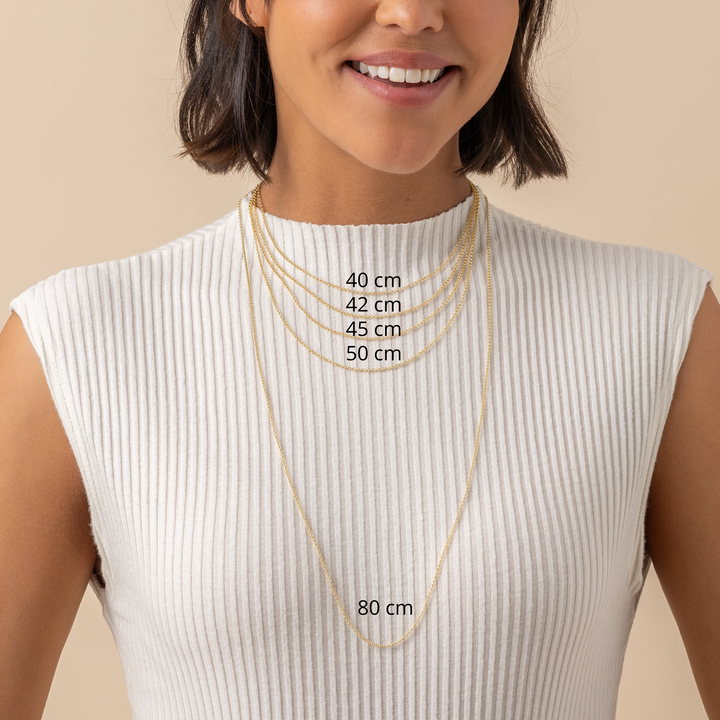
The pendant is 28 mm in sterling silver (925), nickel-free and hypoallergenic, on an 80 cm sterling silver chain (1.8 mm width, lobster clasp). The longer chain lets the icosahedron sit at the sternum, where the symmetry is easier to read. Free worldwide DHL Express shipping in 1-5 business days, all import duties covered, in a ready-to-gift jewelry box.
Is this available in gold vermeil?
Yes. The adenovirus is also available in 18k gold vermeil. Same 28 mm capsid, same icosahedral geometry, on a matching 80 cm gold vermeil chain. Choose the finish the recipient already wears. Both versions carry the same design and the same meaning.
Cellular Biology
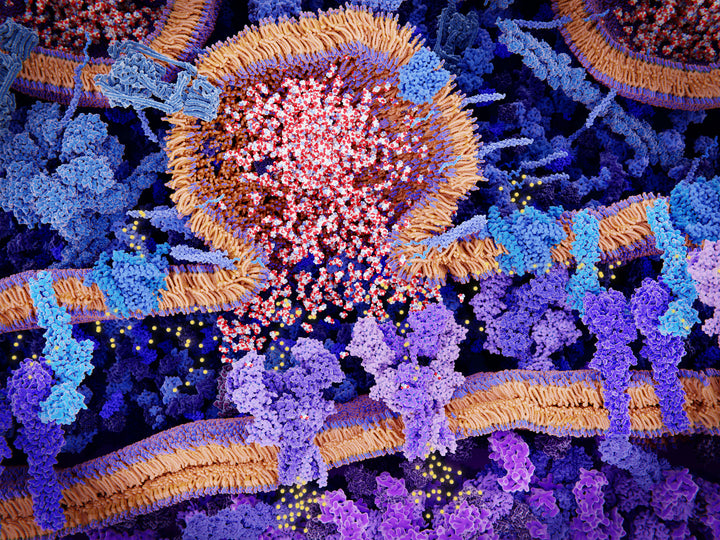
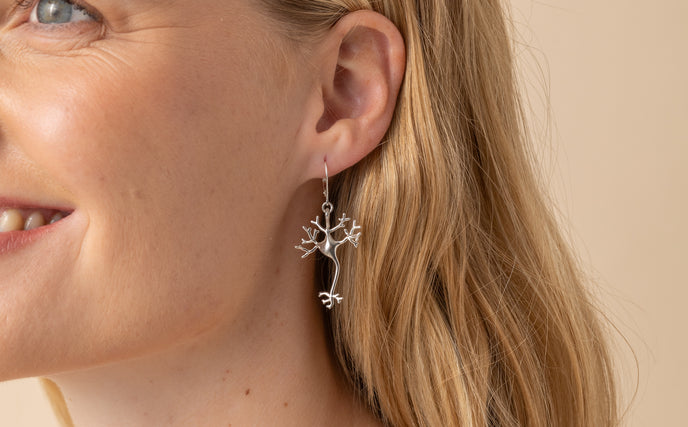
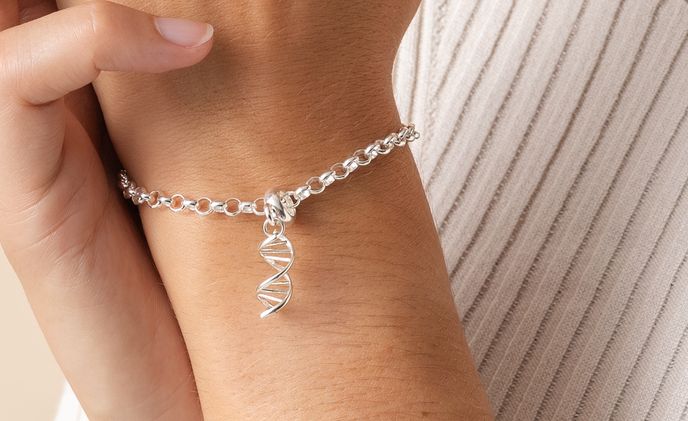
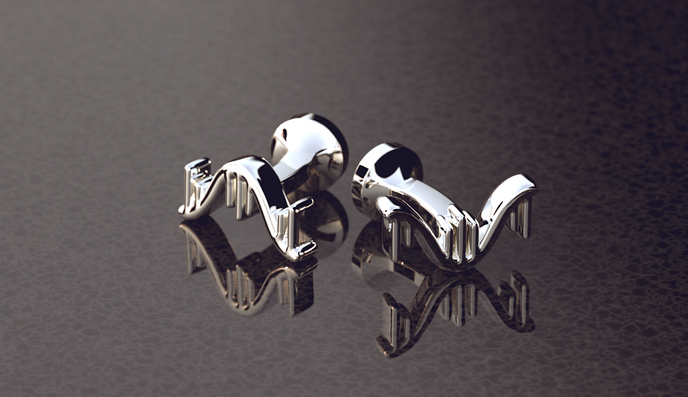
Step into the fascinating world of cellular biology through our unique jewelry designs. These pieces serve as wearable reflections of life's microscopic wonders, capturing the aesthetics of DNA strands, cellular formations, and more. Far from simple adornments, they spark dialogue and honor the captivating complexities found within biological research. Merging scientific accuracy with artistic flair, each creation offers a tactile experience that bridges the gap between scientific inquiry and aesthetic appreciation.
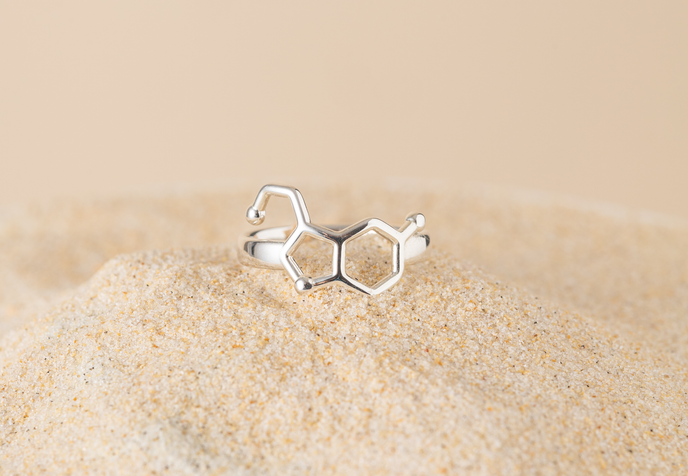
Find your perfect fit: measure an Existing Ring
Finding out your ring size at home is a simple process and can help you shop for jewelry online with confidence.
Necklace length guide