€ 140


Still questions? Contact us
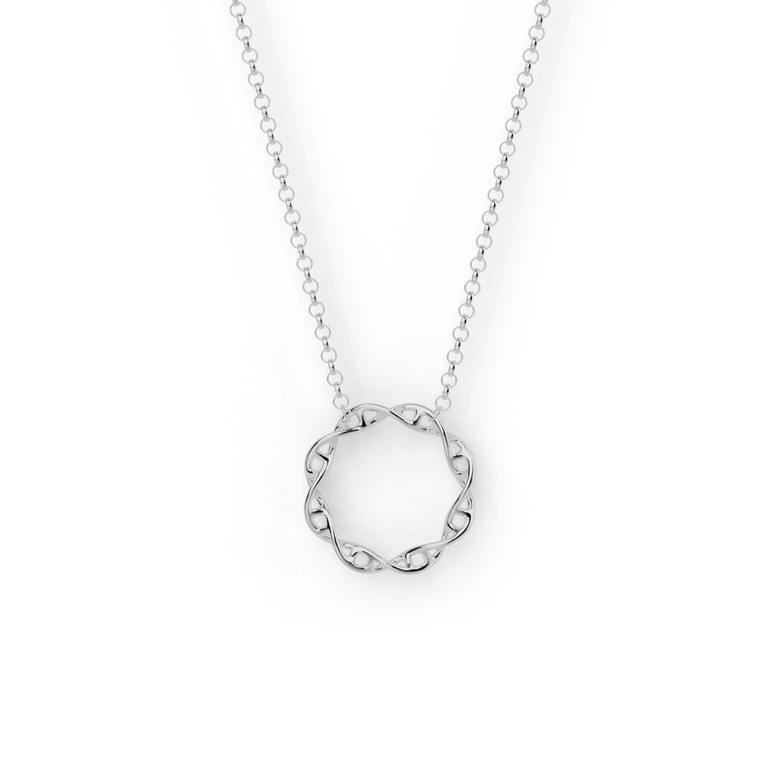
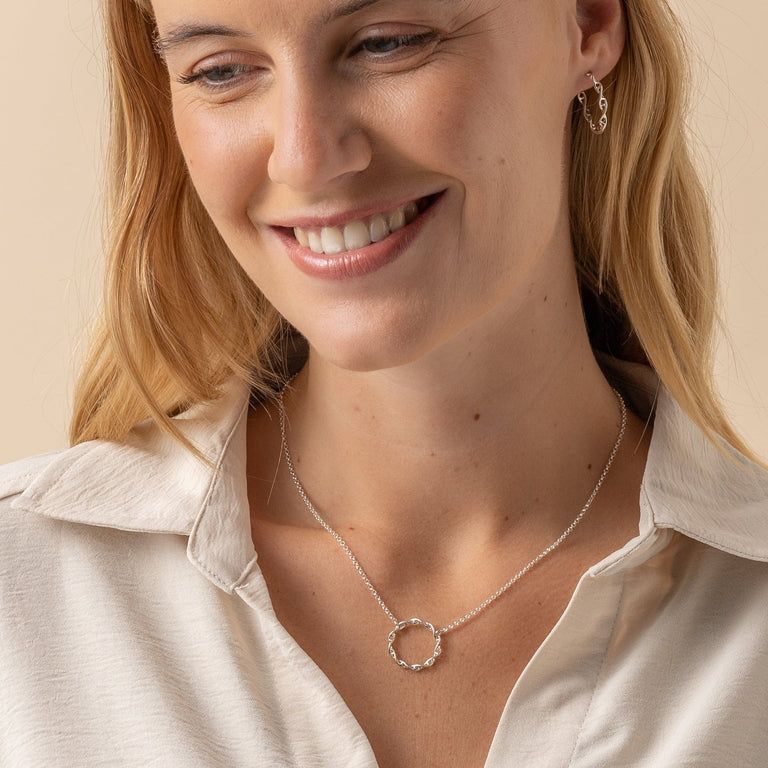
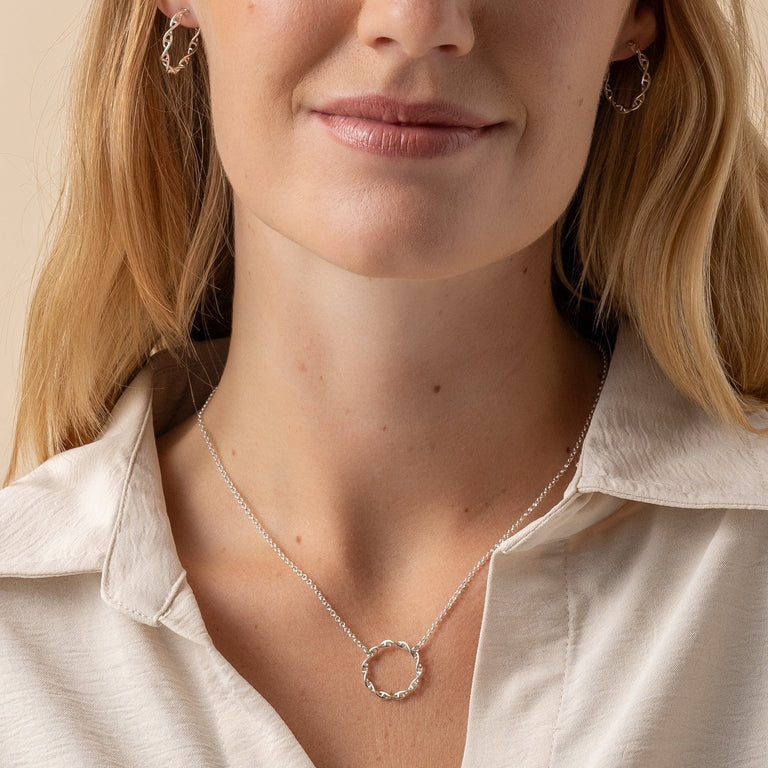
circular DNA necklace | sterling silver
Plasmids made modern biology possible. Recombinant DNA, the first genetic engineering experiments, the entire infrastructure of genetic medicine all built on the trick of inserting a gene into a small circular DNA loop and letting bacteria copy it for you. Linear is the human-cell exception. Circular DNA runs most of life on Earth.
The Science Behind Circular DNA
Circular DNA appears in bacterial chromosomes, plasmids, mitochondrial genomes, chloroplast genomes, and most viral genomes. The closed loop solves the end-replication problem. Linear chromosomes lose a fraction of their tip every time they replicate, which is why human cells need telomeres and the telomerase complex to keep gene-coding regions intact. Circular DNA replicates without that overhead. Plasmids carrying antibiotic-resistance genes were how molecular biology learned to insert any gene into bacteria, and they remain the standard vehicle for cloning, gene therapy delivery, and synthetic biology constructs.
A Quiet Symbol For
Mostly worn by people whose work touches plasmids weekly.
- molecular biologists and biochemists
- microbiologists and bacteriologists
- mitochondrial biology researchers
- synthetic biology and gene therapy teams
- graduate students running cloning and transformation regularly
Explore Related Genetics Jewelry
- circular DNA necklace | gold vermeil
- DNA necklace H | silver
- RNA necklace | silver
- cloning vector necklace | silver
FAQ
Will a microbiologist actually want this?
Yes. Circular DNA is so closely tied to bacterial genetics that recognising it on a piece of jewelry is essentially a peer-identification signal. Microbiologists, plasmid biologists, and synthetic biology researchers will read it immediately. People outside the field often need it explained, which is part of the point.
Why don't bacteria need telomeres?
Because they don't have ends. Replication of a circular chromosome closes back on itself, so there's no terminal stretch of DNA that gets shortened with each division. Telomeres and telomerase only became necessary once chromosomes opened up into linear strands, which is part of why eukaryotic genomes are more elaborate than bacterial ones.
Size, material, chain length?
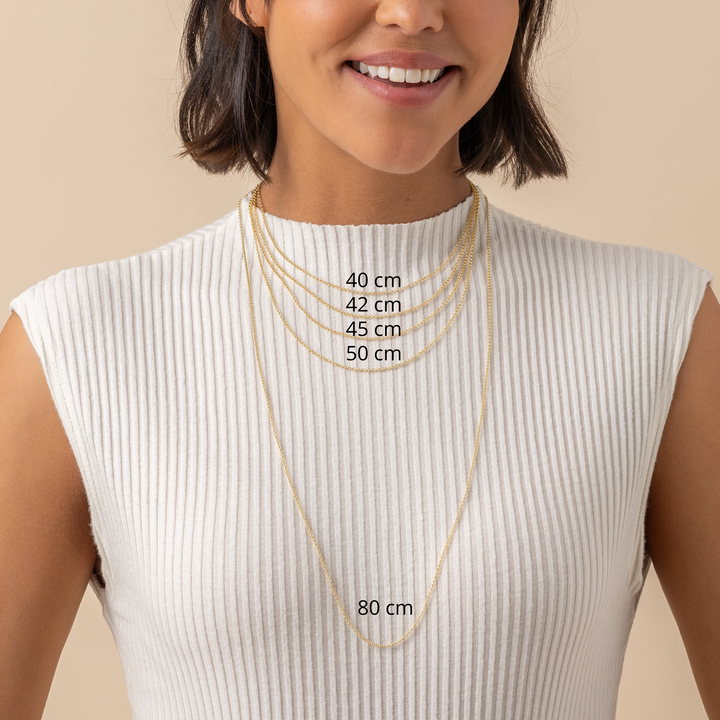
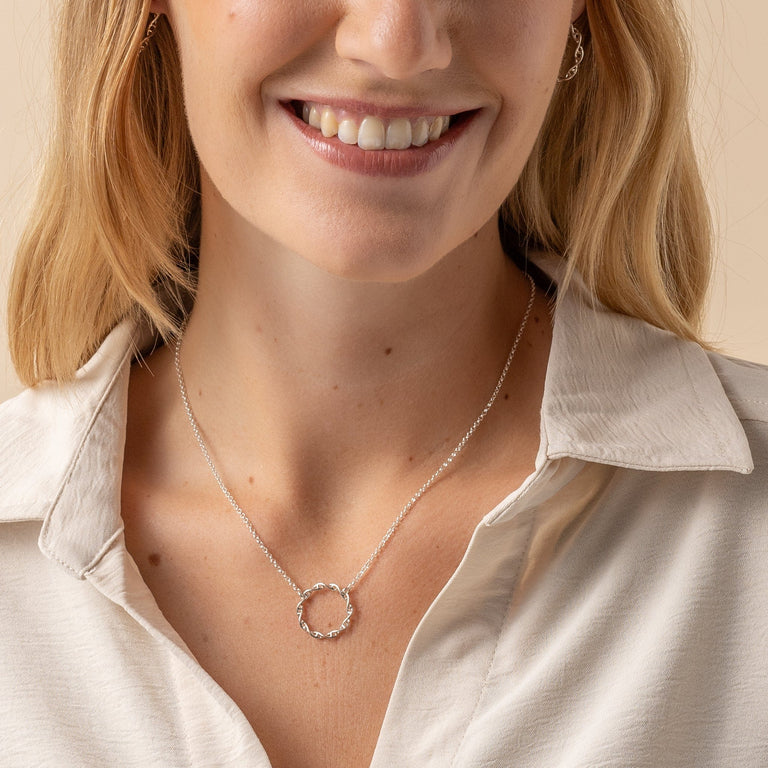
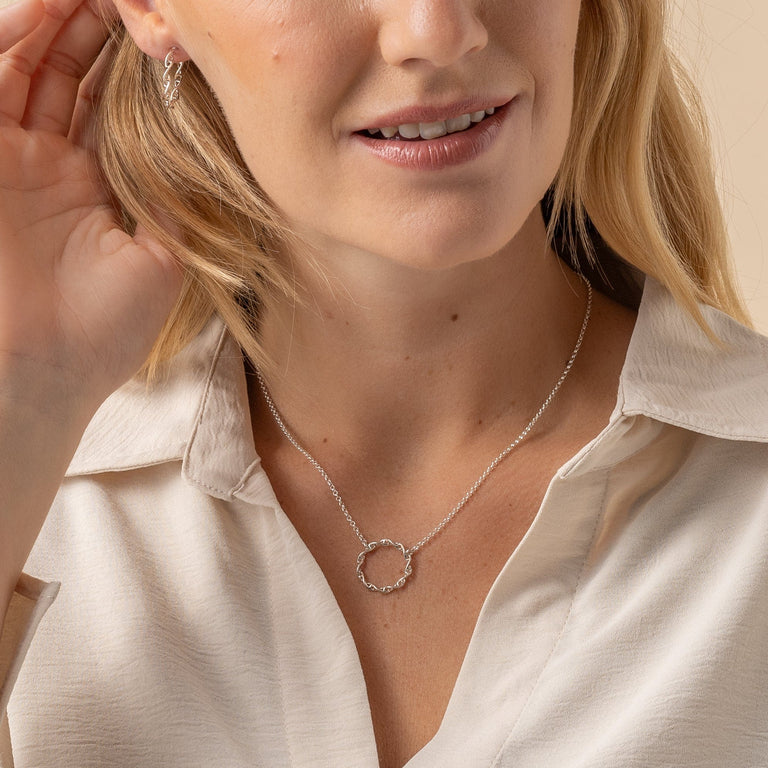
20 mm pendant in 925 polished sterling silver, nickel-free and hypoallergenic, on a 45 cm sterling silver chain (1.8 mm diameter) with lobster clasp and a 5 cm extender. Free DHL Express shipping worldwide in 1-5 business days, all duties and taxes covered, 30-day “Love It or Return It” policy.
Is there a gold version?
Yes. The circular DNA necklace exists in 18k gold vermeil at the same 20 mm size. Same design, material is the only difference.
Genetics
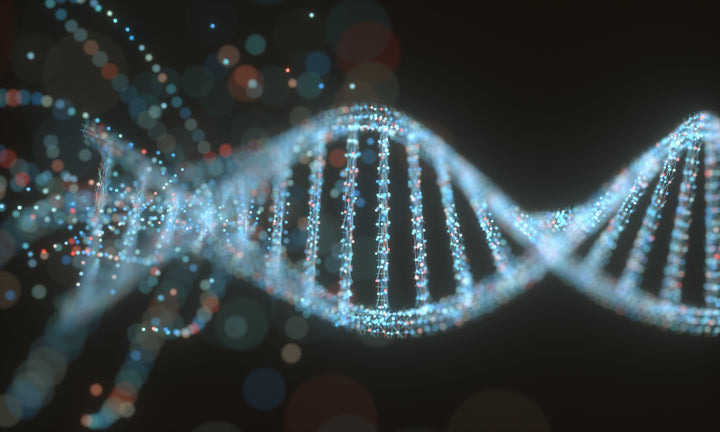
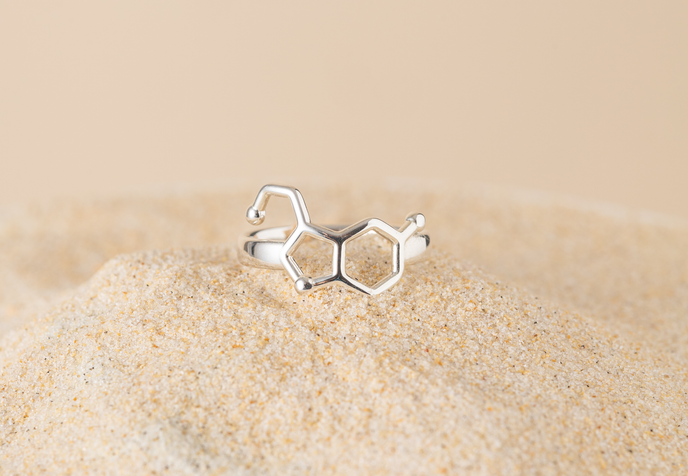
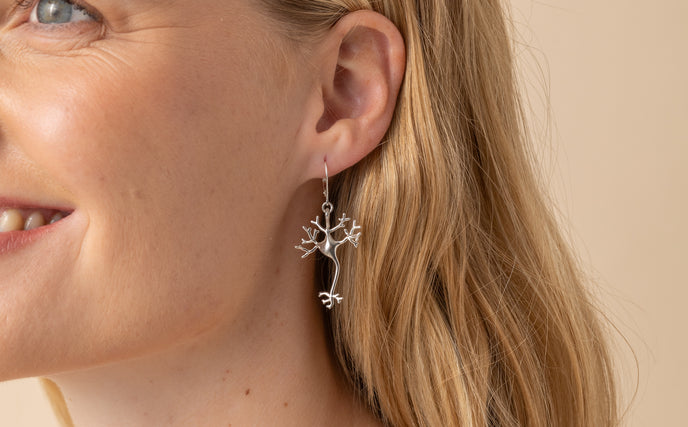
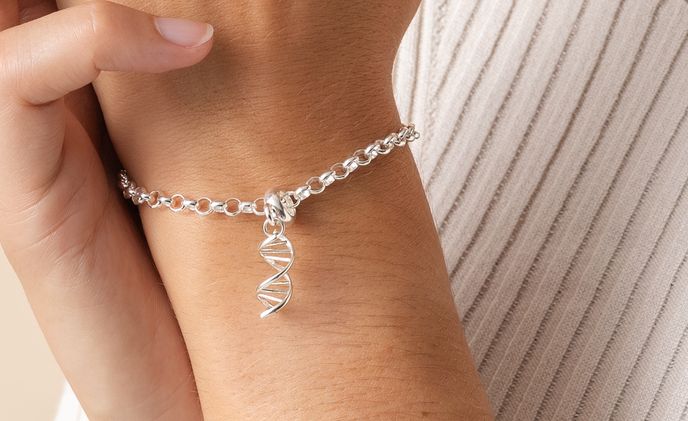
Our genetics-inspired jewelry captures the essence of life's code in striking detail. Crafted to mirror the DNA double helix, each piece is more than an aesthetic marvel—it's a tribute to the complexity of our genetic makeup. Far from ordinary, this collection combines scientific precision with artistic flair, making each item a captivating blend of form and function. It's not just an accessory; it's a meaningful representation of the miracle that is genetics.
Find your perfect fit: measure an Existing Ring
Finding out your ring size at home is a simple process and can help you shop for jewelry online with confidence.
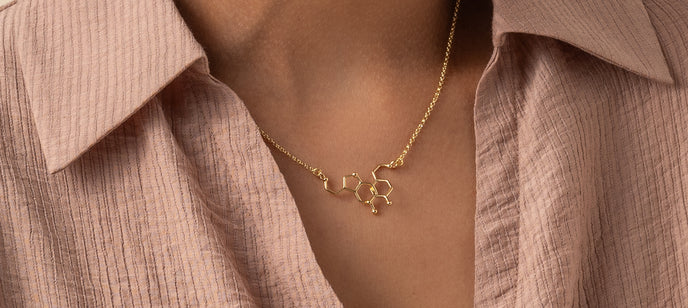
Necklace length guide