€ 190


Still questions? Contact us
Chloroplast necklace | sterling silver
The chloroplast is a former bacterium. Roughly 1.5 billion years ago, a cyanobacterium entered a eukaryotic cell and never left, and the descendants of that single event are now the organelles that turn sunlight into chemical energy in every plant on Earth.
The Science of the Chloroplast
A chloroplast is a double-membrane organelle with a stroma containing stacks of internal thylakoid membranes (the grana) where the light-dependent reactions of photosynthesis happen. Chlorophyll embedded in the thylakoid membranes absorbs light primarily in the red and blue wavelengths, reflecting the green that gives most plants their colour. The captured energy is used to split water (releasing oxygen as a by-product) and to drive the Calvin cycle in the surrounding stroma, which fixes atmospheric carbon dioxide into sugar. The chloroplast carries its own circular genome of about 150 kilobases, the descendant of the original cyanobacterial chromosome. The atmospheric oxygen that aerobic life depends on is the cumulative output of this organelle across geological time.
The Audience
This piece tends to find a specific audience:
- plant biologists, botanists, and crop scientists
- biochemists and biophysicists working on photosynthesis
- evolutionary biologists interested in endosymbiosis and organelle origins
- ecology and climate researchers whose work touches primary production
- biology students who first met the Calvin cycle in a sophomore lecture and remembered it
Explore Related Cellular Biology Jewelry
- Chloroplast necklace | gold vermeil
- Arabidopsis necklace | silver
- Pollen grain necklace | silver
- Darwin's phylogenetic tree necklace | silver
FAQ
Who tends to buy a chloroplast necklace?
Mostly plant biologists, biochemists working on photosynthesis, and evolutionary biologists interested in the endosymbiosis story. It also lands well with crop scientists, with climate researchers whose work touches primary production, and with the broad audience of biology graduates who carried the Calvin cycle out of college and never quite let it go. Less common as a gift to non-scientists, who tend not to recognise the structure on first sight.
Why does it matter that the chloroplast was originally a free-living bacterium?
Because almost everything about the chloroplast still makes sense as a bacterium. It has its own circular genome, its own ribosomes, its own gene expression machinery, and it divides by binary fission. The endosymbiosis hypothesis was contested for decades and confirmed by sequencing in the 1980s. It is the cleanest single explanation for why eukaryotic cells have organelles at all, and the same logic applies to mitochondria, which have their own bacterial origin story.
What's the size, material, and chain?
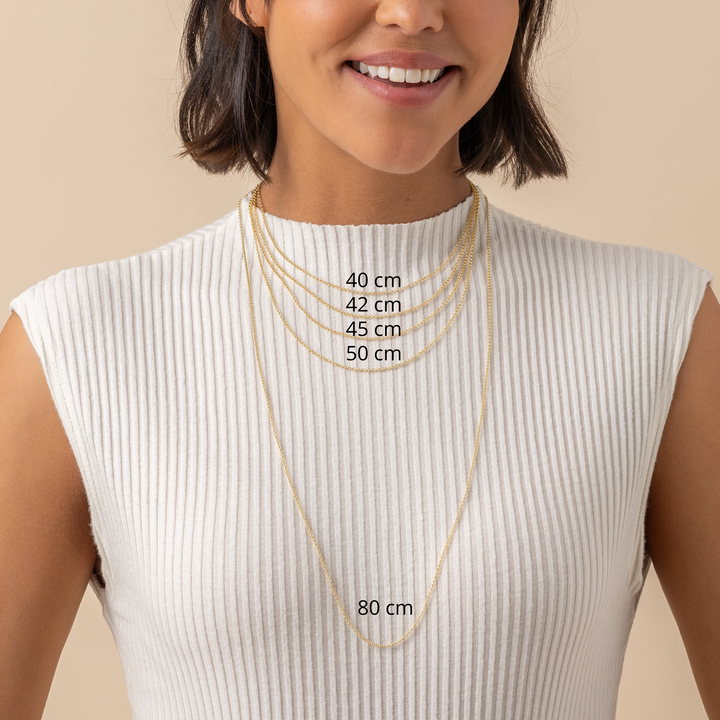
27 mm pendant in 925 sterling silver, nickel-free. 45 cm sterling silver chain with a 5 cm extender. Ships free worldwide via DHL Express in 1-5 business days, with all import duties prepaid. Comes in a ready-to-gift jewelry box with the 30-day “Love It or Return It” policy.
Is there a gold version?
Yes. The chloroplast is also available in 18k gold vermeil at the same 27 mm size. Same model, warmer finish, more formal register.
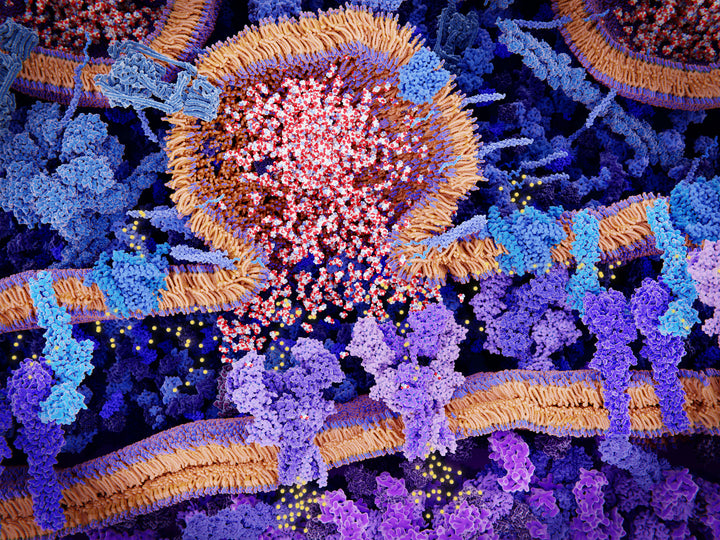
Cellular Biology
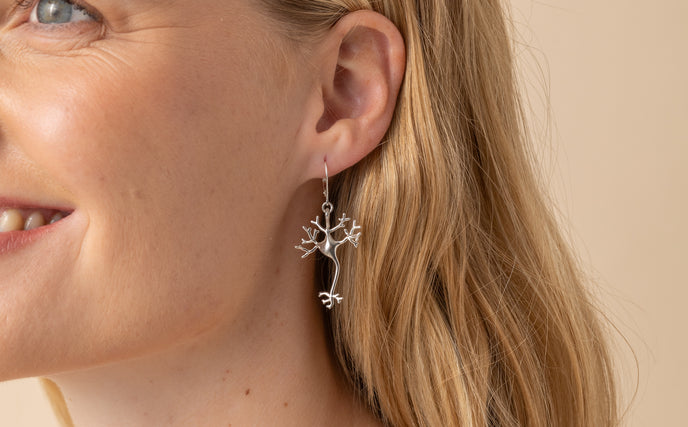
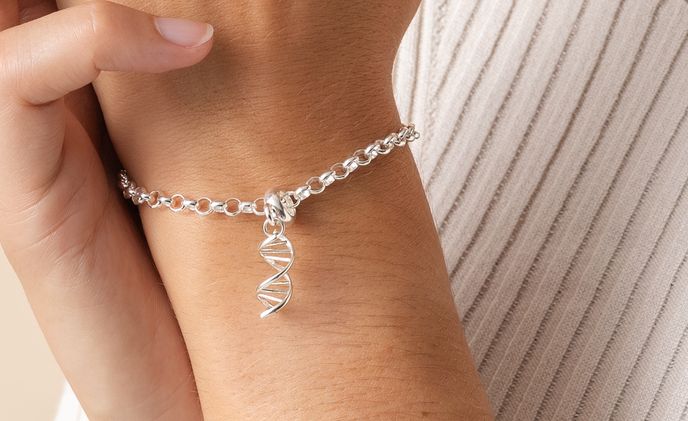
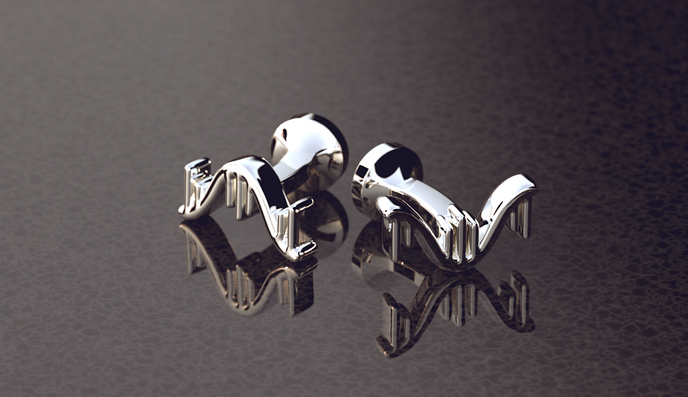
Step into the fascinating world of cellular biology through our unique jewelry designs. These pieces serve as wearable reflections of life's microscopic wonders, capturing the aesthetics of DNA strands, cellular formations, and more. Far from simple adornments, they spark dialogue and honor the captivating complexities found within biological research. Merging scientific accuracy with artistic flair, each creation offers a tactile experience that bridges the gap between scientific inquiry and aesthetic appreciation.
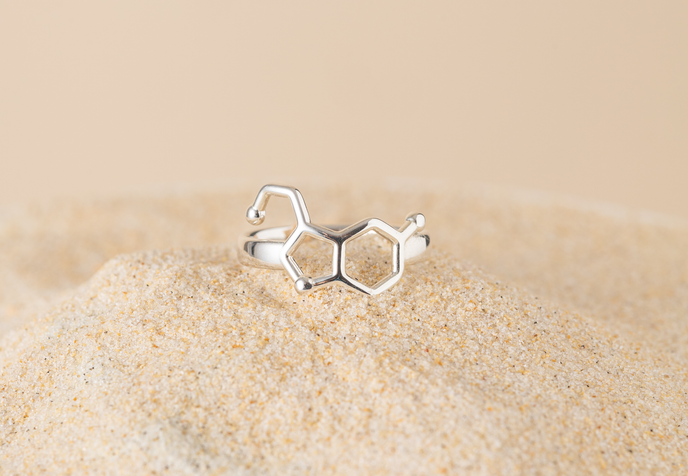
Find your perfect fit: measure an Existing Ring
Finding out your ring size at home is a simple process and can help you shop for jewelry online with confidence.
Necklace length guide