€ 245


Still questions? Contact us
Chloroplast necklace | gold vermeil
If you have ever explained the light reactions to an undergraduate class and watched the moment they realise the entire food chain runs on photons hitting chlorophyll inside this organelle, you already recognise what this is. The chloroplast is the only place in the biosphere where solar energy enters life.
The Biology of the Chloroplast
The chloroplast is the photosynthetic organelle of plants and algae, descended from a free-living cyanobacterium engulfed by an early eukaryote roughly 1.5 billion years ago (primary endosymbiosis). It still has its own circular genome, ribosomes, and double membrane envelope as evidence of that origin. Inside the inner membrane, stacked thylakoid membranes house the photosystems II and I, the cytochrome b6f complex, and ATP synthase that together drive the light reactions: water splitting, oxygen evolution, NADPH production, and ATP synthesis from a proton gradient. The surrounding stroma carries the Calvin-Benson cycle, which fixes carbon dioxide into sugar via RuBisCO. Almost all biomass on Earth is downstream of this organelle. Photosynthetic carbon fixation provides the energy and reduced carbon for nearly all heterotrophic life, including humans.
Who Will Recognise It
The audience clusters around plant biology, photosynthesis research, and adjacent fields:
- plant biologists and photosynthesis researchers
- biochemists and structural biologists working on photosystems
- agricultural scientists and crop physiologists
- climate scientists working on carbon fixation and biological carbon sinks
- biology educators who teach photosynthesis as a foundation course
Explore Related Cellular Biology Jewelry
- Chloroplast necklace | sterling silver
- Mammalian cell necklace | gold vermeil
- Mitochondrion necklace | silver
- DNA necklace | silver
FAQ
Why does the chloroplast still have its own genome?
Because of its evolutionary origin. The chloroplast descended from a free-living cyanobacterium that was engulfed by an early eukaryote about 1.5 billion years ago and never fully assimilated. Most of the original cyanobacterial genes have transferred to the host nucleus over evolutionary time, but a small set (around 100 genes in plants) stays behind. Many of those encode proteins that need to be made directly inside the organelle for kinetic or regulatory reasons, including key components of the photosystems and the chloroplast-specific ribosome. The persistence of this organellar genome is direct evidence of the endosymbiotic origin and the reason maternal inheritance of chloroplast traits exists.
Why is RuBisCO often called the most abundant protein on Earth?
Because every photosynthetic cell needs a lot of it. RuBisCO (ribulose-1,5-bisphosphate carboxylase/oxygenase) catalyses the carbon-fixing step of the Calvin cycle, but it is famously slow (a few reactions per second per active site, against millions per second for many enzymes). Photosynthetic organisms compensate by stockpiling enormous amounts of the enzyme. Estimates put global RuBisCO mass at over 700 million tonnes, which makes it more abundant than any other single protein on the planet. Most of it is in chloroplasts, packed into the stroma at near-crystalline concentration.
What is the size, material, and chain?
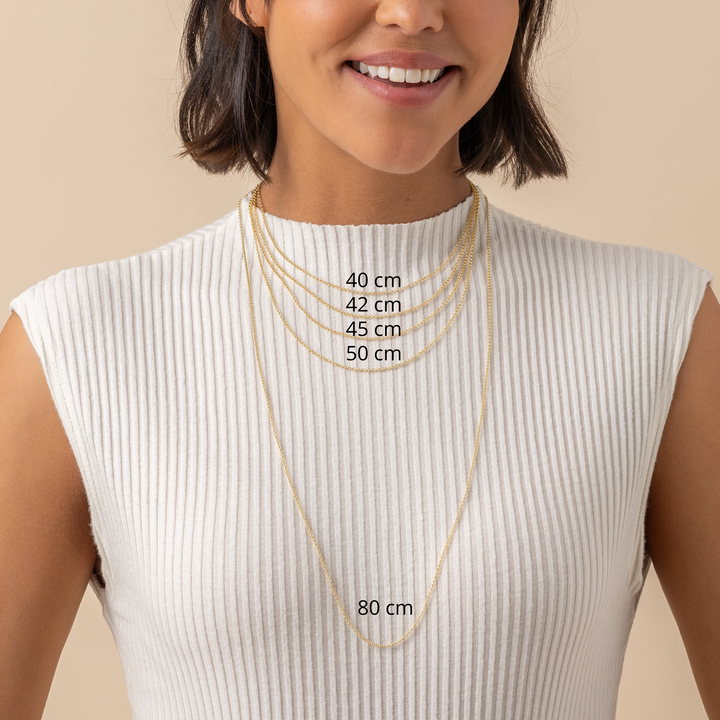
27 mm pendant in 18K gold vermeil (sterling silver core with 2.5 micron gold plating), nickel-free and hypoallergenic. 45 cm gold vermeil chain with a 5 cm extender. Ships free worldwide via DHL Express in 1-5 business days, with all import duties prepaid. Comes in a ready-to-gift jewelry box with the 30-day “Love It or Return It” policy.
Same design as the silver chloroplast?
Yes. Same 27 mm pendant, identical chloroplast geometry. Material is the only difference.
Cellular Biology
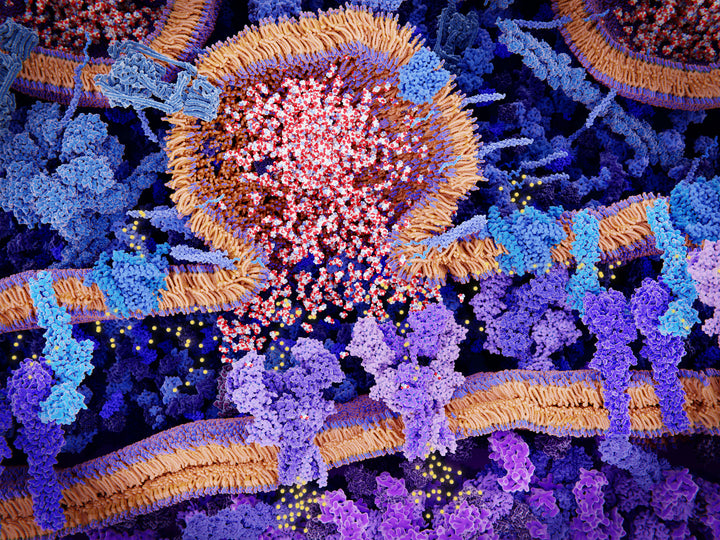
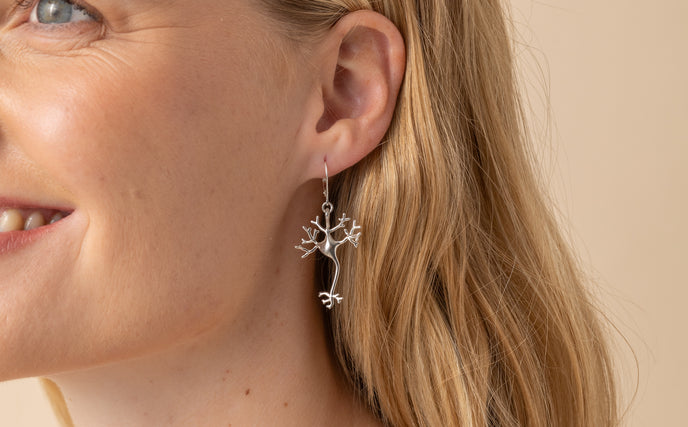
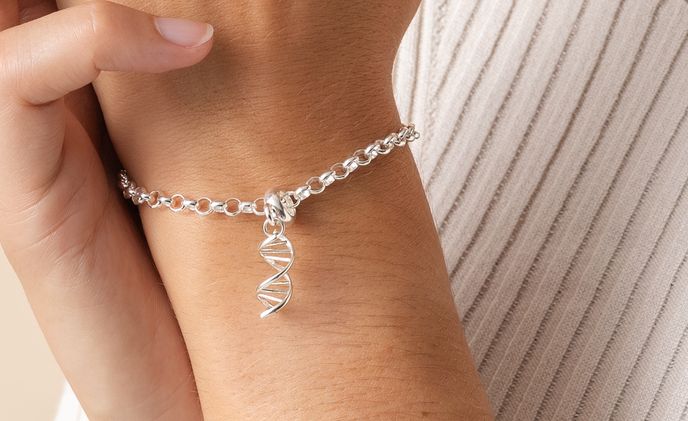
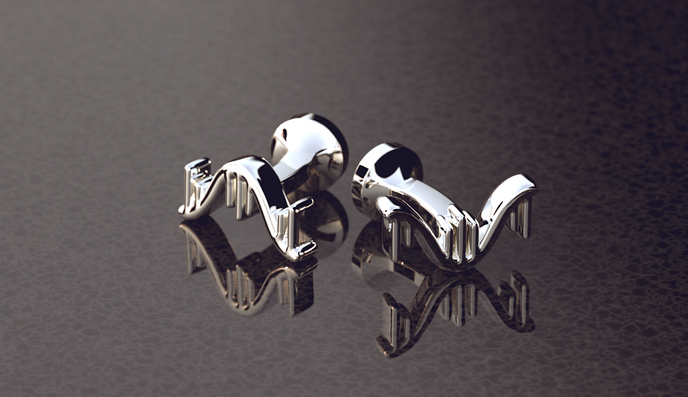
Step into the fascinating world of cellular biology through our unique jewelry designs. These pieces serve as wearable reflections of life's microscopic wonders, capturing the aesthetics of DNA strands, cellular formations, and more. Far from simple adornments, they spark dialogue and honor the captivating complexities found within biological research. Merging scientific accuracy with artistic flair, each creation offers a tactile experience that bridges the gap between scientific inquiry and aesthetic appreciation.
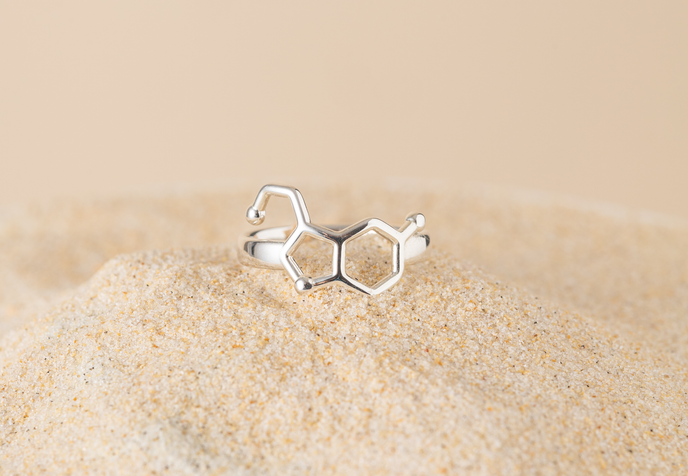
Find your perfect fit: measure an Existing Ring
Finding out your ring size at home is a simple process and can help you shop for jewelry online with confidence.
Necklace length guide