
€ 275


Still questions? Contact us
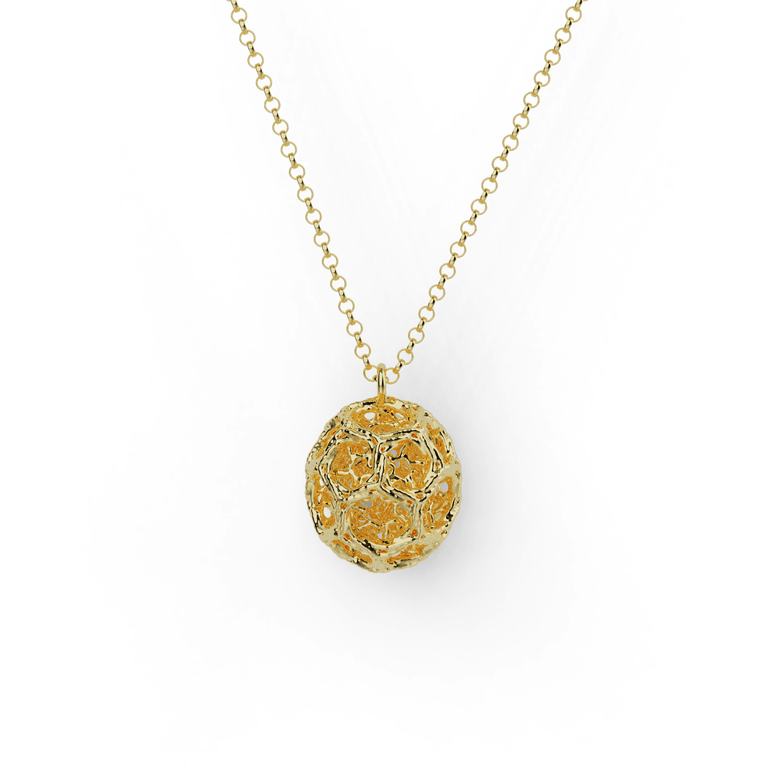
Clathrin coated vesicle necklace | 18k gold vermeil
If you have ever followed cargo into a clathrin-coated pit, watched a triskelion lattice assemble from the inside out, or run a dynamin assay to time the scission, you already recognise this. Clathrin-mediated endocytosis is one of the most-studied trafficking pathways in cell biology.
The Science Behind the Clathrin Cage
Clathrin assembles spontaneously from triskelion subunits into a polyhedral cage of hexagons and pentagons that follows the same geometric logic as a fullerene or a soccer ball. The assembly is driven entirely by non-covalent contacts between adjacent triskelion legs, with no template or external scaffold. In the cell, accessory proteins like AP2 link the cage to specific membrane patches and cargo receptors. As the lattice grows, it deforms the membrane into a budding pit. Dynamin then assembles around the neck of the pit and uses GTP hydrolysis to pinch off the vesicle. The whole sequence takes about a minute, and a typical cell runs hundreds of these events at any given moment.
Who Tends to Wear This
A narrow but devoted audience:
- membrane trafficking and endocytosis researchers
- structural biologists working on protein assemblies and cages
- cell biologists working on receptor signalling, viral entry, or synaptic vesicle recycling
- pharmacologists working on receptor-mediated drug uptake
- cell biology graduate students who picked apart their first clathrin paper as a rite of passage
Often given on the completion of a PhD focused on intracellular trafficking, or picked up as a self-purchase by long-term researchers in the field.
Explore Related Cellular Biology Jewelry
- Clathrin coated vesicle necklace | silver
- Membrane necklace | gold vermeil
- Nuclear pore necklace | silver
- Ribosomes necklace | gold vermeil
FAQ
Is this niche enough to give to a working cell biologist?
Yes. Clathrin is one of the few molecular machines that the average cell biologist will recognise immediately by name and structure, and a pendant that names this specific cage rather than gesturing at cell biology in general tends to land as a thoughtful gift. The triskelion is also the kind of structure that other scientists ask about, which makes it a piece that opens conversations rather than just sitting on a chain.
Why does clathrin assemble into a cage all on its own?
Because the triskelion's three legs are angled in a way that lets adjacent triskelions interlock at predictable angles. Once a few are in position, the geometry constrains where the next one fits. The cage that emerges has the same hexagon-pentagon rules as a fullerene or a soccer ball, and the energetic argument is the same in both cases. It is one of the cleanest demonstrations of structure emerging from the local rules of how parts fit together.
What's the size, material, and chain?
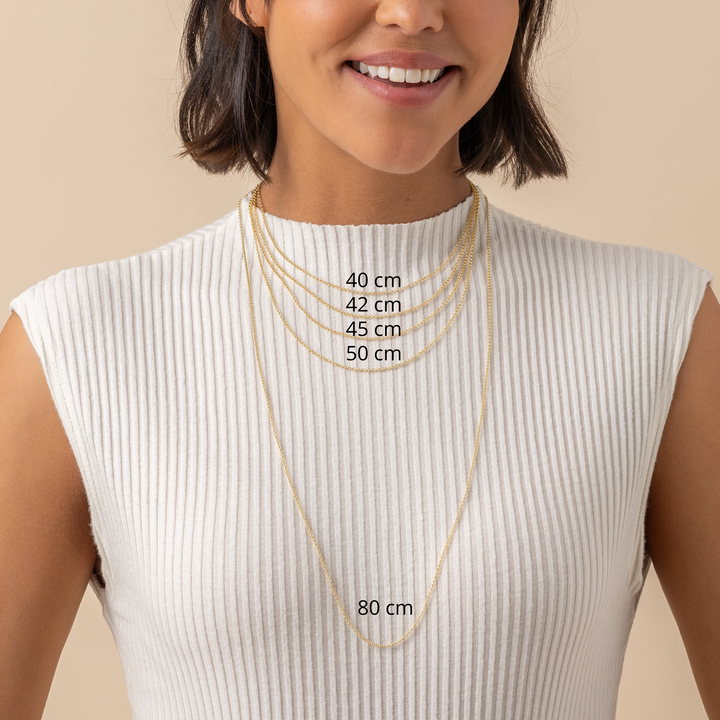
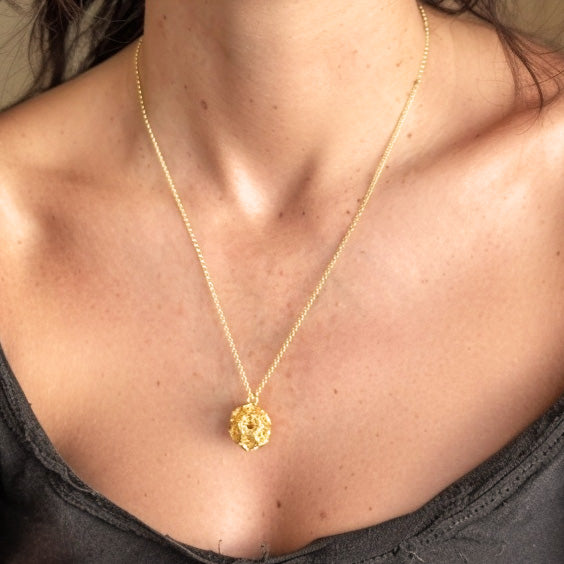
19 mm pendant in 18k gold vermeil over a sterling silver core, nickel-free. 45 cm gold vermeil chain with a 5 cm extender. Ships free worldwide via DHL Express in 1-5 business days, with all import duties prepaid. Comes in a ready-to-gift jewelry box with the 30-day “Love It or Return It” policy.
Same design as the silver clathrin coated vesicle?
Yes. Same model, same 19 mm size. Material is the only difference.
Cellular Biology
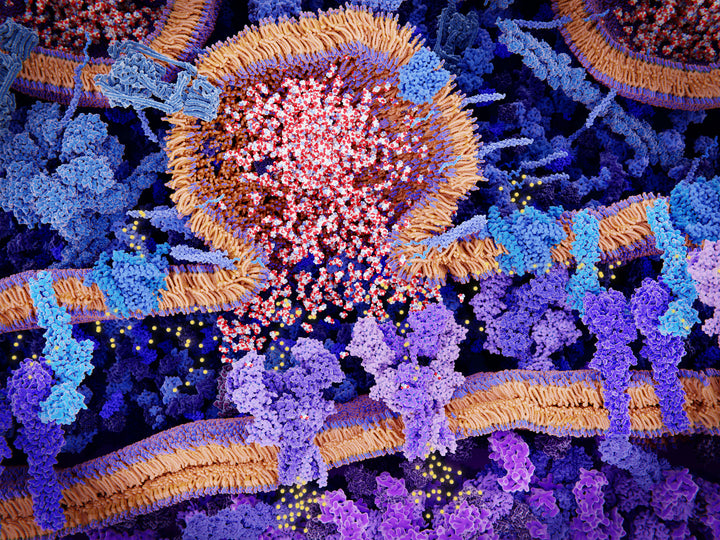
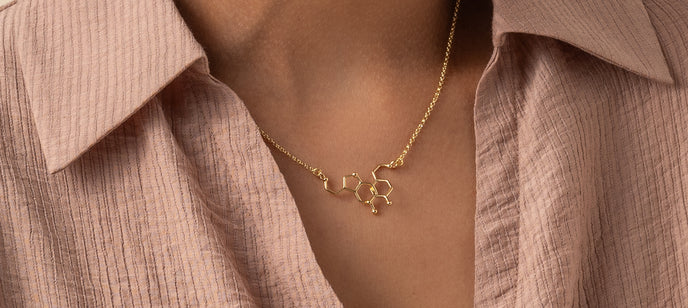
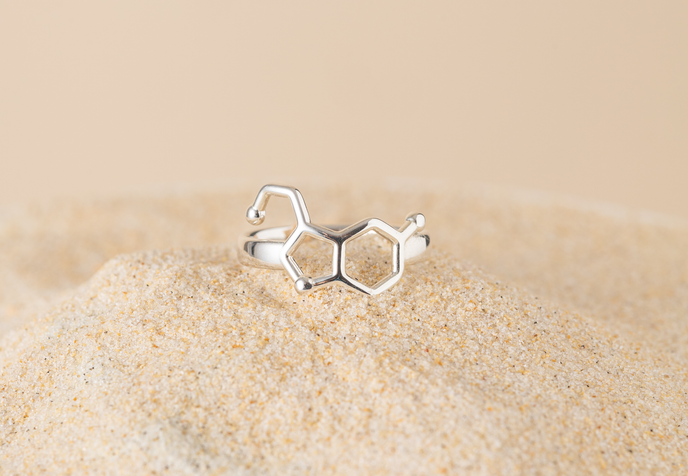
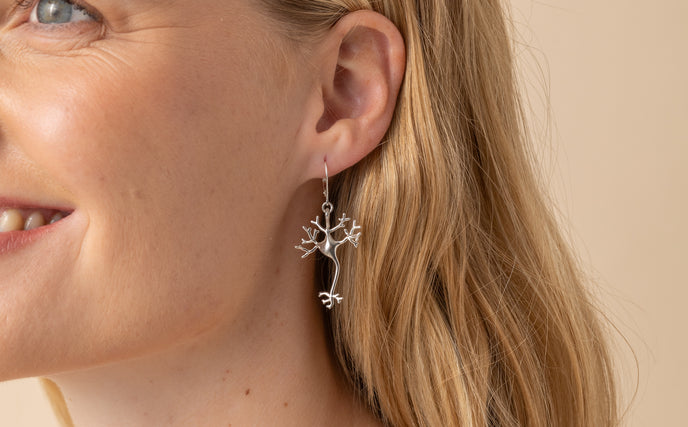
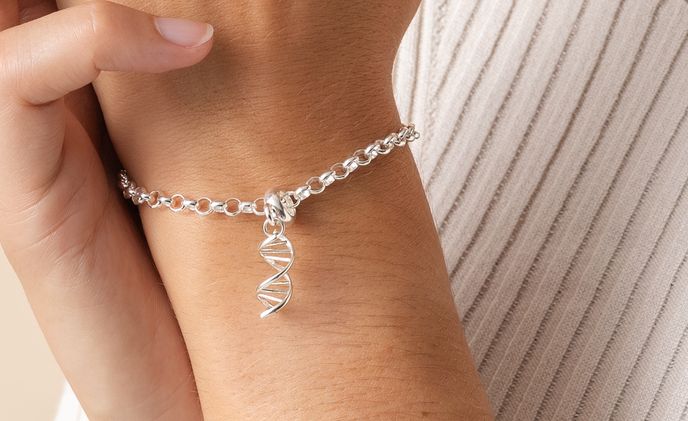
Step into the fascinating world of cellular biology through our unique jewelry designs. These pieces serve as wearable reflections of life's microscopic wonders, capturing the aesthetics of DNA strands, cellular formations, and more. Far from simple adornments, they spark dialogue and honor the captivating complexities found within biological research. Merging scientific accuracy with artistic flair, each creation offers a tactile experience that bridges the gap between scientific inquiry and aesthetic appreciation.
Find your perfect fit: measure an Existing Ring
Finding out your ring size at home is a simple process and can help you shop for jewelry online with confidence.
Necklace length guide