€ 155


Still questions? Contact us
Dopamine necklace H | 18k gold vermeil
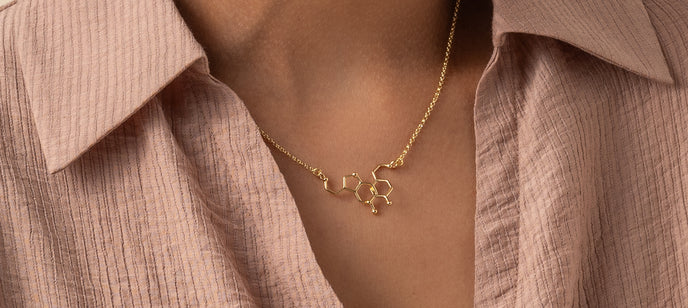
Dopamine is the molecule that runs both reward and cognitive control. The mesocortical pathway, from the ventral tegmental area to the prefrontal cortex, modulates focus, working memory, and executive function. The pendant is the catecholamine geometry, horizontal, in 18k gold vermeil.
The Science Behind Dopamine
The mesocortical dopamine pathway projects from the ventral tegmental area to the prefrontal cortex and modulates executive function through an inverted-U dose-response relationship: both too little and too much prefrontal dopamine impair cognitive performance. This explains why stimulant medications at therapeutic doses improve attention and working memory in ADHD (raising dopamine toward the optimal point), while at higher doses they impair performance. D1 receptor stimulation in the prefrontal cortex enhances signal-to-noise in working memory networks. D2 receptor activation has different effects in the striatum. The mesocortical and mesolimbic pathways are anatomically and pharmacologically distinct, which is why the same molecule can run both cognition and reward.
Worn By
- cognitive neuroscientists and neuropsychologists
- pharmacologists studying dopamine receptor subtypes
- ADHD clinicians and researchers in executive function
- psychiatrists working in addiction or schizophrenia
- people whose work depends on prefrontal dopamine being where it should be
The horizontal version is the cognitive-neuroscience pick, often given as a post-defence gift.
Explore Related Neuroscience Jewelry
- Dopamine necklace H | silver
- Dopamine necklace V | gold vermeil
- Dopamine necklace V | silver
- Dopamine-serotonin necklace H | gold vermeil
FAQ
Will a cognitive neuroscientist actually wear this?
Most do, and many specifically prefer the horizontal version. Cognitive neuroscience runs on the prefrontal-cortex side of the dopamine system, where the mesocortical pathway sets the working memory and attention dial. The pendant is recognisable to anyone in the field. The horizontal orientation reads slightly more like the molecule's textbook chemical structure than the vertical version does. It's also one of the more talked-about pendants at conferences in attention research.
Why is the prefrontal dopamine sweet spot so narrow?
Because the prefrontal cortex is unusually sensitive to dopamine levels. The relationship between prefrontal dopamine concentration and cognitive performance is an inverted U: both too little and too much impair attention, working memory, and executive control. The optimal level is narrow because PFC neurons rely on dopamine to filter signal from noise, and either deficit or excess collapses that filter. The dose-response curve is why stimulant medications work for some patients and worsen function in others.
What size is the pendant and what does it ship with?
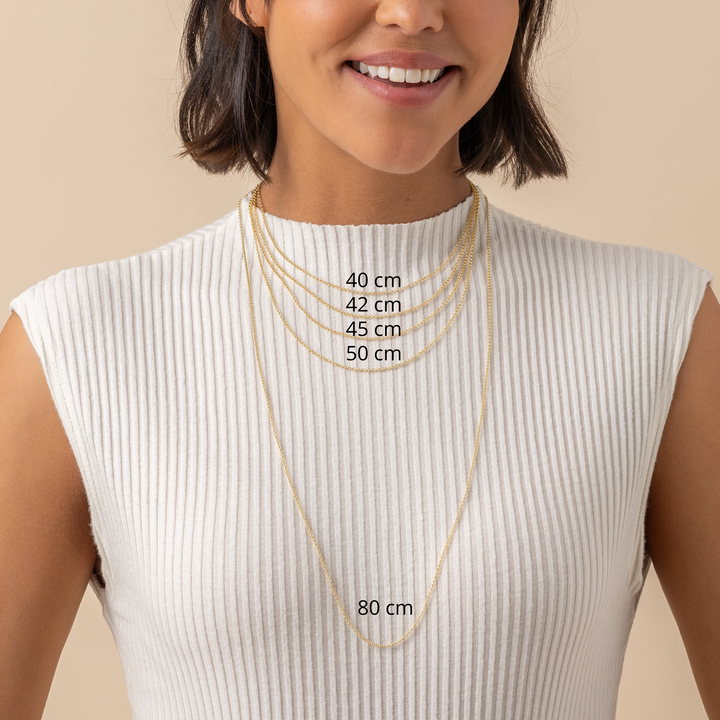
The pendant is in 18k gold vermeil, a 2.5 micron gold layer over a sterling silver core, nickel-free and hypoallergenic, on a 45 cm gold-plated chain with a 5 cm extender and lobster clasp. Free worldwide DHL Express shipping in 1-5 business days, all import duties covered, in a ready-to-gift jewelry box.
What's the difference between the horizontal and vertical dopamine necklaces?
The molecule is the same. Horizontal lays the catecholamine geometry across the pendant width, with the amine and the catechol ring at opposite ends. The pendant can be worn in either direction without losing the structure. Vertical stands the molecule up. The horizontal version tends to be the choice for people who recognise the molecular structure on sight. The vertical reads slightly more abstract on a chain. Both are available in silver and gold.
Molecules
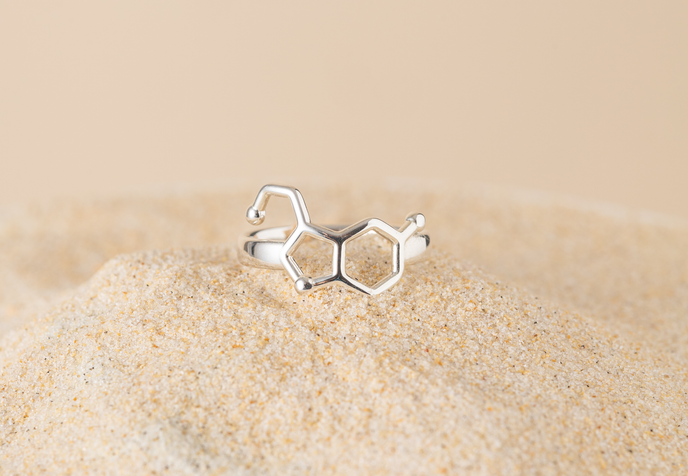
Delve into the hidden elegance of science with our meticulously crafted jewelry, inspired by the intricate structures of chemical molecules. Each piece serves as a tactile tribute to the building blocks of life and matter, capturing the allure of atoms and bonds in precious metals. A harmonious fusion of art and science, these creations are more than mere accessories; they're a celebration of the enigmatic beauty that underpins our universe.
Find your perfect fit: measure an Existing Ring
Finding out your ring size at home is a simple process and can help you shop for jewelry online with confidence.
Necklace length guide