€ 175


Still questions? Contact us
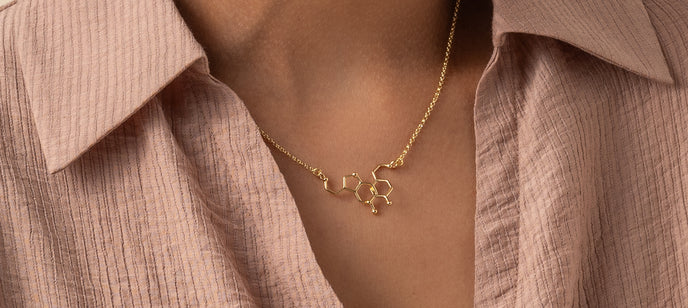
microRNA necklace | 18k gold vermeil
For RNA biologists who watched the field reorganise itself around microRNAs. The discovery sat unread for years before anyone realised what they were looking at. Now they sit in every textbook of post-transcriptional regulation, with hundreds of laboratories built around their specific targets.
The Science of MicroRNA
MiRNAs were first described in C. elegans (lin-4 in 1993, let-7 in 2000) and initially treated as an oddity of nematode biology. By the mid-2000s, conservation work had established that miRNAs are abundant and ancient in animals, plants, and viruses. The current human miRNAome contains over 2,500 annotated mature sequences. Each miRNA can target hundreds of mRNAs by partial sequence complementarity in the 3' UTR, and each mRNA can be targeted by multiple miRNAs. The dense, overlapping regulatory network buffers gene expression against noise and enables coordinated developmental transitions, immune responses, and tissue-specific identity programs.
The Audience
This is a peer-recognition piece for a specific audience. The molecule isn't visually obvious to anyone outside the field, and that's part of the appeal.
- RNA biologists and molecular biologists studying post-transcriptional regulation
- cancer biologists and developmental biologists working on miRNA targets
- bioinformaticians who run miRNA target prediction
- PhD students whose dissertation contains a "let-7" or "miR-21" figure
Common gift case: a postdoc moving into a faculty position, or a senior researcher whose lab focus is miRNA.
Explore Related Cellular Biology Jewelry
- microRNA necklace | silver
- shRNA necklace H | gold vermeil
- tRNA necklace | silver
- ribosomes necklace | gold vermeil
FAQ
Will a generalist scientist recognise this?
Probably not on first sight. miRNAs are small enough that the molecular structure isn't iconic in the way DNA or insulin's structure is. People in molecular biology, RNA biology, or developmental biology will identify it. For a generalist gift, a more recognisable structure works better.
What does a miRNA actually do in a cell?
A miRNA is loaded into the RISC complex and base-pairs with target mRNAs through partial complementarity in the 3' UTR. Binding either represses translation or recruits the mRNA for degradation. The end result is fewer copies of a specific protein, dialled up or down dynamically. Almost every cellular process has miRNA regulation layered on top of it.
Size, material, chain length?
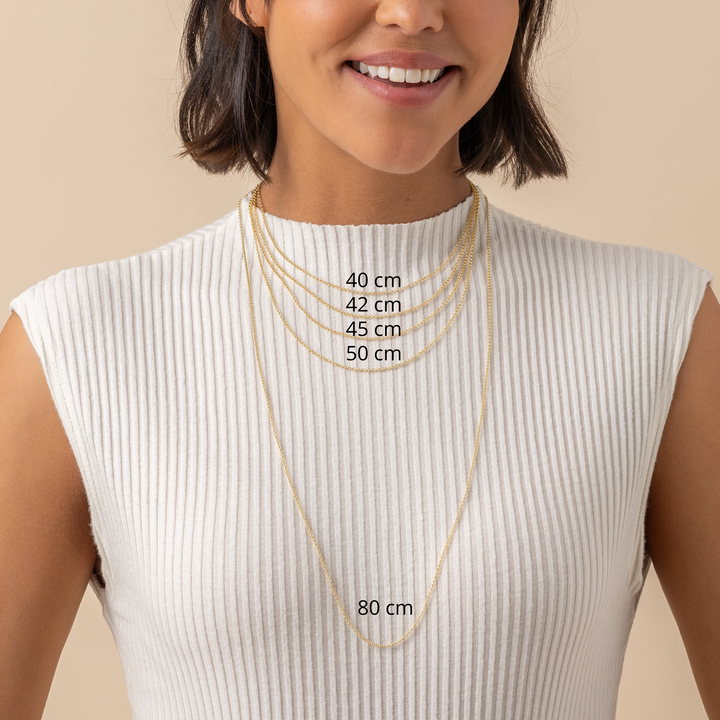
37 mm pendant in 18k gold vermeil over a sterling silver core (2.5 micron plating), nickel-free and hypoallergenic, on a 45 cm gold vermeil chain (1.8 mm diameter) with lobster clasp and a 5 cm extender. Free DHL Express shipping worldwide in 1-5 business days, all duties and taxes covered, 30-day “Love It or Return It” policy.
Is there a silver version?
Yes. The microRNA necklace exists in 925 sterling silver at the same 37 mm size. Same design, material is the only difference.
Cellular Biology
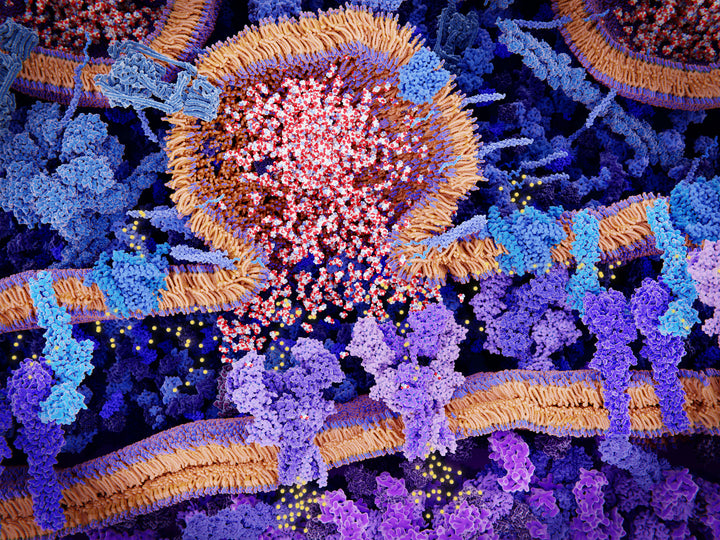
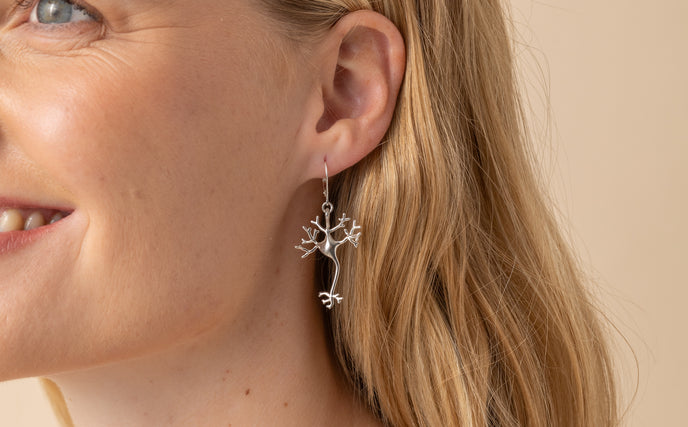
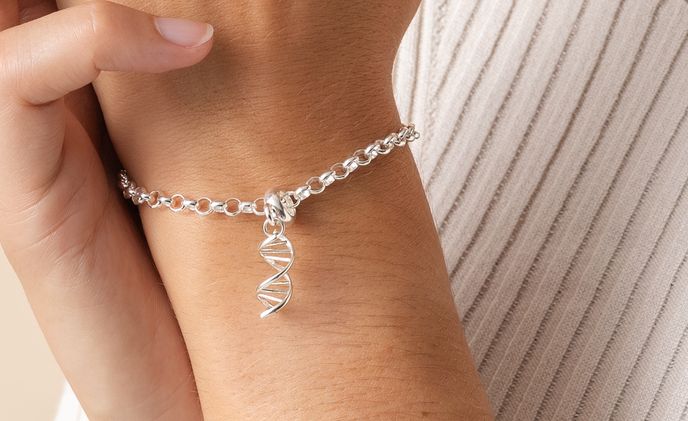
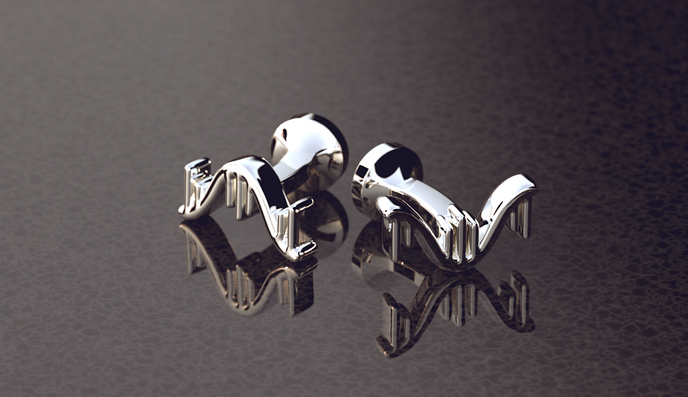
Step into the fascinating world of cellular biology through our unique jewelry designs. These pieces serve as wearable reflections of life's microscopic wonders, capturing the aesthetics of DNA strands, cellular formations, and more. Far from simple adornments, they spark dialogue and honor the captivating complexities found within biological research. Merging scientific accuracy with artistic flair, each creation offers a tactile experience that bridges the gap between scientific inquiry and aesthetic appreciation.
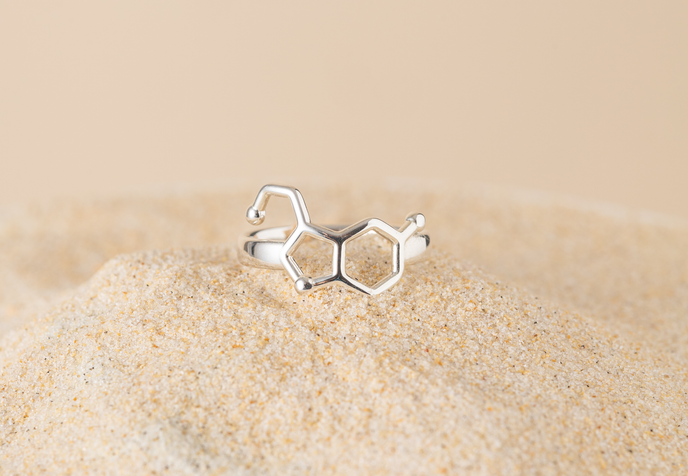
Find your perfect fit: measure an Existing Ring
Finding out your ring size at home is a simple process and can help you shop for jewelry online with confidence.
Necklace length guide