€ 150


Still questions? Contact us
microRNA necklace | silver
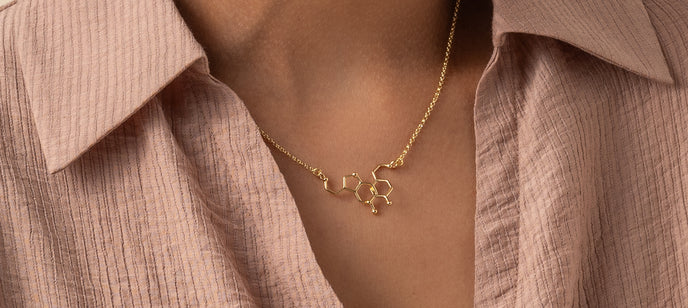
A 22-nucleotide RNA, rendered at 37 mm in 925 sterling silver. The molecule is small. The job is large: microRNAs regulate the expression of an estimated 60 percent of all human protein-coding genes by binding partial-complement target mRNAs and silencing them. The pendant carries the geometry of a regulator most people never hear of.
The Science Behind microRNA
microRNAs were identified in 1993 in C. elegans by Victor Ambros and Gary Ruvkun, who characterised lin-4, a small non-coding RNA that regulated developmental timing. The broader class was recognised in 2000 with let-7. Mature microRNAs are about 22 nucleotides long, processed from longer hairpin precursors by Drosha and Dicer, then loaded into the RISC complex where they guide it to target mRNAs through partial sequence complementarity. Once bound, the RISC complex represses translation or accelerates mRNA degradation. Hundreds of human microRNAs have been mapped, and dysregulation of specific microRNAs (miR-21, miR-155, miR-34) is now established in oncology, cardiovascular disease, and neurodegeneration.
A Quiet Symbol For
RNA biologists, oncology researchers, and anyone whose work involves post-transcriptional gene regulation.
- RNA biologists and molecular biologists working on non-coding RNAs
- cancer researchers studying microRNA dysregulation
- cardiovascular and neurodegeneration scientists
- graduate students who have done their first miRNA target prediction
For the researcher whose career has been spent on a class of molecules that nobody talked about before 2000.
Explore Related Cellular Biology Jewelry
- microRNA necklace | gold vermeil
- RNA necklace | silver
- tRNA necklace | gold vermeil
- shRNA necklace H | silver
- Cloning vector necklace | silver
Frequently Asked Questions
What does the pendant show?
A microRNA in its mature 22-nucleotide form, the size that gets loaded into RISC and guides the complex to target mRNAs. The geometry is simplified for jewelry scale but the topology references the regulator that runs through most of human gene expression.
Why microRNA rather than mRNA or tRNA?
Because microRNAs are the regulators. mRNAs carry the message, tRNAs deliver the amino acids, but microRNAs decide which messages get translated and which get degraded. People who work on gene regulation tend to find the miRNA pendant more meaningful than a generic RNA piece.
What are the specs and what is the return policy?
925 sterling silver, 37 mm pendant, 45 cm chain with a 5 cm extender. Nickel-free and hypoallergenic. Ships free worldwide via DHL Express in 1-5 business days, with all import duties and taxes covered. 30-day “Love It or Return It” returns.
Is this available in gold?
Yes. The same 37 mm microRNA pendant is available in 18K gold vermeil at the same size and chain length.
Cellular Biology
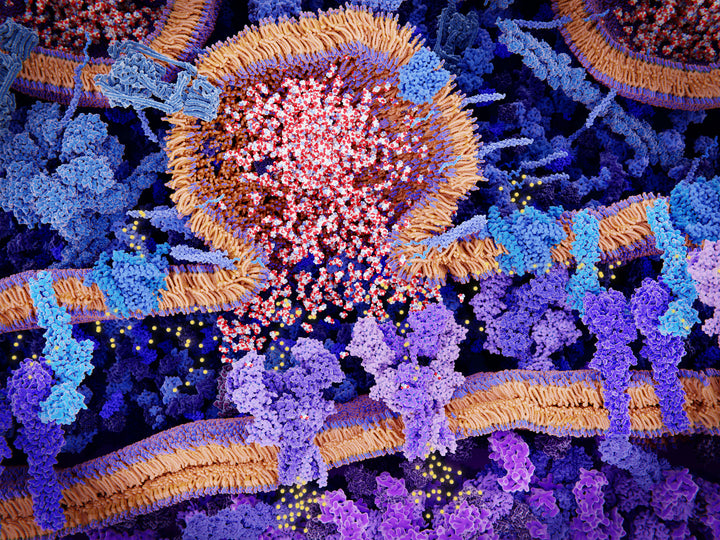
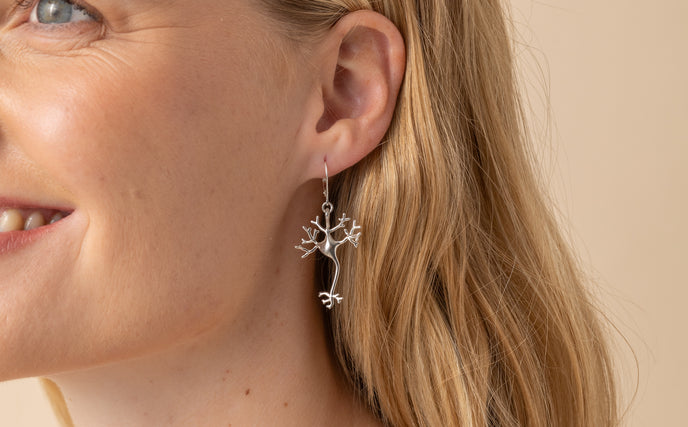
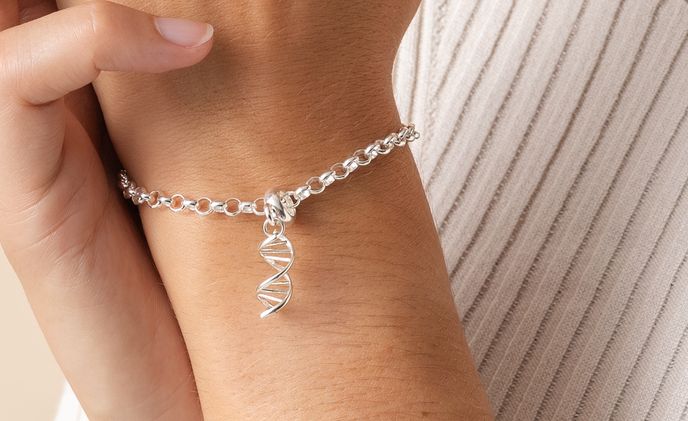
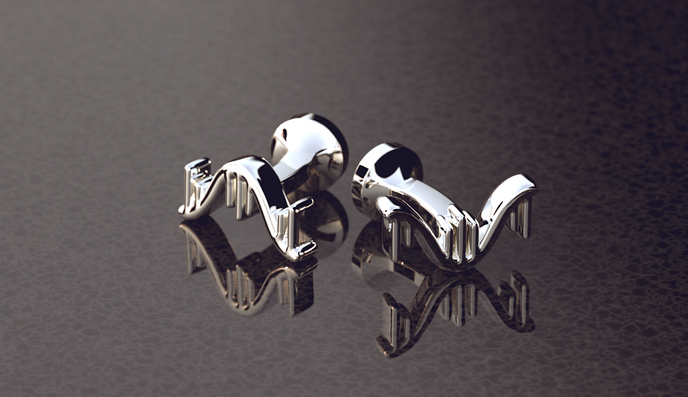
Step into the fascinating world of cellular biology through our unique jewelry designs. These pieces serve as wearable reflections of life's microscopic wonders, capturing the aesthetics of DNA strands, cellular formations, and more. Far from simple adornments, they spark dialogue and honor the captivating complexities found within biological research. Merging scientific accuracy with artistic flair, each creation offers a tactile experience that bridges the gap between scientific inquiry and aesthetic appreciation.
Find your perfect fit: measure an Existing Ring
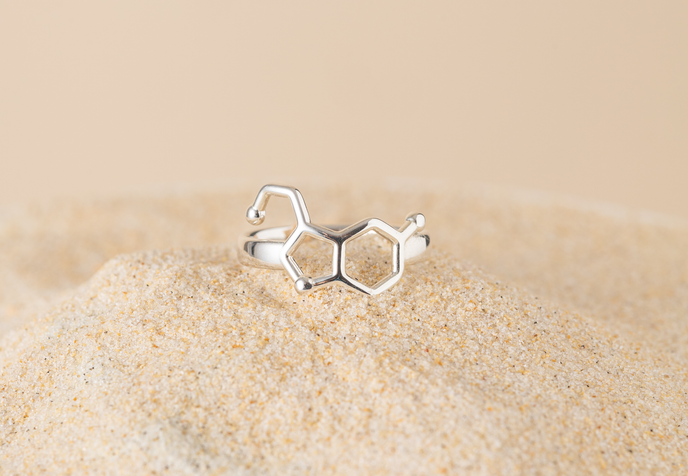
Finding out your ring size at home is a simple process and can help you shop for jewelry online with confidence.
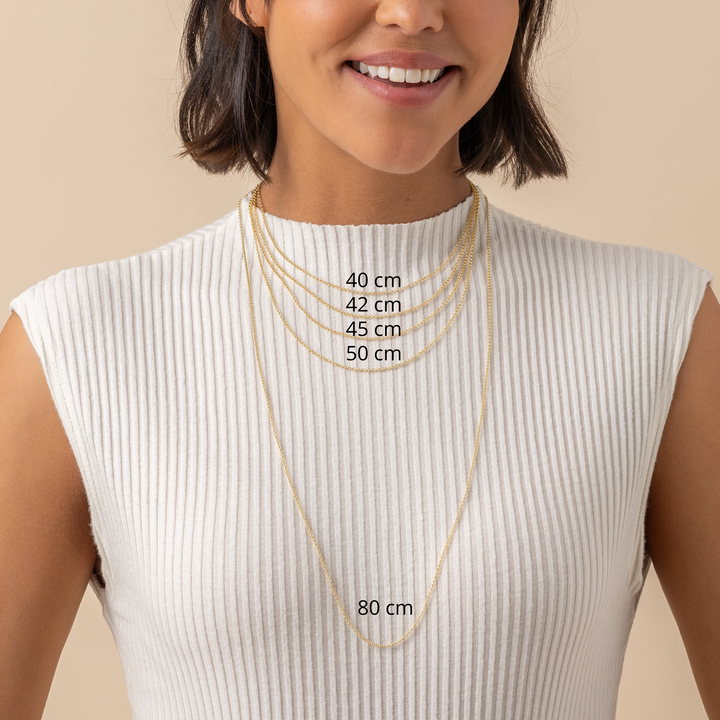
Necklace length guide