€ 195


Still questions? Contact us
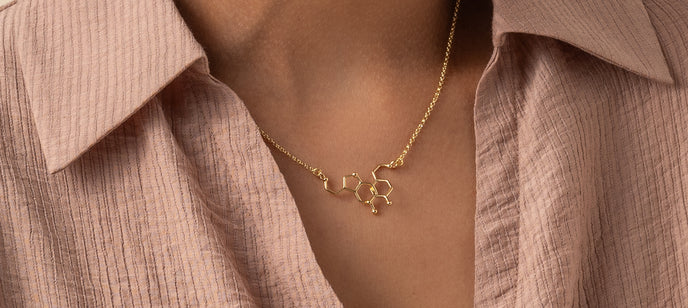
tRNA necklace | 18k gold vermeil
For biochemists who teach translation, tRNA is the part students always struggle with and biologists never forget. The molecule that turns the genetic code into a working machine. Without it, mRNA is just letters and ribosomes are just bumps. It's where biology becomes biochemistry.
The Science of tRNA
Transfer RNA molecules are small RNAs (70 to 90 nucleotides) with a characteristic L-shaped three-dimensional structure formed by two helical domains at right angles. The anticodon loop at one end base-pairs with the complementary mRNA codon at the ribosomal A site. The 3' CCA terminus at the other end carries the cognate amino acid, attached by aminoacyl-tRNA synthetase. Translation accuracy depends on both the anticodon-codon pairing and the loading step: aminoacyl-tRNA synthetases proofread incorrectly charged tRNAs and reject them. There are 61 sense codons in the genetic code but only around 45 distinct human tRNA anticodons, made possible by wobble base pairing at the third codon position.
Worn By
Mostly people who teach the central dogma or work on translation directly. Outside that audience, the piece reads as a generic RNA pendant rather than a specific molecule.
- biochemists and molecular biologists working on translation
- structural biologists studying tRNA or ribosome function
- pharmacologists developing antibiotics that target bacterial translation
- biochemistry teachers and educators
Often given for a structural biology PhD, or to a colleague whose lab focus is the ribosome.
Explore Related Cellular Biology Jewelry
- tRNA necklace | silver
- microRNA necklace | gold vermeil
- ribosomes necklace | gold vermeil
- nucleosomes necklace | gold vermeil
FAQ
Will a generalist recognise this as tRNA?
Probably not. tRNA's cloverleaf and L-shape aren't iconic in the way DNA's double helix is, even though tRNA is just as fundamental. The piece works for someone who has actually drawn the structure on a whiteboard. For a general science gift, a DNA or mRNA pendant lands more easily.
Why does tRNA need that L-shape?
To do two things at opposite ends. The anticodon loop has to read mRNA at the ribosomal A site. The 3' CCA terminus has to hold the amino acid until the ribosome stitches it onto the growing peptide. The L-shape puts those two functions roughly 80 angstroms apart, which is what the ribosome geometry requires.
Size, material, chain length?
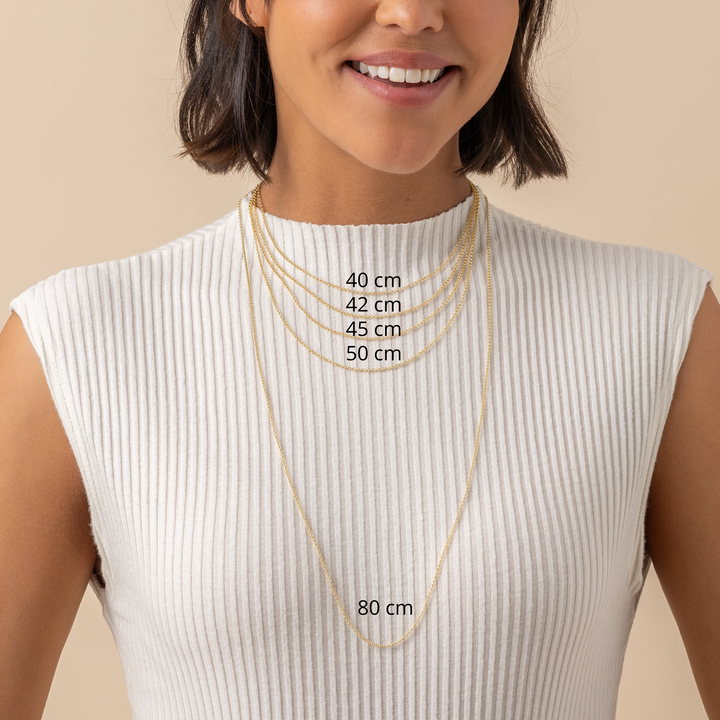
33 mm pendant in 18k gold vermeil over a sterling silver core (2.5 micron plating), nickel-free and hypoallergenic, on a 45 cm gold vermeil chain (1.8 mm diameter) with lobster clasp and a 5 cm extender. Free DHL Express shipping worldwide in 1-5 business days, all duties and taxes covered, 30-day “Love It or Return It” policy.
Is there a silver version?
Yes. The tRNA necklace exists in 925 sterling silver at the same 33 mm size. Same design, material is the only difference.
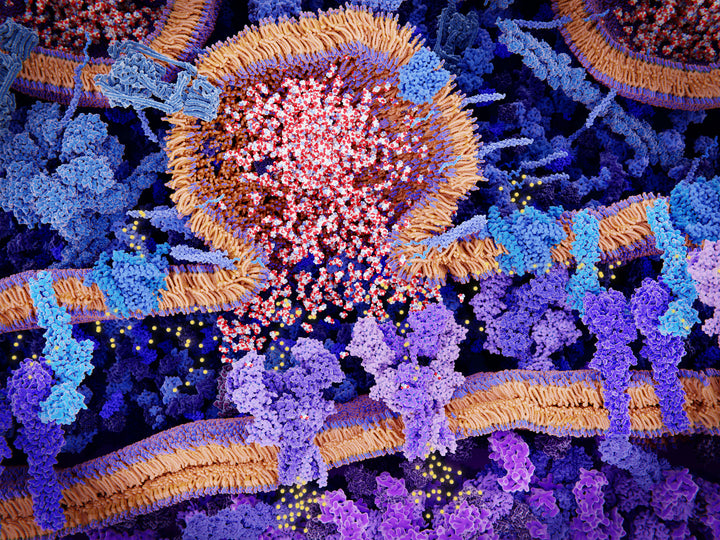
Cellular Biology
Step into the fascinating world of cellular biology through our unique jewelry designs. These pieces serve as wearable reflections of life's microscopic wonders, capturing the aesthetics of DNA strands, cellular formations, and more. Far from simple adornments, they spark dialogue and honor the captivating complexities found within biological research. Merging scientific accuracy with artistic flair, each creation offers a tactile experience that bridges the gap between scientific inquiry and aesthetic appreciation.
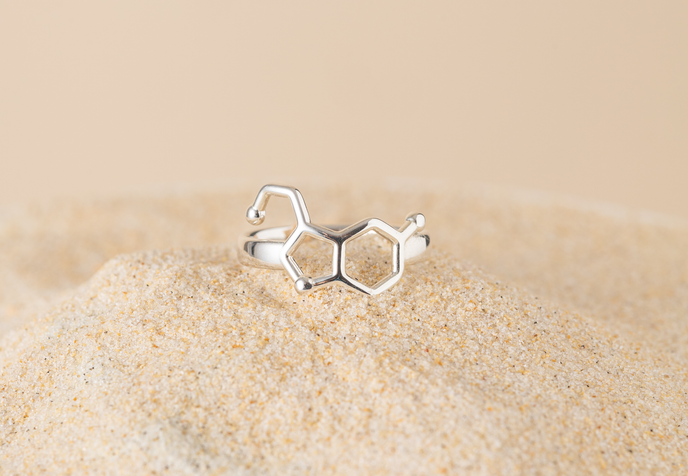
Find your perfect fit: measure an Existing Ring
Finding out your ring size at home is a simple process and can help you shop for jewelry online with confidence.
Necklace length guide