From € 140


Still questions? Contact us
Microscope bracelet charm | sterling silver
The microscope opened the invisible world. Bacteria, blood cells, sperm cells, protozoa, the entire universe of organisms below the resolution of the human eye. Most of the medical sciences as they exist today rest on observations made through one. Worn here as an 18 mm sterling silver charm on a Pandora-compatible bracelet.
The Science Behind the Microscope
The compound microscope emerged in the Netherlands around 1600. The traditional attribution to Zacharias Janssen rests on testimony given decades later and is disputed by historians. Antonie van Leeuwenhoek in Delft, working between 1674 and 1683 with a single-lens microscope of his own construction, made the first observations of bacteria, red blood cells, sperm cells, and protozoa. He communicated the findings to the Royal Society of London, which verified them and published them in the Philosophical Transactions. The development of achromatic lenses in the 19th century eliminated chromatic aberration and made the modern compound microscope possible. Electron microscopy now resolves structures at the atomic level, but the optical microscope Van Leeuwenhoek perfected remains the daily instrument of histology, microbiology, and cell biology.
Who Tends to Wear This
- microbiologists and cell biologists who work at the microscope every day
- histopathologists and clinical laboratory scientists
- biology and medical students in lab-based programmes
- anyone building a Pandora-compatible charm bracelet with a working scientific anchor
A precise addition to an existing science-themed charm collection, or a sharp starting point for one.
Explore Related Medical & Lab Tools Jewelry
- Microscope necklace | silver
- Microscope necklace | gold vermeil
- Microscope earrings | silver
- Petri dish bracelet | silver
- Eppendorf necklace | silver
FAQ
Is this a bracelet or a charm?
The microscope is the charm. It comes attached to a Pandora-compatible connector that fits standard charm bracelets. Three chain length options come with the listing: 17 cm, 18 cm, and 19 cm sterling silver chains, each with a lobster clasp. A no-chain option is also available for buyers who already own a Pandora-compatible bracelet and want only the charm.
Why an optical microscope rather than an electron microscope?
Because the optical microscope is the daily instrument. Histopathology, clinical microbiology, parasitology, basic teaching laboratories, and most cell biology still run on light microscopes. Electron microscopes resolve smaller structures but sit in dedicated facilities, used for specific high-resolution work rather than routine examination. The pendant carries the working tool, not the speciality instrument.
What size is the charm and what chain options come with it?
925 sterling silver. The microscope charm is 18 mm, attached via a Pandora-compatible connector to a sterling silver chain (ø 3.8 mm) with lobster clasp. Available in 17 cm, 18 cm, or 19 cm chain lengths, or as a no-chain charm. Nickel-free and hypoallergenic. Free worldwide DHL Express in 1-5 business days, with all import duties and taxes covered. 30-day “Love It or Return It” returns.
Is the microscope available in other formats?
Yes. A microscope necklace exists in both sterling silver and 18K gold vermeil with the same 18 mm pendant, and microscope earrings exist in sterling silver.

Medical & Lab tools
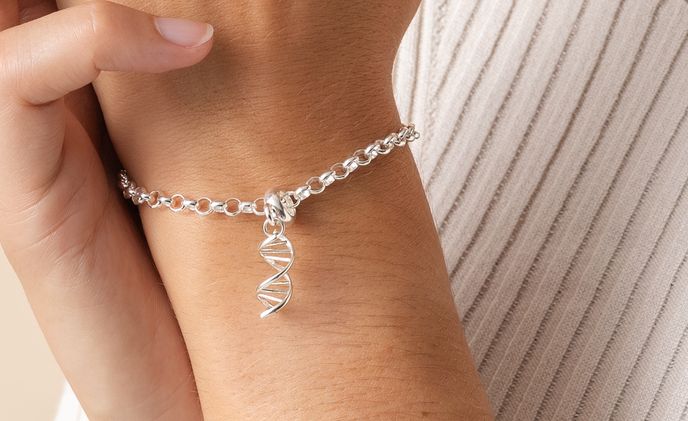
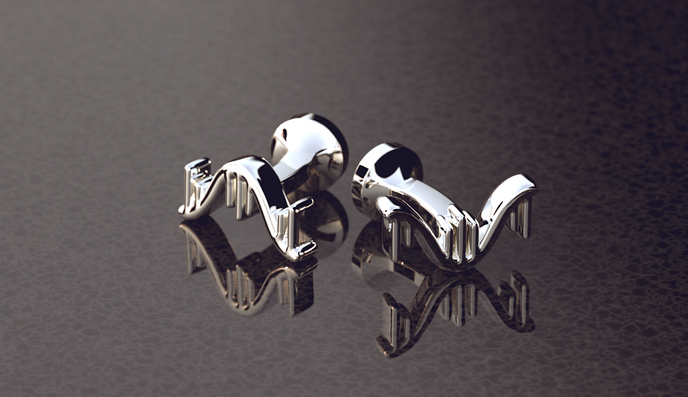
Dive into the captivating world of science-inspired jewelry, where intricate designs meet the essence of medical and laboratory tools. These masterfully crafted pieces act as subtle yet striking tributes to the instruments that have paved the way for scientific discovery. From DNA helices to microscope charms, each piece serves as a conversation starter, a talisman, and a small monument to human ingenuity. They're not just accessories; they're wearable artifacts that tell a story of scientific exploration and advancement.
Find your perfect fit
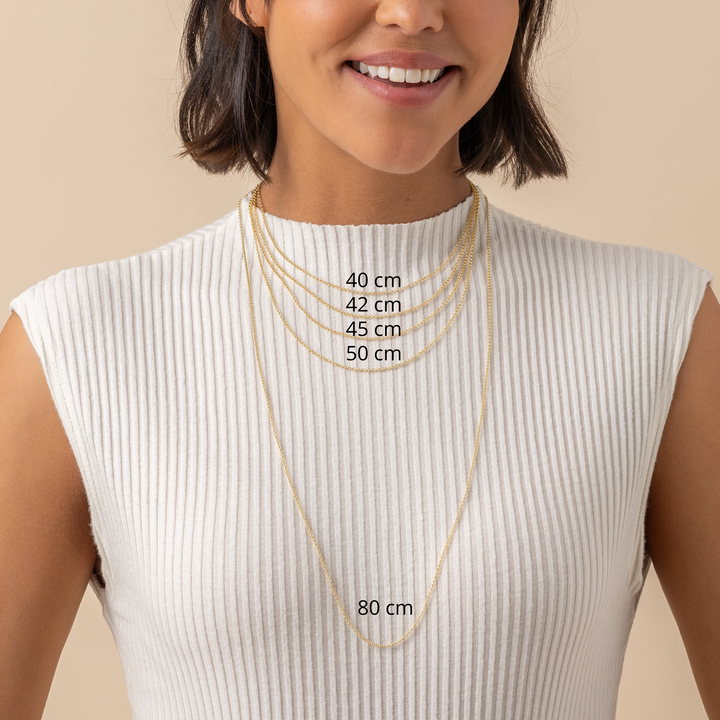
Necklace length guide