€ 190


Still questions? Contact us
Microscope necklace | 18K gold vermeil
A microscope necklace can be a lucky charm. A friend gave one to a clinical pathologist, and she wore it for luck in the run-up to her exams. This one is in 18K gold vermeil, for a woman who spends her days at the eyepiece, or once did, and likes to wear gold.
Who It's For
- a daughter graduating in biology or biomedical science
- a friend in pathology or histology, before a big exam or after it
- a colleague leaving the lab, or the supervisor who saw you through your PhD
- a sister in microbiology who already wears gold
- yourself, if a microscope is where science first won you over
Patricia bought the gold version for her daughter: “Bought for my daughter as a Bachelor of Science graduation gift. She LOVES it.” Anna L. bought the silver version for herself: “The microscope pendant is great quality and just the right size.”
How Microscopes See Living Cells
Living cells are hard to see under an ordinary light microscope. They are mostly water and nearly transparent, so light passes through them almost unchanged. Stains add contrast, but most of the classic ones are used on fixed tissue, where the cells are no longer alive. What a living cell does change is the timing of the light: light passing through it is slightly delayed, a shift the eye cannot see. In the 1930s the Dutch physicist Frits Zernike found a way to turn that delay into light and dark. His phase contrast microscope earned him the 1953 Nobel Prize in Physics, and labs still use it every day to look at living cells without staining them.
Explore Related Lab Jewelry
- microscope necklace | silver
- microscope earrings | silver
- microscope bracelet | silver
- petri dish necklace | gold vermeil
FAQ
How big is it, and how does it sit?
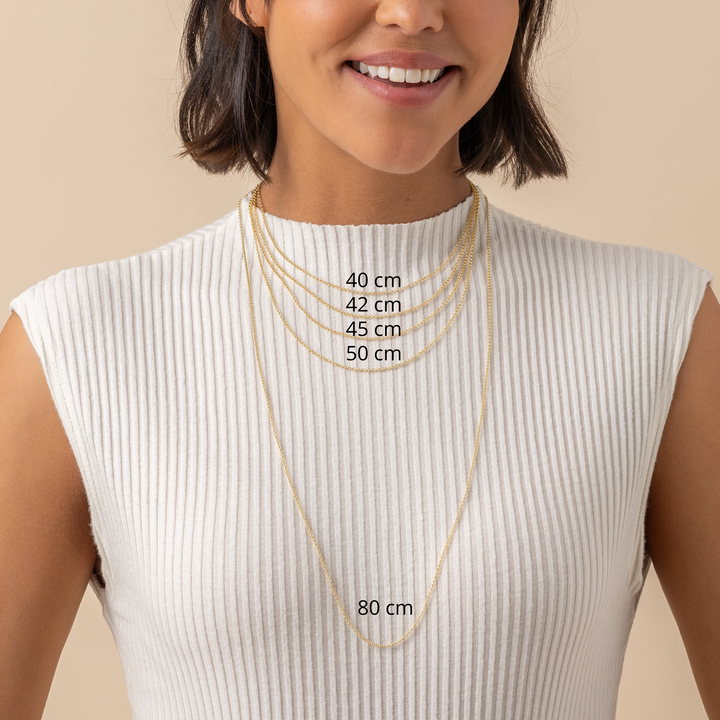
The pendant is 18 mm (about 0.7 inch), roughly the size of a US dime, so it is smaller than the close-up photos may suggest. It hangs from a single point on a 45 cm (17.7 inch) gold vermeil chain with a 5 cm (2 inch) extender, and on that length it sits just below the collarbone. Gold vermeil is 2.5 microns of 18K gold over solid sterling silver, nickel-free and hypoallergenic.
Is there a silver version, or matching earrings?
Yes. The same 18 mm microscope comes as a sterling silver necklace, as a pair of silver leverback earrings and as a silver bracelet, with the charm on a connector that also fits Pandora bracelets. Choose the finish she already wears: the design is the same in silver and gold vermeil. For another length, an extra gold vermeil chain is offered on this page in 40, 42, 45 or 50 cm, each with the 5 cm extender, or 80 cm without one.
Will it arrive in time, and what if it isn't right?
DHL Express delivers free in 1-5 business days worldwide, and we pay the import duties and taxes, so nothing is due at the door. It arrives in a ready-to-gift jewelry box and festive envelope. If it isn't right, our 30-day “Love It or Return It” policy applies.
Who named the cell?
Robert Hooke, in 1665. Looking at a thin slice of cork under his microscope, he found it “all perforated and porous, much like a Honey-comb”, and called the little boxes cells. They were the empty walls of dead plant cells. Only in the late 1830s were cells understood as the building blocks of all plants and animals. Hooke published his drawings in Micrographia, and Samuel Pepys sat up until two in the morning reading it, calling it “the most ingenious book that ever I read in my life”.

Medical & Lab tools
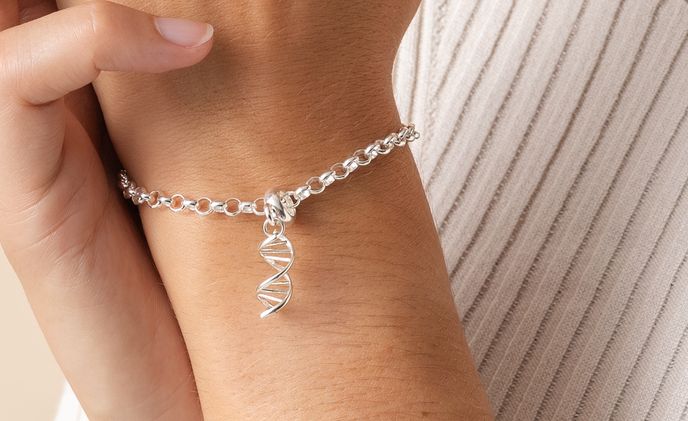
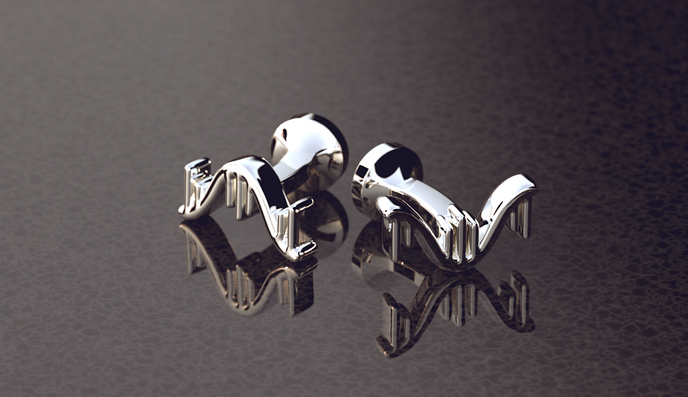
Dive into the captivating world of science-inspired jewelry, where intricate designs meet the essence of medical and laboratory tools. These masterfully crafted pieces act as subtle yet striking tributes to the instruments that have paved the way for scientific discovery. From DNA helices to microscope charms, each piece serves as a conversation starter, a talisman, and a small monument to human ingenuity. They're not just accessories; they're wearable artifacts that tell a story of scientific exploration and advancement.
Find your perfect fit: measure an Existing Ring
Finding out your ring size at home is a simple process and can help you shop for jewelry online with confidence.
Necklace length guide