€ 155


Still questions? Contact us
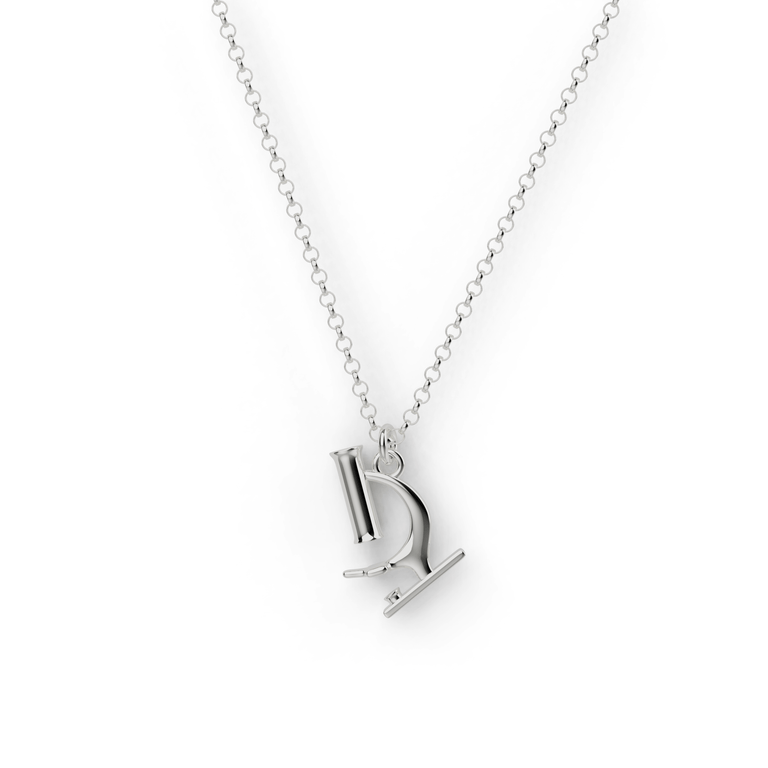
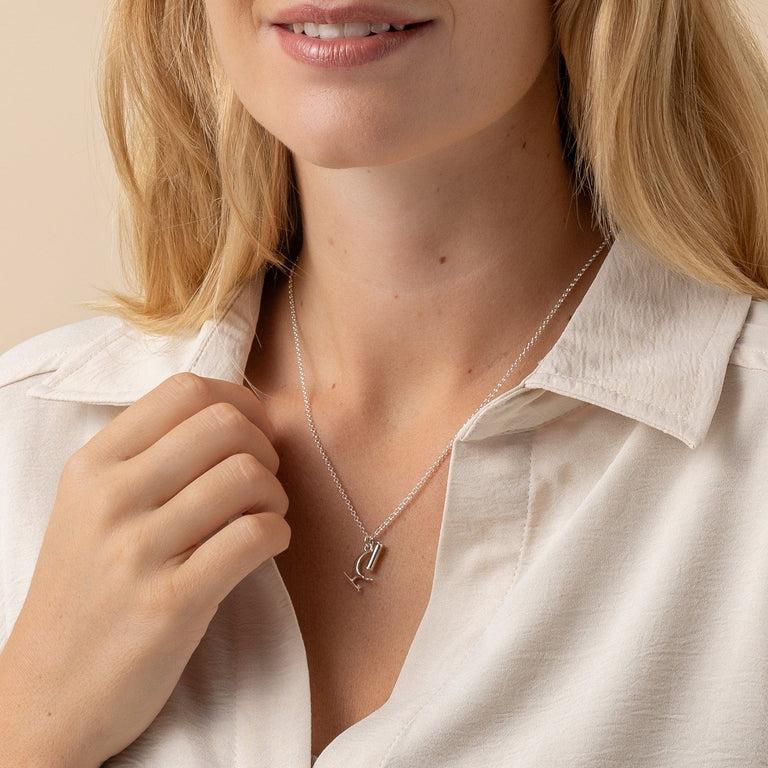
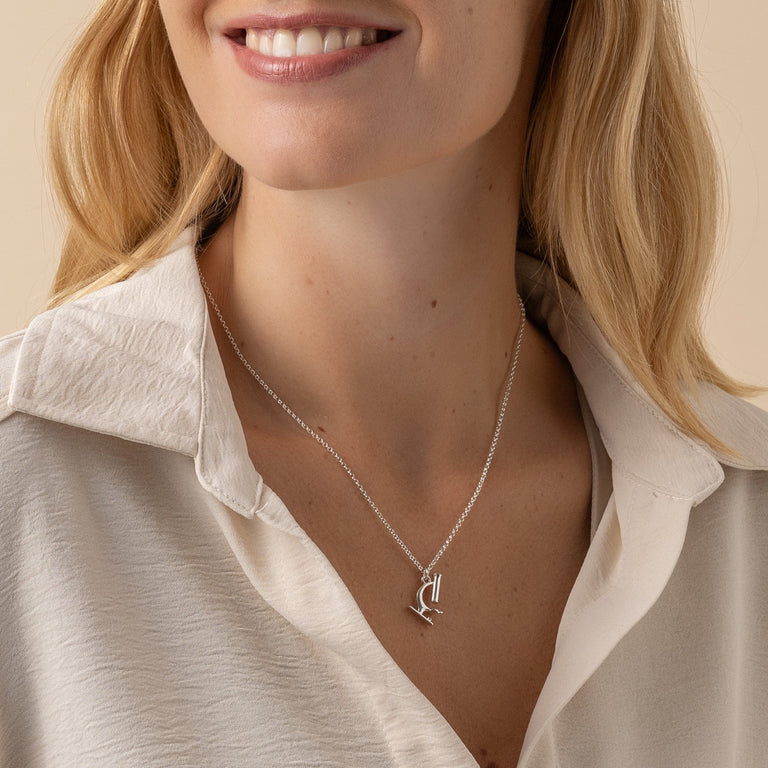
Microscope necklace | sterling silver
Ask a biologist what she first saw under a microscope and she can usually tell you: onion skin, pond water, her own cheek cells. A microscope necklace carries that moment with her, whether she still spends her days at the eyepiece or has left the lab behind. Give it to her, or keep it for yourself.
Who It's For
- a friend or colleague in pathology, microbiology or cell biology
- your PhD supervisor, on the day you graduate
- a daughter graduating in biology or biomedical science, or for her birthday
- a sister or girlfriend who spends her working day at the microscope
- yourself, for the science that first won you over, even if you've moved on since
Jean-luc S. gave it to his girlfriend: “My girlfriend lost it when she saw this. She's a microbiologist and spends most of her day peering through the lens of a microscope, so this was an ideal gift.” Brooke W. bought her own: “I bought this necklace to reflect the study I did in microbiology during my undergrad degree, and although I'm not in this field any more, I love that I get to wear the passion I had for that particular branch of science.”
The Science Behind the Microscope
A compound microscope magnifies twice. The objective lens near the sample makes an enlarged image, and the eyepiece enlarges it again, so a 40x objective with a 10x eyepiece gives 400x. More magnification does not always show more detail, though. In 1873 Ernst Abbe worked out that light cannot separate details much closer than about 200 nanometres, roughly half the wavelength of visible light. That is fine enough for cells, their nuclei and most bacteria, but not for most viruses. For more than a century that was the limit of the light microscope, until fluorescence methods found ways around it and earned Eric Betzig, Stefan Hell and William Moerner the 2014 Nobel Prize in Chemistry.
Explore Related Lab Jewelry
- microscope necklace | gold vermeil
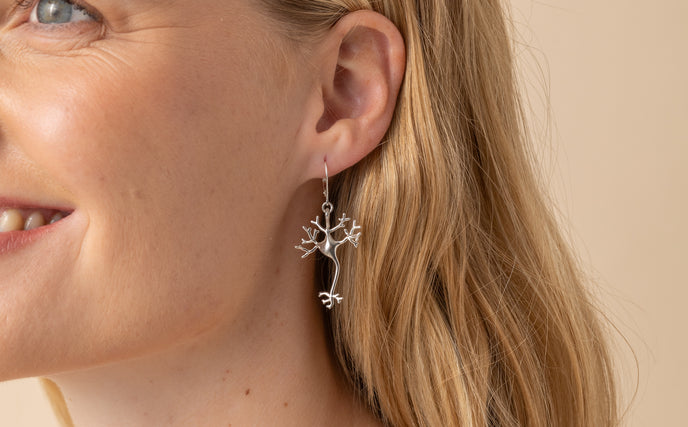
- microscope earrings | silver
- microscope bracelet | silver
- petri dish necklace | silver
FAQ
How big is it, and how does it sit?
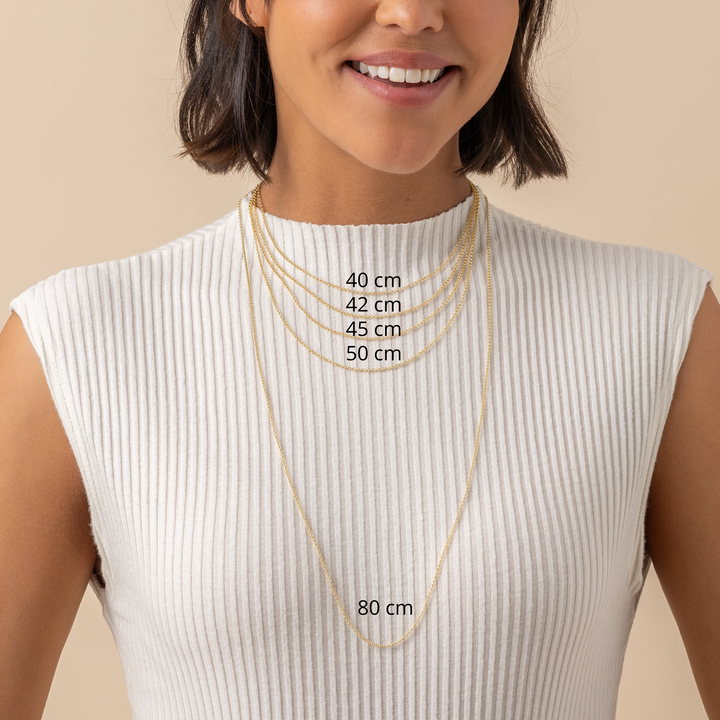
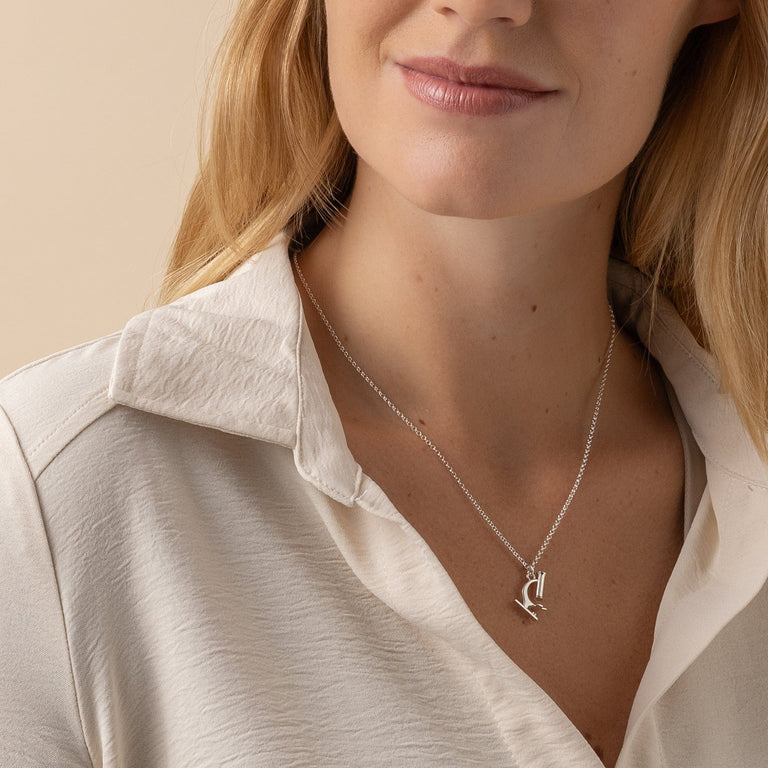
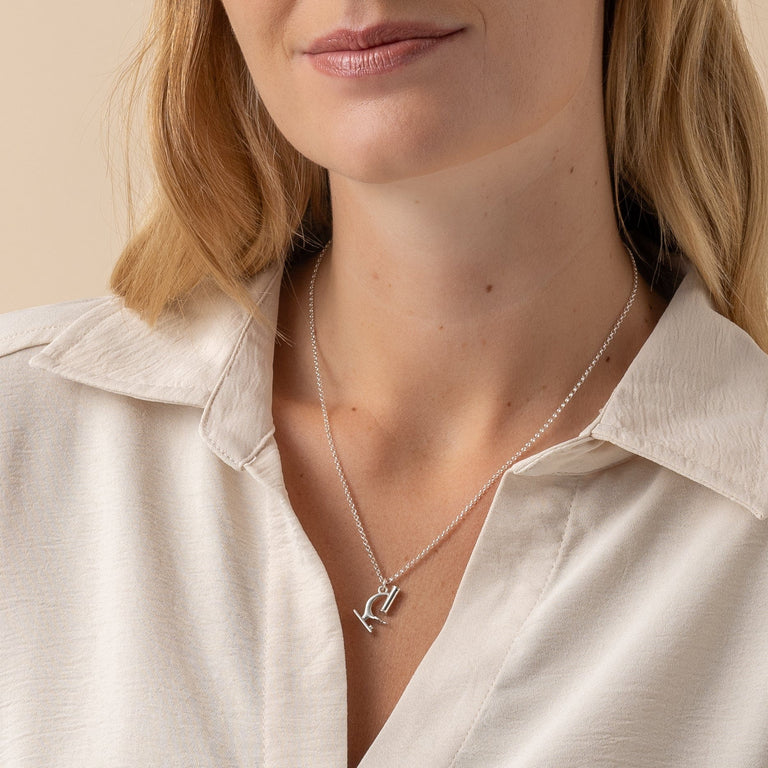
The pendant is 18 mm (about 0.7 inch), roughly the size of a US dime, so it is smaller than the close-up photos may suggest. It hangs from a single point on a 45 cm (17.7 inch) sterling silver chain with a 5 cm (2 inch) extender, and on that length it sits just below the collarbone. If she likes it shorter or longer, an extra chain in 40, 42, 45, 50 or 80 cm can be added on this page. It is 925 sterling silver, nickel-free and hypoallergenic.
Is there a gold version, or matching earrings?
Yes. The same 18 mm microscope comes as a necklace in 18K gold vermeil and as a pair of silver leverback earrings. There is also a silver bracelet, with the charm on a connector that fits Pandora bracelets too. Choose the finish she already wears: the design is the same in silver and gold vermeil.
When will it arrive, and what if it isn't right?
DHL Express delivers free in 1-5 business days worldwide, and we pay the import duties and taxes, so nothing is due at the door. It arrives in a ready-to-gift jewelry box and festive envelope. If it isn't right, our 30-day “Love It or Return It” policy applies.
Who first saw bacteria under a microscope?
Antonie van Leeuwenhoek, a cloth merchant in Delft who made his own lenses. In October 1676 he wrote to the Royal Society in London about countless tiny living creatures in snow water, well water and water steeped with pepper. The smallest of them were bacteria, the first ever described. The Fellows wanted proof, so he sent signed statements from local pastors, a notary, a doctor and a lawyer who had seen the creatures through his lenses. In November 1677 Robert Hooke saw them for himself, on his third attempt.

Medical & Lab tools
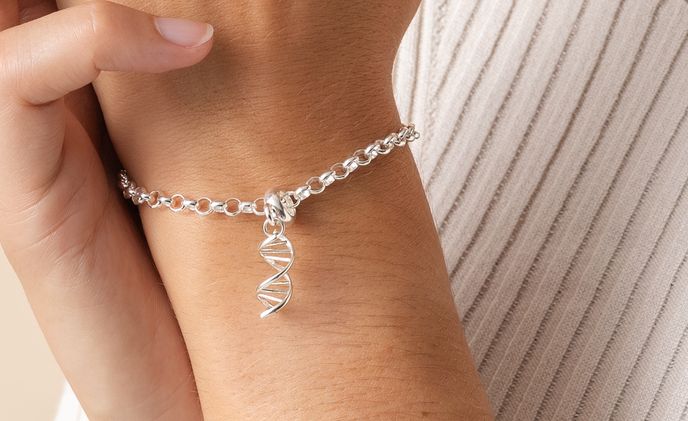
Dive into the captivating world of science-inspired jewelry, where intricate designs meet the essence of medical and laboratory tools. These masterfully crafted pieces act as subtle yet striking tributes to the instruments that have paved the way for scientific discovery. From DNA helices to microscope charms, each piece serves as a conversation starter, a talisman, and a small monument to human ingenuity. They're not just accessories; they're wearable artifacts that tell a story of scientific exploration and advancement.
Find your perfect fit: measure an Existing Ring
Finding out your ring size at home is a simple process and can help you shop for jewelry online with confidence.
Necklace length guide