€ 255


Still questions? Contact us
Mitochondrion necklace | 18k gold vermeil
If you've drawn the proton gradient enough times to know which complex pumps which proton, you already recognise this organelle. The mitochondrion runs cellular energy. Without it, no muscle contracts, no neuron fires, no cell divides for long.
How Mitochondria Power the Cell
Mitochondria generate ATP by coupling oxidation to a proton gradient across the inner membrane. Complexes I to IV pump protons into the intermembrane space, and ATP synthase lets them flow back. The flow rotates a molecular motor that converts ADP to ATP. Paul Boyer and John Walker shared the 1997 Nobel Prize in Chemistry for working out that rotation. A single mitochondrion can carry hundreds of ATP synthase complexes, and a metabolically active cell can carry thousands of mitochondria. Most of the energy in your body, right now, came out of one of these in the last few seconds.
Worn By
Researchers and clinicians whose work sits close to cellular energetics:
- cell biologists and biochemists who work with mitochondria directly
- researchers in bioenergetics, metabolic disease, or mitochondrial genetics
- physicians treating mitochondrial disorders or metabolic syndromes
- scientists who want a piece of cellular biology in gold rather than silver
Explore Related Cellular Biology Jewelry
- Mitochondrion necklace | silver
- Mitochondrion necklace | silver & gold vermeil
- Mitochondria studs | silver
- Ribosomes necklace | gold vermeil
FAQ
What do you give a cell biologist who has read every paper in the field?
Something they recognise from inside their own work, not from a textbook cover. The mitochondrion is one of the few organelles that nearly every cell biologist has had under a microscope at some point, and the gold version makes it wearable for clinic, conferences, or evenings out.
Why is ATP synthase called a rotary motor?
Because it physically rotates. The flow of protons back across the inner mitochondrial membrane spins a central stalk inside ATP synthase, and that rotation drives the chemistry that joins ADP and inorganic phosphate into ATP. About three ATP molecules per full revolution. The rotation was a controversial idea when Boyer proposed it. Walker's later structural work settled the question.
What's the size, material, and chain?
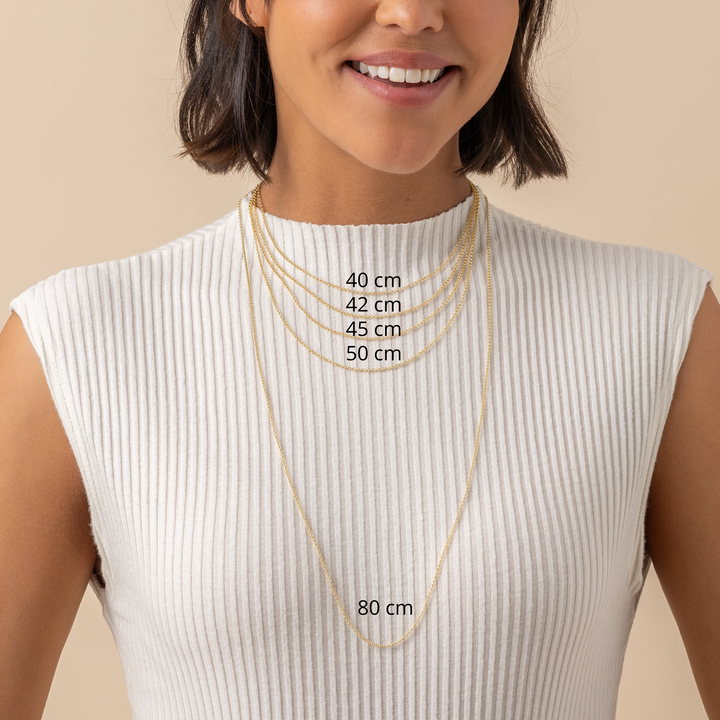
24 mm pendant in 18k gold vermeil over a sterling silver core, nickel-free. 45 cm chain with a 5 cm extender. Ships free worldwide via DHL Express in 1-5 business days, with all import duties prepaid. Comes in a ready-to-gift jewelry box with the 30-day "Love It or Return It" policy.
Same design as the silver mitochondrion?
Yes. Same model, same 24 mm size. The only difference is the material and the chain. The silver version sits closer to a lab-bench register, the gold closer to formal wear.
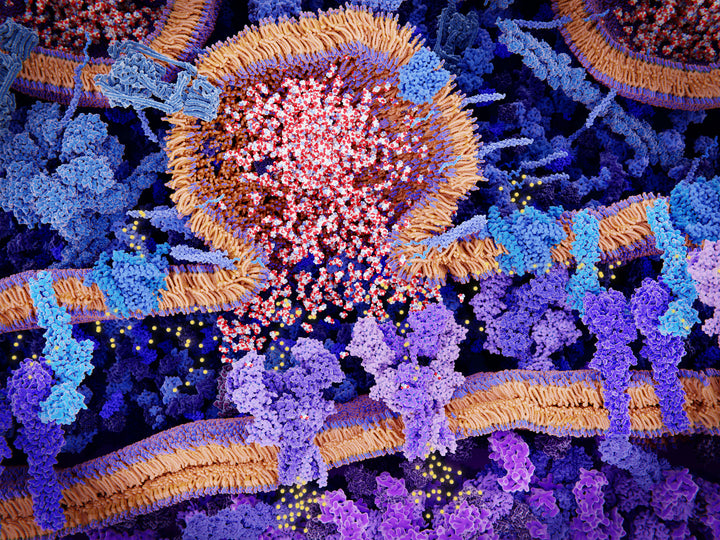
Cellular Biology
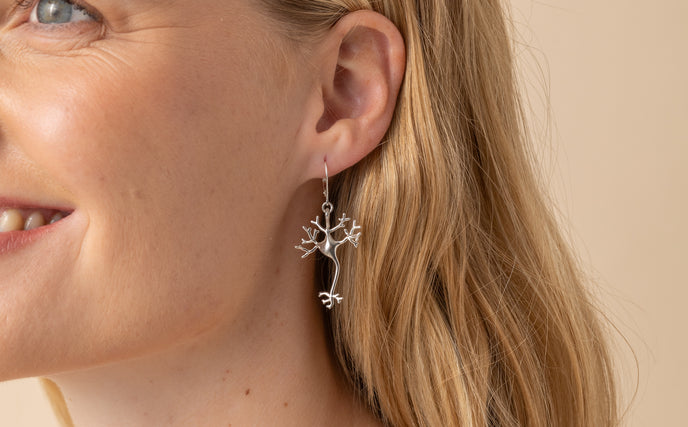
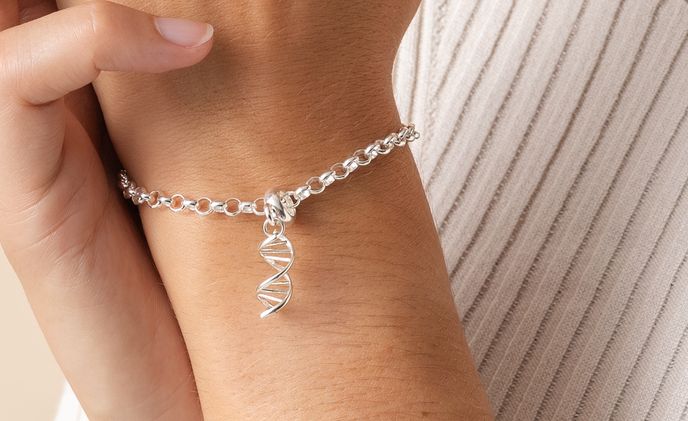
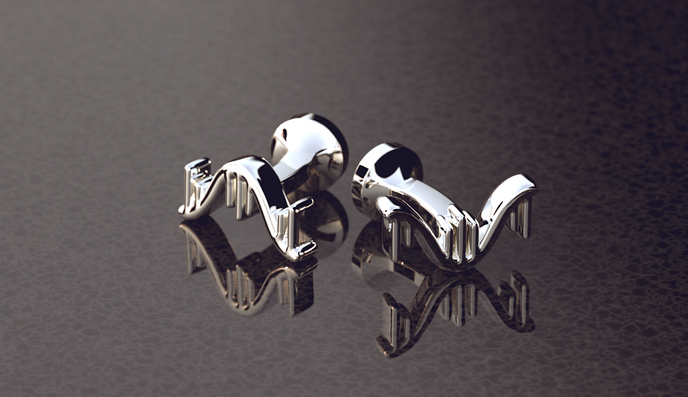
Step into the fascinating world of cellular biology through our unique jewelry designs. These pieces serve as wearable reflections of life's microscopic wonders, capturing the aesthetics of DNA strands, cellular formations, and more. Far from simple adornments, they spark dialogue and honor the captivating complexities found within biological research. Merging scientific accuracy with artistic flair, each creation offers a tactile experience that bridges the gap between scientific inquiry and aesthetic appreciation.
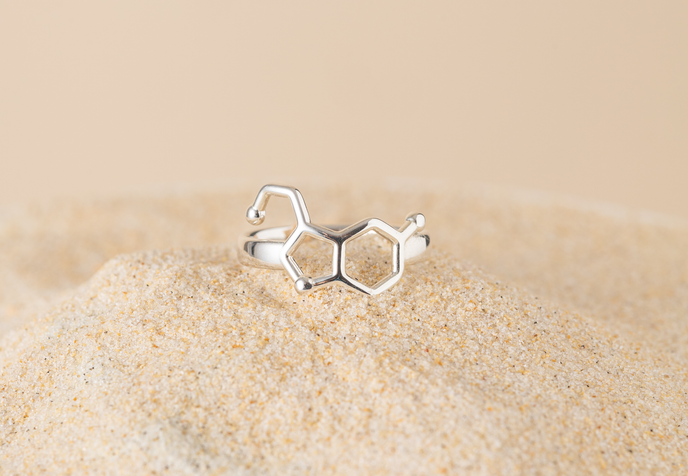
Find your perfect fit: measure an Existing Ring
Finding out your ring size at home is a simple process and can help you shop for jewelry online with confidence.
Necklace length guide