€ 155


Still questions? Contact us
Myosin necklace | sterling silver
Myosin is the molecular motor that turns ATP into mechanical work. Every voluntary movement, every heartbeat, every smooth muscle contraction in the gut traces back to a myosin head pulling on actin. The protein is so old and so universally conserved that almost every eukaryotic cell carries some version of it.
The Science of Myosin
Myosin II is the family member responsible for muscle contraction. Each molecule is a hexamer of two heavy chains and four light chains, with the heavy chains forming two globular motor domains and an extended coiled-coil tail. The motor domain binds actin, hydrolyses ATP, and undergoes a conformational change (the power stroke) that translates filament position by roughly ten nanometres per cycle. In striated muscle, myosin II self-assembles into thick filaments that interdigitate with actin thin filaments, and synchronised power strokes across thousands of motors produce the macroscopic contraction. The sliding filament model, established by the Huxley and Hanson labs in 1954, remains one of the cleanest examples of how molecular structure explains physiological function. The myosin superfamily extends well beyond muscle: nonmuscle myosins drive cytokinesis, cell migration, and intracellular transport in essentially every eukaryotic cell.
Who Tends to Wear This
The audience clusters by what they actually study:
- cell biologists working on motor proteins, cytoskeletal dynamics, or cell migration
- physiologists and biophysicists studying muscle mechanics
- cardiac scientists working on contractile dysfunction or hypertrophic cardiomyopathy
- structural biologists who have spent time on the actomyosin interface
- biology students who have worked through the cross-bridge cycle and remember it
Often given as a graduation gift after a doctorate in muscle biology or cell biology, or as a self-purchase by long-term researchers in motor protein biophysics.
Explore Related Cellular Biology Jewelry
- Myosin necklace | gold vermeil
- Sarcomere necklace | silver
- Microtubule necklace | silver
- Collagen necklace | silver
FAQ
Is this niche enough for a working muscle biologist?
Yes. Myosin is the centre of the field, and a piece that names this protein specifically rather than gesturing at biology in general tends to land well. The cross-bridge cycle is one of the few bits of textbook biochemistry that remains fundamental to a working researcher's daily reasoning, so a pendant referencing it carries more weight with someone who teaches it than a generic anatomy piece.
Why is the sliding filament model still useful seventy years on?
Because the basic mechanism it describes has held up under every subsequent experiment, and because it makes the right predictions about real muscle behaviour. Length-tension curves, force-velocity relationships, and the calcium dependence of contraction all fall out cleanly from the model. Modern work has filled in the molecular details (myosin head crystal structures, single-molecule force measurements, the exact geometry of the power stroke) but has not changed the central picture. The model also generalises to nonmuscle myosins running on actin, which is why the same framework applies to cytokinesis and cell migration as well.
What's the size, material, and chain?
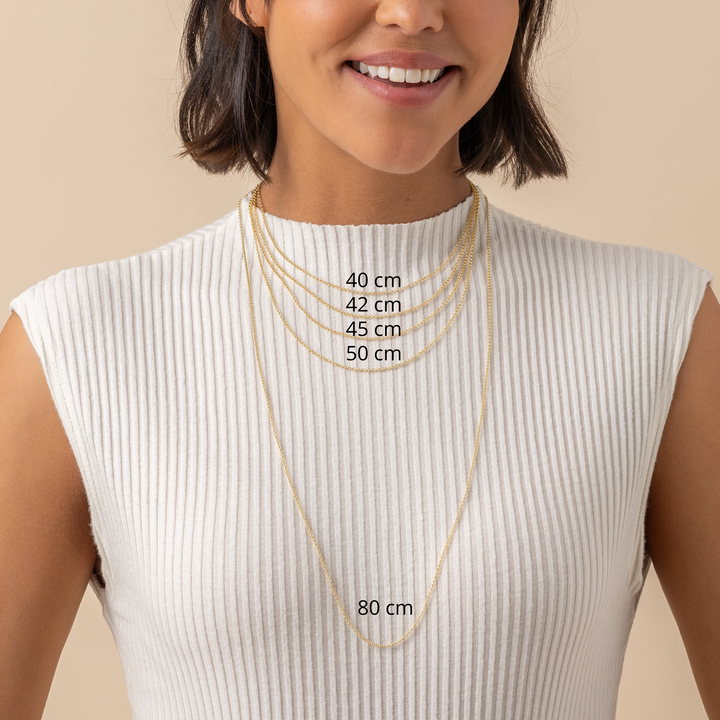
30 mm pendant in 925 sterling silver, nickel-free. 45 cm sterling silver chain with a 5 cm extender. Ships free worldwide via DHL Express in 1-5 business days, with all import duties prepaid. Comes in a ready-to-gift jewelry box with the 30-day “Love It or Return It” policy.
Is there a gold version?
Yes. Myosin is also available in 18k gold vermeil at the same 30 mm size. Same model, warmer finish, more formal register.
Cellular Biology
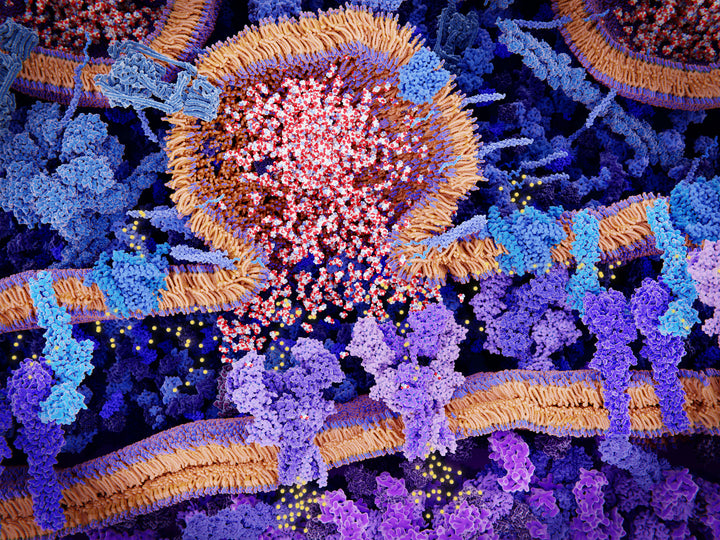
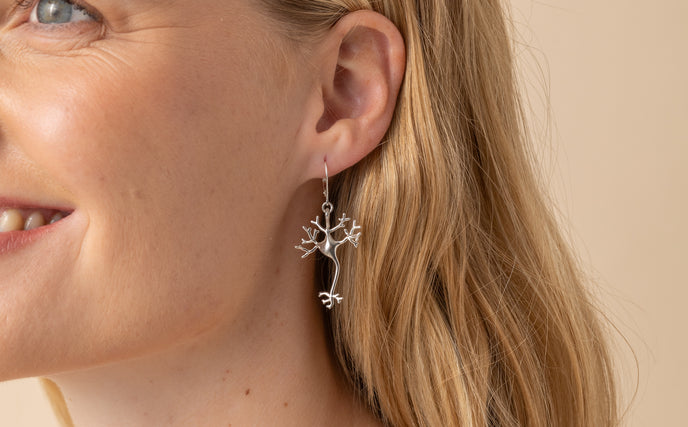
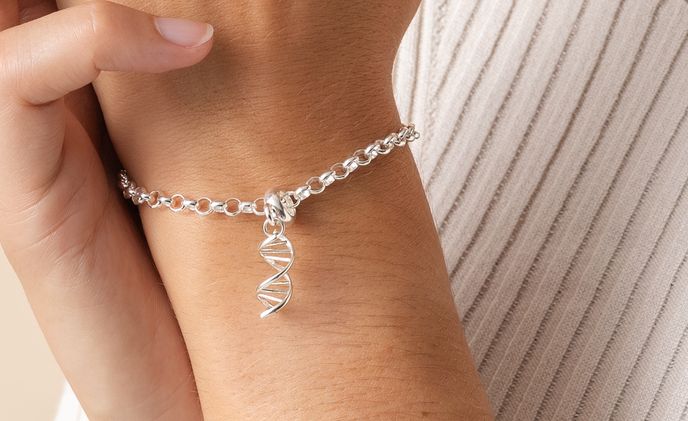
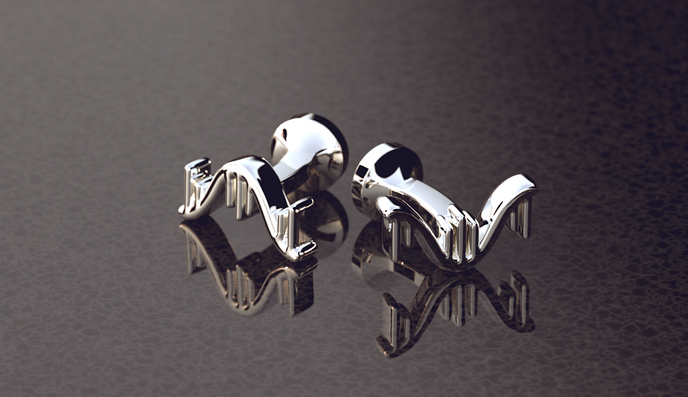
Step into the fascinating world of cellular biology through our unique jewelry designs. These pieces serve as wearable reflections of life's microscopic wonders, capturing the aesthetics of DNA strands, cellular formations, and more. Far from simple adornments, they spark dialogue and honor the captivating complexities found within biological research. Merging scientific accuracy with artistic flair, each creation offers a tactile experience that bridges the gap between scientific inquiry and aesthetic appreciation.
Find your perfect fit: measure an Existing Ring
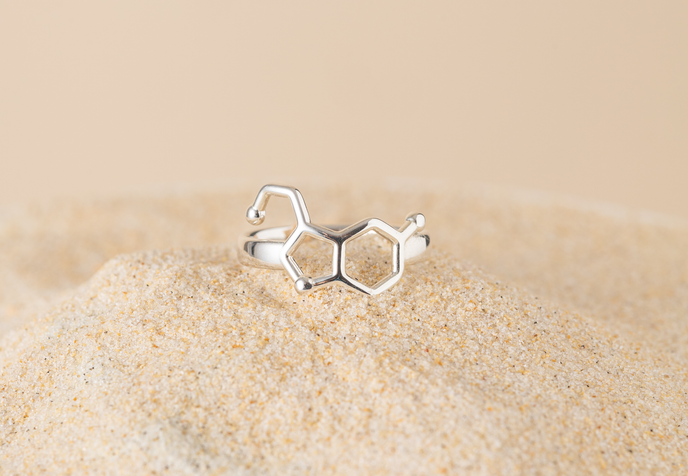
Finding out your ring size at home is a simple process and can help you shop for jewelry online with confidence.
Necklace length guide