€ 180


Still questions? Contact us
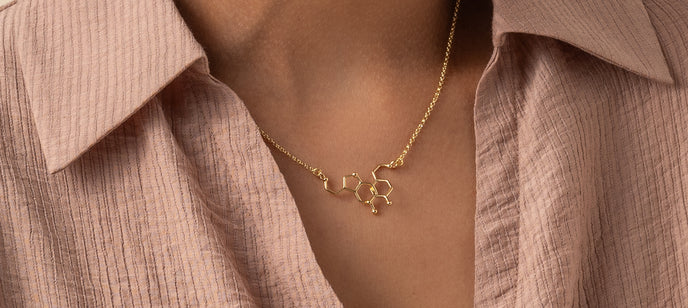
myosin necklace | 18k gold vermeil
If you trained on muscle physiology, you already know which protein lifts the body out of bed in the morning, drives every heartbeat, and powers the smile that crosses a face. Myosin is the work of being a body. Anything that moves, at the cellular scale, runs through it.
The Science of Myosin
Myosin is a superfamily of actin-based motor proteins. Class II, conventional myosin, drives muscle contraction through the cross-bridge cycle: the myosin head binds actin, releases the power stroke when phosphate dissociates, detaches when ATP binds the head, and re-cocks into the pre-power-stroke conformation after ATP hydrolysis. Repeated by thousands of myosin heads per sarcomere, this cycle generates the coordinated force of a contraction. Outside skeletal and cardiac muscle, non-muscle myosin II runs cytokinesis, cell migration, and tissue organisation. Same family of proteins, different isoforms tuned to different jobs.
Who Tends to Wear This
For people who work on contraction, force generation, or cellular movement at any scale.
- cell biologists and physiologists working on motor proteins
- cardiac researchers and electrophysiologists
- sports physiologists and exercise scientists
- biophysicists studying single-molecule mechanics
Explore Related Cellular Biology Jewelry
- myosin necklace | silver
- sarcomere necklace | gold vermeil
- microtubule necklace | silver
- collagen necklace | gold vermeil
FAQ
Why gold for muscle research?
Gold reads as something to keep, a piece marked for an occasion. The science is the same in both materials. Choose the finish the recipient already wears. Both versions carry the same design and the same meaning.
Why is myosin called a motor protein?
Because it converts chemical energy into mechanical work. ATP binds, hydrolyses, and the resulting conformational change moves the myosin head along an actin filament. Repeated millions of times across a muscle, it produces coordinated force. The term 'motor' is literal: chemistry in, motion out.
Size, material, chain length?
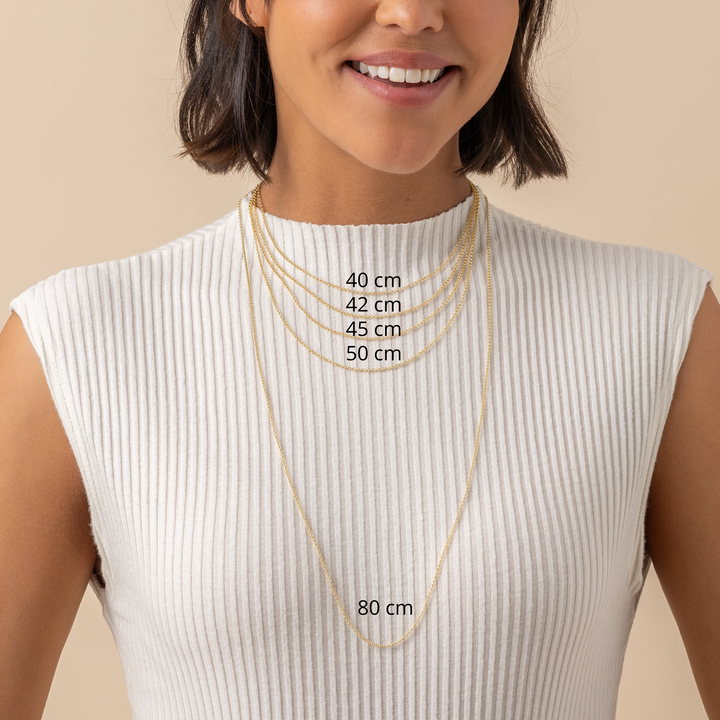
30 mm pendant in 18k gold vermeil over a sterling silver core (2.5 micron plating), nickel-free and hypoallergenic, on a 45 cm gold vermeil chain (1.8 mm diameter) with lobster clasp and a 5 cm extender. Free DHL Express shipping worldwide in 1-5 business days, all duties and taxes covered, 30-day “Love It or Return It” policy.
Is there a silver version at the same size?
Yes. The myosin necklace exists in 925 sterling silver at the same 30 mm size. Same design, material is the only difference.
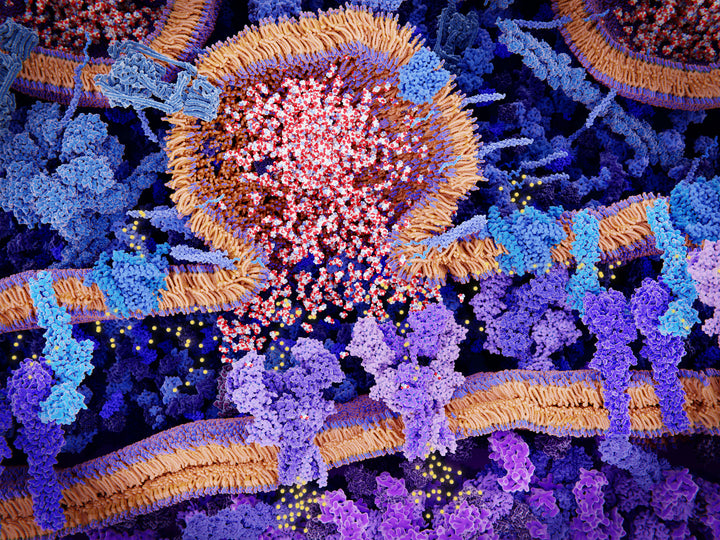
Cellular Biology
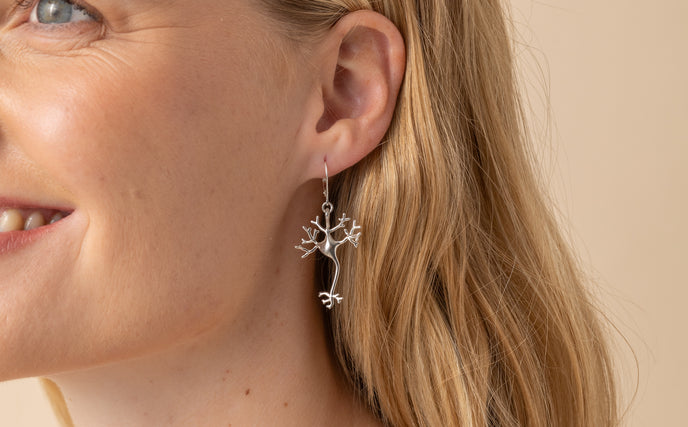
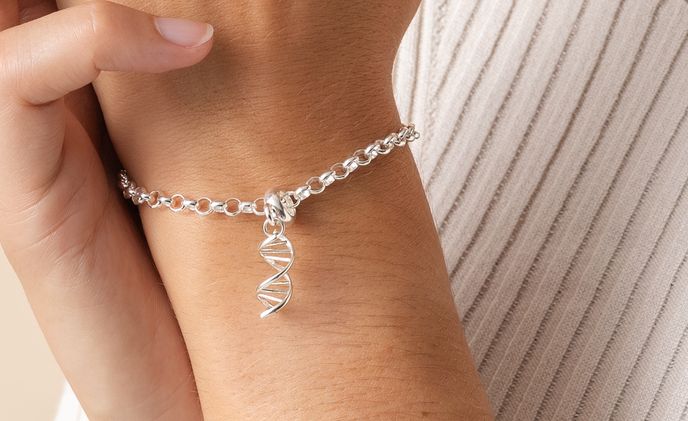
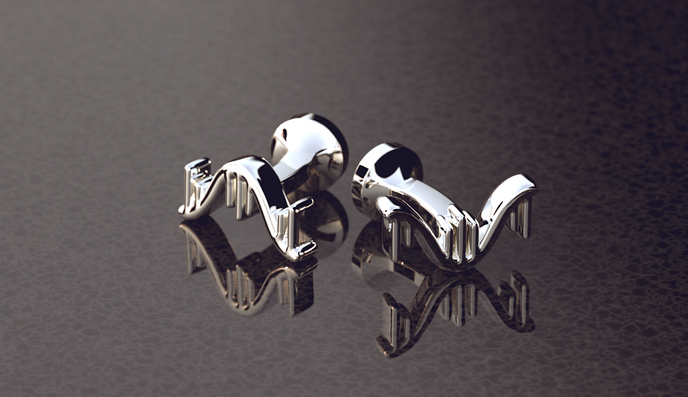
Step into the fascinating world of cellular biology through our unique jewelry designs. These pieces serve as wearable reflections of life's microscopic wonders, capturing the aesthetics of DNA strands, cellular formations, and more. Far from simple adornments, they spark dialogue and honor the captivating complexities found within biological research. Merging scientific accuracy with artistic flair, each creation offers a tactile experience that bridges the gap between scientific inquiry and aesthetic appreciation.
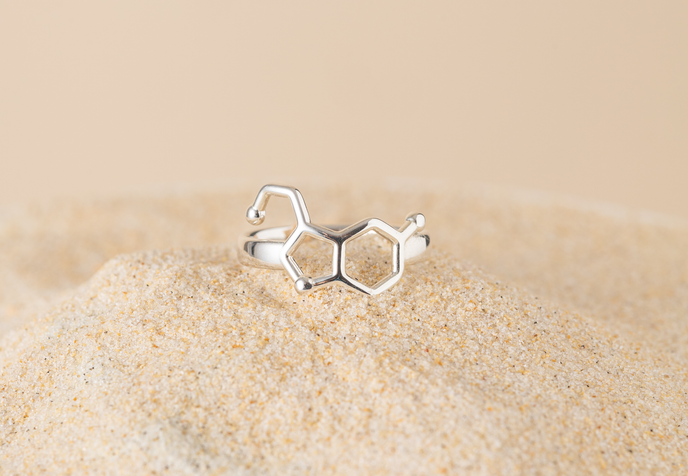
Find your perfect fit: measure an Existing Ring
Finding out your ring size at home is a simple process and can help you shop for jewelry online with confidence.
Necklace length guide